How to Write an Educational Tutorial YouTube Script (India, 2026)
The teaching-script structure that makes a tutorial actually stick — promise the outcome, run a prerequisite check, chunk the steps with checkpoints, recap, and a next-step CTA, in a clear Hinglish explainer voice.
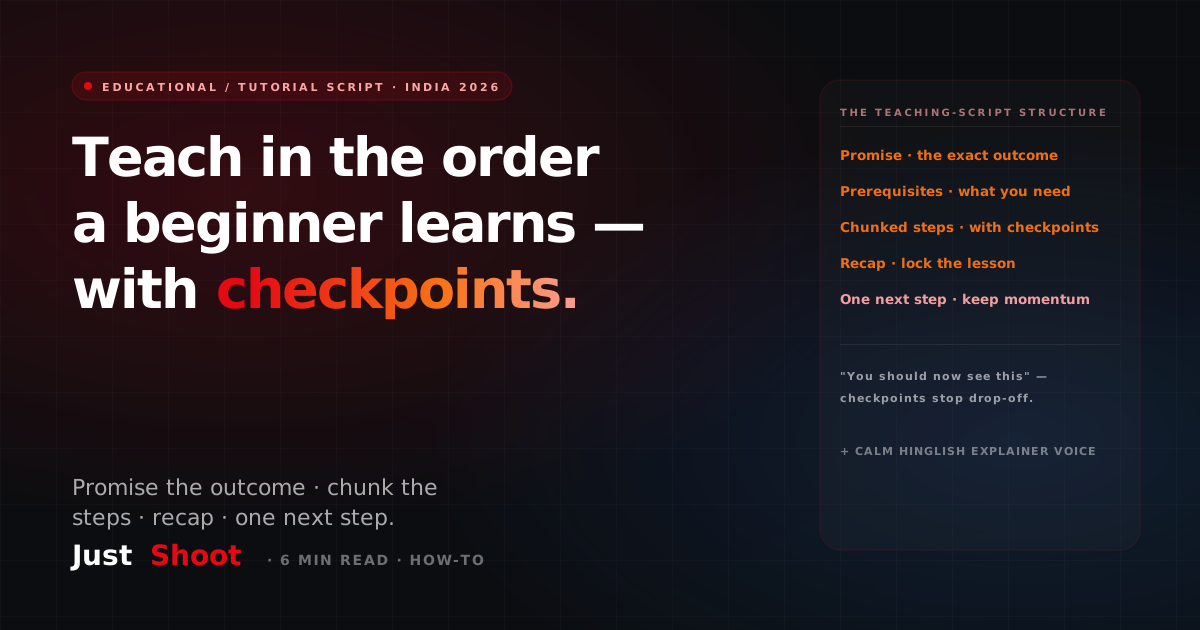
How to Write an Educational Tutorial YouTube Script (India, 2026)
By Ashok Sachdev, Founder of JustShoot · Published 2026-06-28
Short answer: An educational tutorial script works when it promises a concrete outcome in the first 20 seconds, does a quick prerequisite check, then breaks the lesson into small chunks each followed by a checkpoint ("pause here and try it"), ends with a one-line recap, and points to a clear next step. For teaching content, clarity beats personality — script the order of ideas, the checkpoints, and the plain-language explanations, and let your natural Hinglish pacing carry the warmth. Confusion is the only retention killer that matters in a tutorial.
I build an AI scripting tool for Indian creators, and education is one of the fastest-growing categories on Indian YouTube — exam prep, coding, design, spoken English, finance basics, skill how-tos. The difference between a tutorial people finish and one they drop in 90 seconds is almost never the topic. It's the structure: whether each idea arrives in the right order, at the right size, with a checkpoint that lets the viewer confirm they got it before you move on.
Why a tutorial needs a tighter script than a vlog
A vlog forgives wandering — viewers come for you. A tutorial does not. Someone watching "how to solve quadratic equations" or "how to deploy a Next.js app" has a job to finish, and the moment they feel lost, they leave (or worse, they leave a confused comment and never come back). A loose, unscripted tutorial sags in the same three places every time: a fuzzy promise up front, a middle that jumps a step the creator forgot was hard, and an ending that just stops without locking in the lesson. A script fixes all three. You don't memorise it word-for-word — you script the spine so the teaching is airtight.
The teaching-script structure
Promise the outcome. Open by stating exactly what the viewer will be able to do by the end, concretely: "Iss video ke baad aap apne pehle Python function khud likh paaoge — bina kisi confusion ke." Not "today we'll learn about functions." A concrete, time-bound promise is the educational version of a first-30-seconds hook: it tells the viewer their time will pay off and gives them a reason to stay through the boring setup.
The prerequisite check. In one or two lines, state what they need to know or have ready before starting — "agar aapne loops dekhe hain, perfect; agar nahi, neeche linked video pehle dekho." This single beat prevents the biggest tutorial drop-off: a beginner realising three minutes in that they're missing a foundation. It also protects your advanced viewers from sitting through basics — they know they can skip ahead.
Chunk the steps with checkpoints. Break the lesson into the smallest sensible units, and after each, script a checkpoint: "pause karo, ye khud try karke dekho, phir aage chalo." Checkpoints turn passive watching into active learning, which is what makes a tutorial stick — and they create natural re-watch points that lift your retention graph. The mistake almost every creator makes is chunking too big: you understand the topic, so a step that's obvious to you is a cliff to a beginner. Script smaller than feels necessary.
Explain in plain language, then name the term. Teach the idea first in everyday words, then introduce the technical term — not the other way around. "Ye ek box hai jisme aap value rakhte ho... isko hum 'variable' kehte hain." Leading with jargon loses the exact beginners you're trying to teach. This plain-first ordering is the heart of a good tutorial script.
Recap, then a single next step. Close with a one-line recap of what they can now do ("toh ab aap function bana sakte ho aur call kar sakte ho") and one clear next action — the next video in the series, a practice problem, or a resource. A scattered ending with five asks converts nobody. For the closing line itself, the same value-tied subscribe-ask principles apply: tie the ask to the next thing they'll learn, not a generic "subscribe please."
Clarity over personality (but keep the warmth)
In entertainment content, personality is the product. In a tutorial, clarity is — and the good news is they're not in conflict. You don't strip your personality out; you keep your warm, encouraging Hinglish explainer voice while making sure the information is ordered and chunked correctly. A teacher who's clear and warm beats a clear-but-robotic one every time. The trap is letting personality detours interrupt a step mid-explanation. Script the teaching tight; let the warmth live in the asides, the encouragement ("dekho, ye easy hai, ghabrao mat"), and the checkpoints — not in tangents that break the learning flow.
Pace your Hinglish explainer voice
Explainer pacing is its own skill. Teaching content needs slightly slower delivery than a vlog, deliberate pauses after a new concept (so it lands), and a consistent Hinglish blend your audience reads as natural rather than code-switching for effect. Getting that balance right — and keeping it identical across a 40-video course so the channel feels like one teacher — is exactly what a persisted Tone Fingerprint protects. If your spoken-English channel teaches in near-pure English while your coding channel runs heavier Hindi, that's a deliberate choice you should lock in, not re-decide every video.
Common tutorial-script mistakes
- A vague promise — "today we'll learn about X" instead of "by the end you'll be able to do Y."
- Skipping the prerequisite check — beginners realise mid-video they're lost and bounce.
- Chunks too big — a step that's obvious to you is a cliff to a learner; chunk smaller.
- Jargon before plain language — naming the term before explaining the idea loses beginners.
- No checkpoints — passive watching doesn't teach; "pause and try" does.
- A five-ask ending — recap once, then point to exactly one next step.
Where JustShoot fits
Inside JustShoot's 9-agent pipeline, the script agent can draft your tutorial spine in your own explainer voice — the outcome promise, the prerequisite check, chunked steps with checkpoints, plain-language-then-term ordering, and the recap-plus-next-step close — so the teaching structure is right before you ever hit record. Because it writes in your locked voice, every lesson in a course sounds like the same teacher, which is what turns one-off viewers into subscribers who finish the series. If you teach across languages, it can write natively in 11 Indian languages rather than translating, so the pacing stays natural.
JustShoot starts at Trial ₹0 (7 days, 2 scripts, no card), then Starter ₹499/mo (3 scripts), Creator ₹999/mo (4 scripts, most popular), and Studio is custom. Every plan runs the full pipeline.
Want to check your tutorial script is clear and sounds like you, not a generic AI explainer? Run the draft through the JustShoot Robot Score tool.
FAQ
How do I write a script for an educational YouTube video? Promise a concrete outcome in the first 20 seconds, do a quick prerequisite check, break the lesson into small chunks each followed by a "pause and try" checkpoint, explain ideas in plain language before naming the technical term, and close with a one-line recap plus a single next step. Script the structure and checkpoints, not every word.
Should a tutorial script be word-for-word or just an outline? A detailed spine, not a full word-for-word read. Script the outcome promise, the order of steps, the exact checkpoint lines, and the plain-language explanations of hard concepts — then deliver the connecting talk naturally so it doesn't sound robotic.
How do I stop viewers dropping off in the middle of a tutorial? Chunk smaller than feels necessary, add a checkpoint after each chunk ("pause here and try it"), and explain in plain words before introducing jargon. Most mid-tutorial drop-off comes from a step that was obvious to you but a cliff to a beginner.
Is Hinglish good for educational content? For most Indian audiences, yes — a clear, warm Hinglish explainer voice feels approachable and lowers the barrier for beginners. Match the blend to your topic: a spoken-English channel may lean near-pure English, while a coding or exam-prep channel often runs heavier Hindi. Keep the blend consistent across the whole course.
How long should a tutorial video be? As long as the lesson genuinely needs and no longer. Cover the outcome completely, but cut any padding — for tutorials, a tight 6-12 minutes that teaches one thing well beats a 25-minute video that wanders. Match runtime to the complexity of what you're teaching.
Ashok Sachdev is the founder of JustShoot, an AI content OS that writes YouTube scripts in your own voice for Indian creators. Connect on LinkedIn.
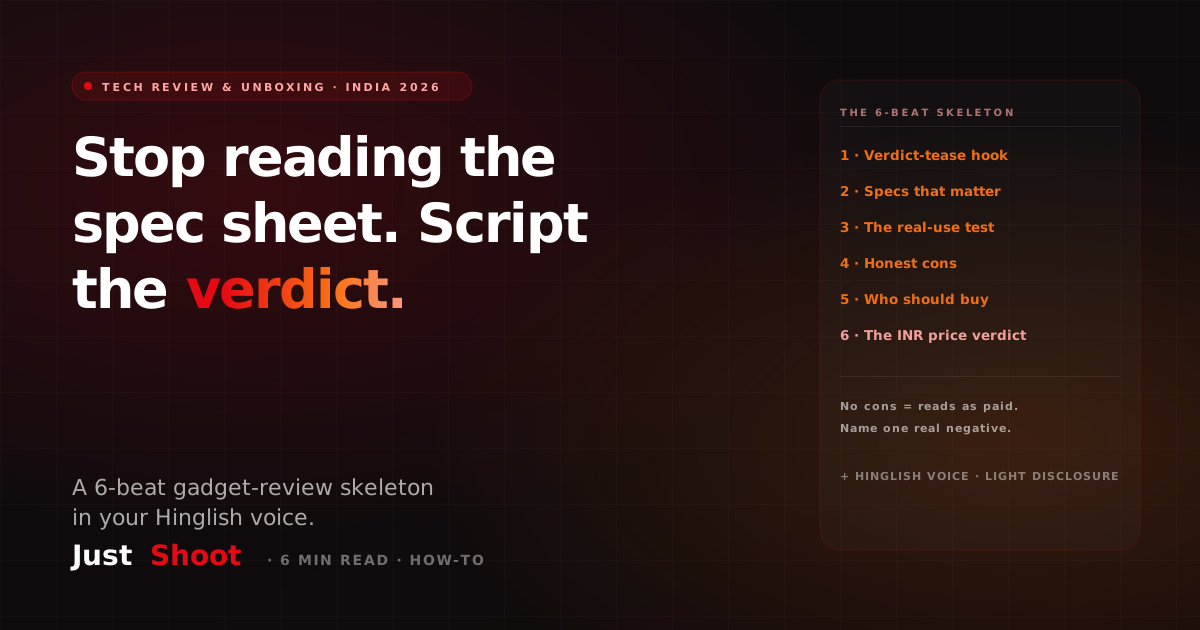
How to Write a Tech Review & Unboxing Script for YouTube (India, 2026)
A repeatable script skeleton for tech review and unboxing videos — verdict-tease hook, specs that matter, the real-use test, honest cons, who-should-buy, and the INR price verdict, in your channel's Hinglish voice.
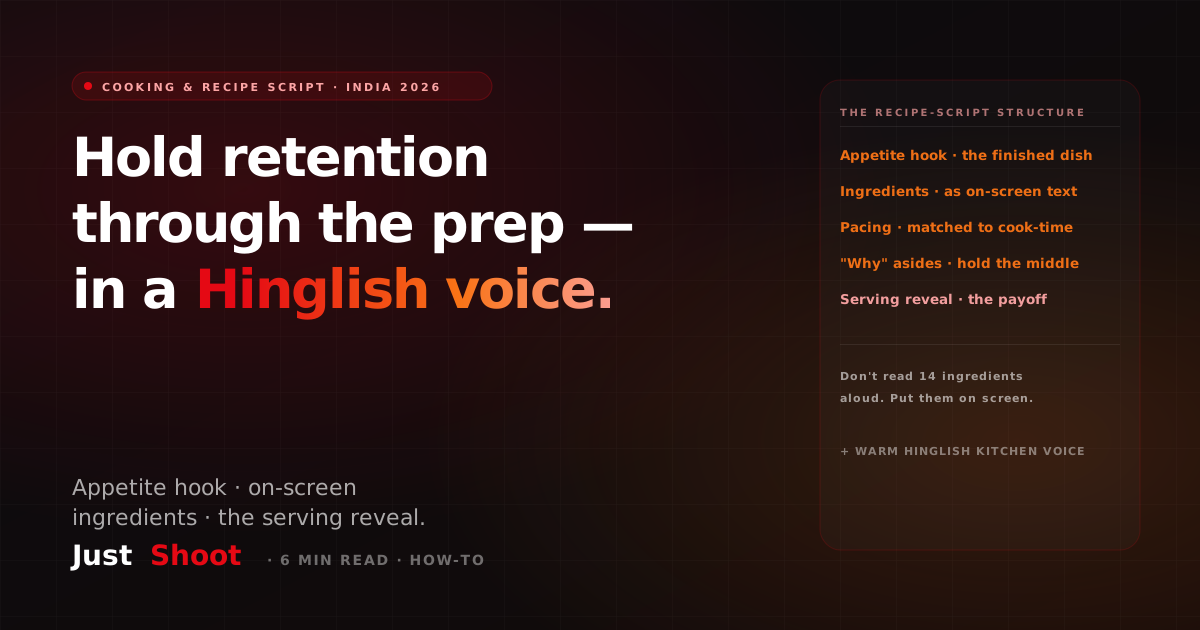
How to Script a Cooking & Recipe YouTube Video (Hinglish, India 2026)
The recipe-video script structure that holds retention through prep — an appetite hook, ingredients as on-screen text, step pacing matched to cook-time, and the serving-reveal payoff, in a warm Hinglish kitchen voice.
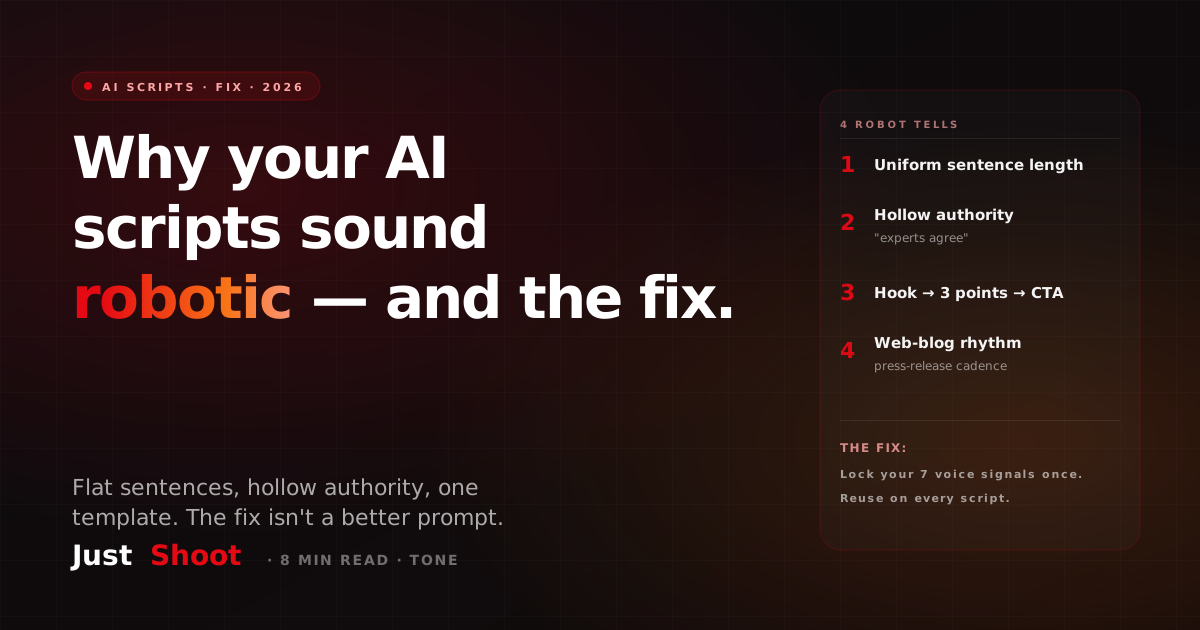
Why Your AI YouTube Scripts Sound Robotic (And How to Fix It)
AI YouTube scripts sound robotic for 3 reasons: uniform sentences, hollow authority, and one rigid template. Here's why — and the real fix for natural, human scripts in 2026.