How to Script a Cooking & Recipe YouTube Video (Hinglish, India 2026)
The recipe-video script structure that holds retention through prep — an appetite hook, ingredients as on-screen text, step pacing matched to cook-time, and the serving-reveal payoff, in a warm Hinglish kitchen voice.
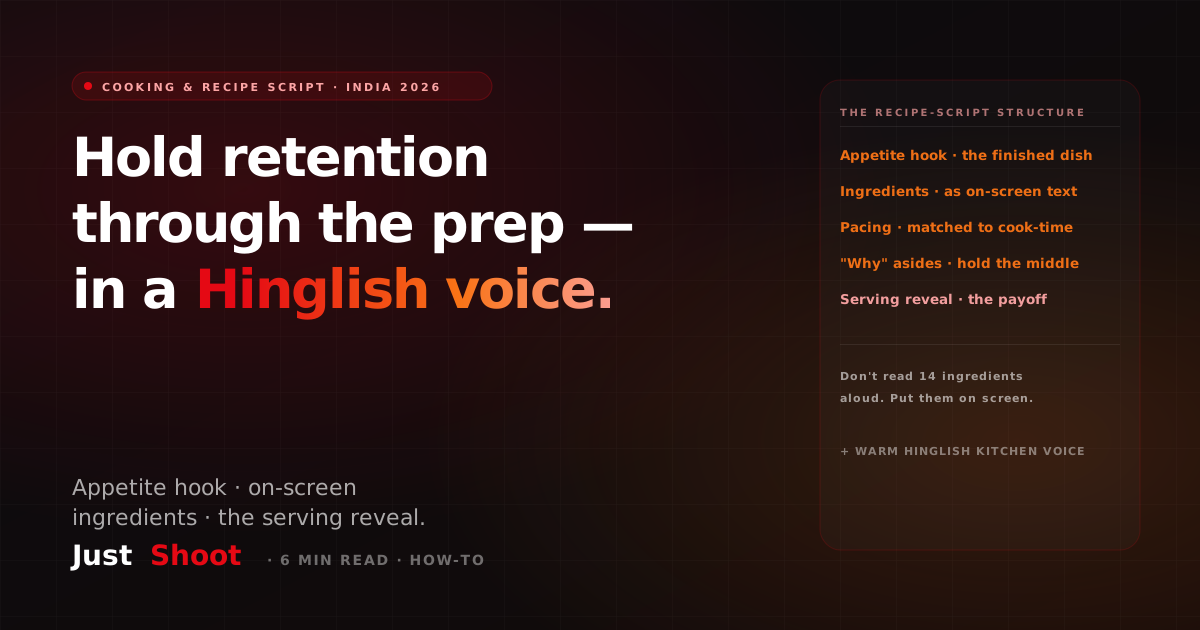
How to Script a Cooking & Recipe YouTube Video (Hinglish, India 2026)
By Ashok Sachdev, Founder of JustShoot · Published 2026-06-27
Short answer: A cooking-video script should open with an appetite hook (the finished dish, not the intro), list ingredients as on-screen text instead of reading them all aloud, pace the narration to match the actual cook-time of each step, and close on a satisfying serving-reveal payoff. The hardest part isn't the recipe — it's holding retention through repetitive prep steps. You solve that with a warm, consistent Hinglish kitchen voice and short "why" asides that keep the viewer engaged between actions, rather than narrating every chop.
I build an AI scripting tool for Indian creators, and food is one of the largest and most competitive categories on Indian YouTube. The recipe is rarely the problem — viewers can find the recipe anywhere. What keeps them on your video is the voice, the pacing, and the feeling that they're cooking alongside a warm host. That's all in the script.
Why a recipe needs a script at all
It feels like you can just cook and talk. But unscripted cooking videos sag in the middle — long silent stretches of chopping, repeated "and now we add" lines, and a flat ending. A light script fixes the three retention killers: a weak open, a saggy prep section, and a payoff that just... stops. You don't script every word; you script the spine and the beats that carry attention.
The recipe-video script structure
The appetite hook. Open on the finished dish, plated and glistening, with one line that makes the mouth water: "Yeh wala butter chicken — restaurant se behtar, aur sirf 30 minutes mein." Lead with the reward. This is the same first-30-seconds hook logic every retention-led video needs — show them what they'll get before you ask for their time.
Ingredients as on-screen text. Don't read a 14-item list aloud — it's dead air and viewers tune out. Put the full list on screen as text (and in the description) and only speak the ingredients that need a note: "ghee use karo, oil nahi — flavour double ho jaata hai." This is a perfect example of mapping a script beat to on-screen text in your shot list: the eye reads the list while the ear gets only what matters.
Step pacing matched to cook-time. Script your narration to the real duration of each step. A 10-minute simmer doesn't need 10 minutes of talking — it needs a "while this cooks, let me tell you the one mistake everyone makes" aside or a clean time-cut. Match words to the action so the video never drags or rushes.
The "why" asides that hold retention. Between mechanical steps, drop short, genuinely useful tips — why you bloom the spices, why room-temperature dahi won't split. These asides are what separate a memorable cooking host from a silent recipe card, and they're where your personality lives.
The serving-reveal payoff. End on the plated dish, a taste reaction, and a warm sign-off. Don't just trail off when the cooking stops. The reveal is your emotional close — and a natural place for the subscribe ask: "agar yeh recipe pasand aayi, toh subscribe karo — agle hafte aur ghar ka khana."
Write it in a warm Hinglish kitchen voice
Food is intimate, and Indian food audiences respond to warmth. Script the lines the way you'd actually talk in your kitchen — Hinglish, relaxed, encouraging — not a stiff English recipe read translated word-for-word. "Thoda sa namak, taste karke adjust karna" feels like a friend cooking with you; a translated equivalent feels like a manual. Keeping that warmth consistent across every recipe is exactly what a persisted Tone Fingerprint protects, so your channel always sounds like the same comforting host. Tuning the right Hindi-English Hinglish blend ratio for your audience is part of getting that voice right.
Common cooking-script mistakes
- Reading the whole ingredient list aloud — kills the open; use on-screen text.
- A weak open — start on the finished dish, not "namaste dosto, aaj hum banayenge."
- Saggy prep section — fill long cook-times with a tip or a clean cut, not silence.
- No personality — without "why" asides, you're a silent recipe card viewers scroll past.
- A flat ending — end on the plated reveal and a taste reaction, not when the stove turns off.
Where JustShoot fits
Inside JustShoot's 9-agent pipeline, the script agent can draft your recipe-video spine in your kitchen's warm Hinglish voice — appetite hook, the spoken-vs-on-screen ingredient split, step pacing, and the serving-reveal close — so you can focus on the cooking, not the writing. Because it uses your locked voice, every recipe sounds like the same host viewers already trust.
JustShoot starts at Trial ₹0 (7 days, 2 scripts, no card), then Starter ₹499/mo (3 scripts), Creator ₹999/mo (4 scripts, most popular), and Studio is custom. Every plan runs the full pipeline.
Want to check your recipe script sounds warm and like you, not a generic AI? Run the draft through the JustShoot Robot Score tool.
FAQ
How do I write a script for a cooking YouTube video? Open with an appetite hook on the finished dish, put the full ingredient list as on-screen text and only speak the ones that need a note, pace your narration to each step's real cook-time, fill long cooks with useful "why" asides, and close on the serving reveal. Script the spine and key lines, not every word.
Should I read out all the ingredients in a recipe video? No — reading a long list aloud is dead air. Put the full list on screen and in the description, and only speak the ingredients that need a tip or substitution note. It keeps the open tight and retention high.
How do I keep viewers watching through the prep steps? Match narration to cook-time and fill long, repetitive stretches with short, genuinely useful tips ("why I bloom the spices") or clean time-cuts. Silence and repeated "and now we add" lines are where viewers drop off.
Is Hinglish good for a cooking channel? For most Indian food audiences, yes — a warm, relaxed Hinglish kitchen voice feels intimate and credible. Write the lines the way you'd actually talk while cooking, rather than translating a stiff English recipe read.
How long should a recipe video be? Long enough to cover the dish clearly and no longer — most recipe videos work well in 5-10 minutes. Match runtime to the recipe's complexity and cut any stretch that drags; padding for length hurts retention.
Ashok Sachdev is the founder of JustShoot, an AI content OS that writes YouTube scripts in your own voice for Indian creators. Connect on LinkedIn.
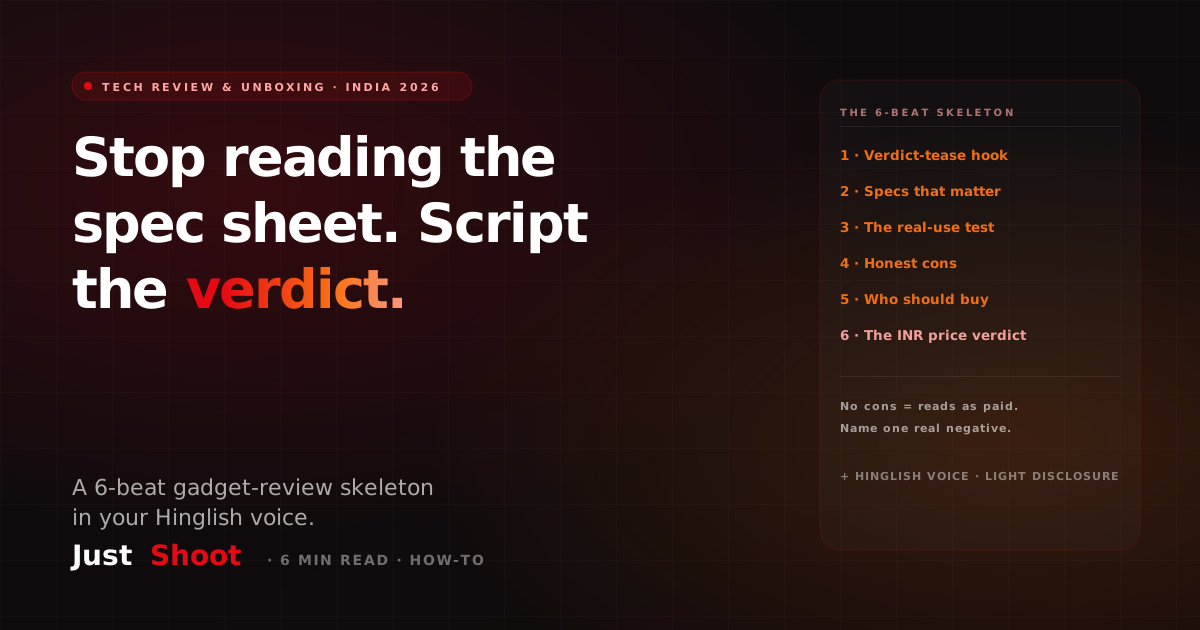
How to Write a Tech Review & Unboxing Script for YouTube (India, 2026)
A repeatable script skeleton for tech review and unboxing videos — verdict-tease hook, specs that matter, the real-use test, honest cons, who-should-buy, and the INR price verdict, in your channel's Hinglish voice.
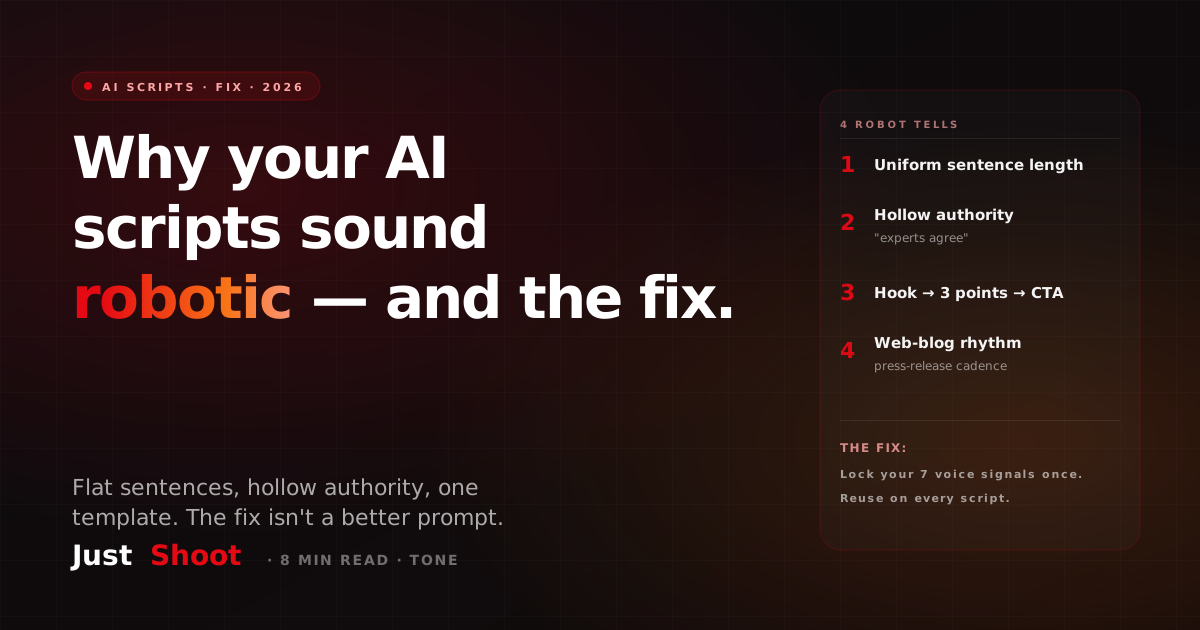
Why Your AI YouTube Scripts Sound Robotic (And How to Fix It)
AI YouTube scripts sound robotic for 3 reasons: uniform sentences, hollow authority, and one rigid template. Here's why — and the real fix for natural, human scripts in 2026.
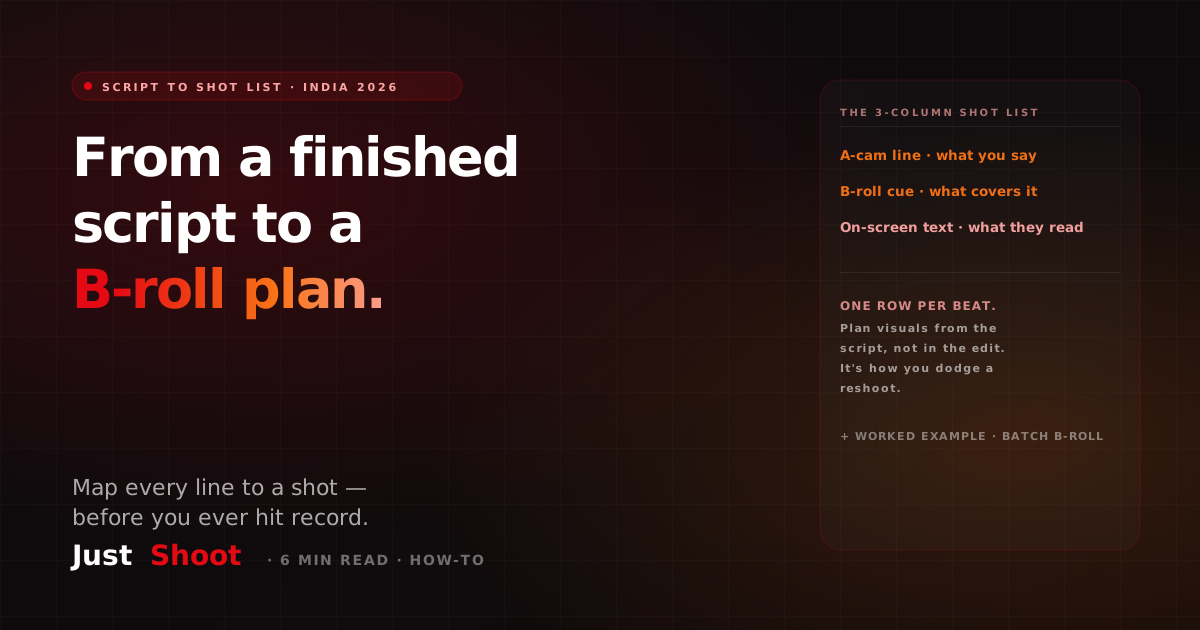
Turn Your YouTube Script Into a Shot List & B-Roll Plan (India, 2026)
The pre-production step nobody scripts: convert a finished YouTube script into a shot list and B-roll plan before you shoot — a worked example, the [line / B-roll / on-screen text] table, and how AI does it.