How to Write a Tech Review & Unboxing Script for YouTube (India, 2026)
A repeatable script skeleton for tech review and unboxing videos — verdict-tease hook, specs that matter, the real-use test, honest cons, who-should-buy, and the INR price verdict, in your channel's Hinglish voice.
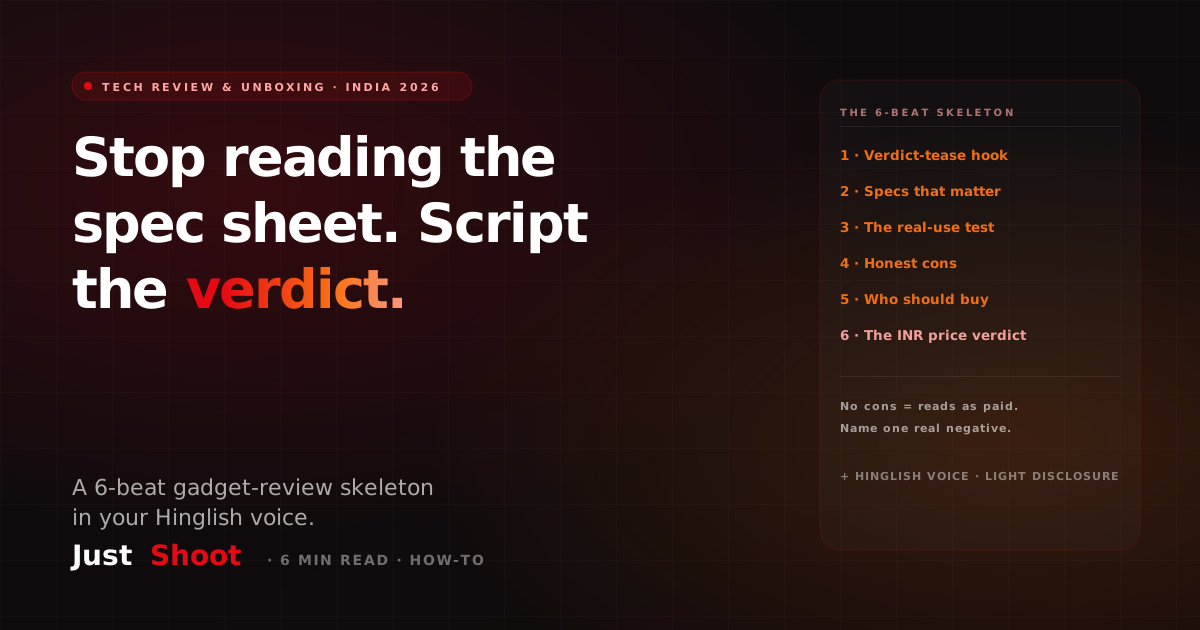
How to Write a Tech Review & Unboxing Script for YouTube (India, 2026)
By Ashok Sachdev, Founder of JustShoot · Published 2026-06-27
Short answer: A tech review or unboxing script should follow six beats — a verdict-tease hook, the specs that actually matter (not the full spec sheet), a real-use test, the honest cons, a clear who-should-buy verdict, and the price in INR. Lead by hinting at your conclusion so viewers stay to find out why, keep the spec-dump short, and earn trust with at least one genuine negative. Write it in your channel's natural Hinglish voice rather than reading off a press release, and add a light affiliate-disclosure line if you use affiliate links.
I build an AI scripting tool for Indian creators, and tech/gadget reviews are one of the biggest verticals on Indian YouTube — and one of the easiest to script badly. The default mistake is reading the spec sheet aloud. Viewers can get specs from the product page; they come to you for a verdict and a vibe. That's what the script has to deliver.
Why a review script needs a skeleton, not a teleprompter dump
The best tech reviewers sound conversational, not scripted — but they almost always work from a structure. The skeleton keeps you from forgetting the cons (the section that builds the most trust) and stops the video sprawling into a 20-minute spec recital nobody finishes. You write the spine and the key lines, then talk naturally around them. That's the same "script the spine, improvise the texture" approach that works for podcast and interview formats too.
The 6-beat review-script skeleton
Beat 1 — Verdict-tease hook. Open by hinting at your conclusion without giving it all away: "After two weeks, this is either the best phone under ₹30,000 or a battery trap — let's find out." That curiosity gap is the same retention engine behind a strong first-30-seconds hook: promise the payoff, then make them watch for it.
Beat 2 — The specs that matter. Not the whole sheet — the three or four specs that change the buying decision for your audience. Frame each as "what this means for you," not a number in isolation.
Beat 3 — The real-use test. What you actually did with it. A day in your pocket, a week of gaming, the camera in real Indian light. This is where you earn credibility press releases can't.
Beat 4 — Honest cons. The single most trust-building section. Name at least one real negative. A review with no downsides reads as paid, and viewers can smell it. Specifics ("25W charging is slow for the price") beat vague hedging.
Beat 5 — Who should buy it. Translate the review into a recommendation for specific people: "If you shoot a lot of video, yes. If you game heavily, look elsewhere." Viewers want permission to decide.
Beat 6 — The INR price verdict. End on value-for-money in rupees — the question every Indian buyer is actually asking. Is it worth its price here, given Indian alternatives and import markups?
Write it in your channel's Hinglish voice
The skeleton is universal; the voice is yours. A gadget channel that talks to its audience in Hinglish should script the lines in Hinglish, not write in English and translate. "Camera ekdum solid hai, but low light mein thoda struggle karta hai" lands warmer and more credibly than a stiff translated equivalent. That native-voice consistency across every review is exactly what a persisted Tone Fingerprint protects — so your review #50 sounds like the same reviewer as review #1.
A light disclosure note (and why it's not optional)
If you use affiliate links or received the unit free, say so — briefly and clearly. A one-line on-screen and spoken disclosure ("This unit was sent by the brand; links below are affiliate") keeps you on the right side of advertising norms and, frankly, builds more trust than hiding it. Keep it light and factual; it's a courtesy line, not a legal essay. (For formal sponsored-content disclosure rules, that's a separate compliance topic worth reading up on before a paid brand deal.)
Common review-script mistakes
- Reading the spec sheet — viewers came for your take, not the product page.
- Burying the verdict — tease it early; don't make people wait 12 minutes to learn if it's good.
- No cons — a flawless review reads as paid and tanks trust.
- Generic praise — "amazing camera" means nothing; "sharp in daylight, noisy after sunset" means everything.
- Skipping the INR value verdict — price-in-context is the whole reason an Indian buyer watches.
Where JustShoot fits
Inside JustShoot's 9-agent pipeline, the script agent can draft a full six-beat review script in your channel's locked voice and language — verdict-tease, the specs that matter, real-use, honest cons, who-should-buy, and the INR verdict — so you walk into the shoot with a tight spine instead of a blank page. From there, turning it into a shot list and B-roll plan (the product shots, the screen recordings, the test footage) is the natural next step.
JustShoot starts at Trial ₹0 (7 days, 2 scripts, no card), then Starter ₹499/mo (3 scripts), Creator ₹999/mo (4 scripts, most popular), and Studio is custom. Every plan runs the full pipeline.
Want to check your review reads like you and not a press release? Run the draft through the JustShoot Robot Score tool.
FAQ
How do I write a tech review script for YouTube? Follow six beats: a verdict-tease hook, the three or four specs that actually matter, a real-use test, honest cons, a who-should-buy recommendation, and the price verdict in INR. Write the spine and key lines, then talk naturally around them rather than reading it word for word.
What should an unboxing video script include? Beyond the open-the-box moment, an unboxing should set up first impressions and tease whether the product lives up to its price — essentially the front half of a review skeleton. Lead with a verdict-tease, note what's in the box that matters, and point toward the full-use verdict.
How long should a tech review video be? Long enough to cover the six beats and no longer. Most strong reviews run 8-15 minutes; padding for length tanks retention. If a spec doesn't change the buying decision, cut it.
Should I mention the cons in a review? Yes — naming at least one real con is the single most trust-building thing you can do. A review with no downsides reads as paid, and Indian viewers are quick to spot it. Be specific, not vague.
Do I need a disclosure if the brand sent me the product? Yes. A brief, clear spoken and on-screen line ("This unit was sent by the brand; links are affiliate") is good practice and builds trust. For formal sponsored brand-deal disclosures, check the specific advertising rules before publishing.
Ashok Sachdev is the founder of JustShoot, an AI content OS that writes YouTube scripts in your own voice for Indian creators. Connect on LinkedIn.
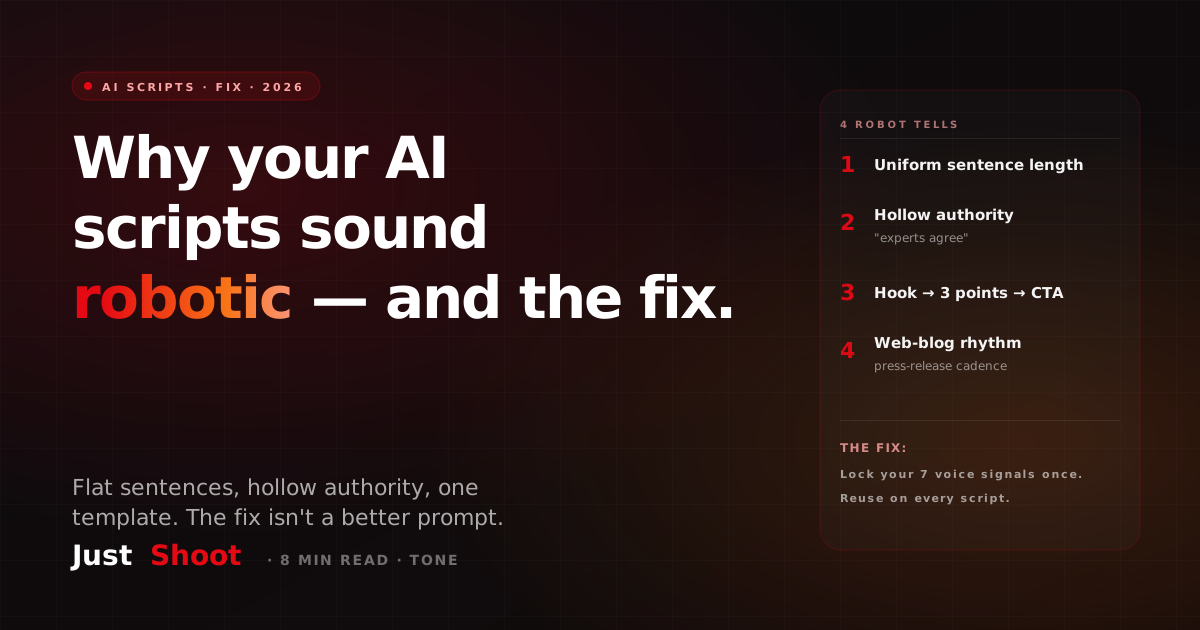
Why Your AI YouTube Scripts Sound Robotic (And How to Fix It)
AI YouTube scripts sound robotic for 3 reasons: uniform sentences, hollow authority, and one rigid template. Here's why — and the real fix for natural, human scripts in 2026.
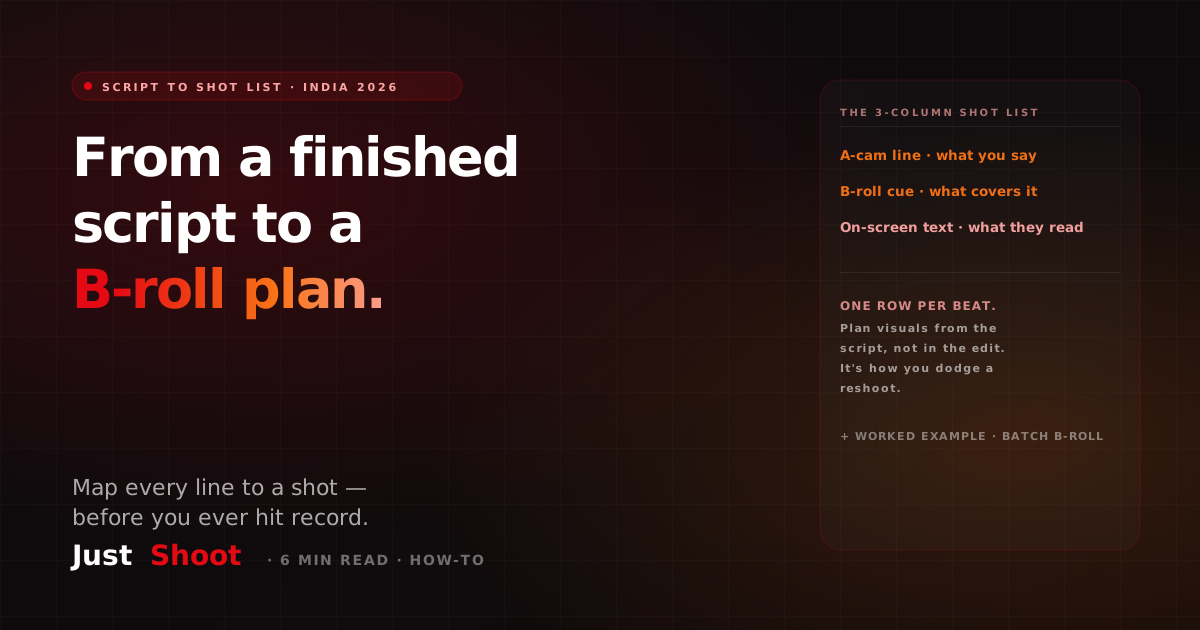
Turn Your YouTube Script Into a Shot List & B-Roll Plan (India, 2026)
The pre-production step nobody scripts: convert a finished YouTube script into a shot list and B-roll plan before you shoot — a worked example, the [line / B-roll / on-screen text] table, and how AI does it.
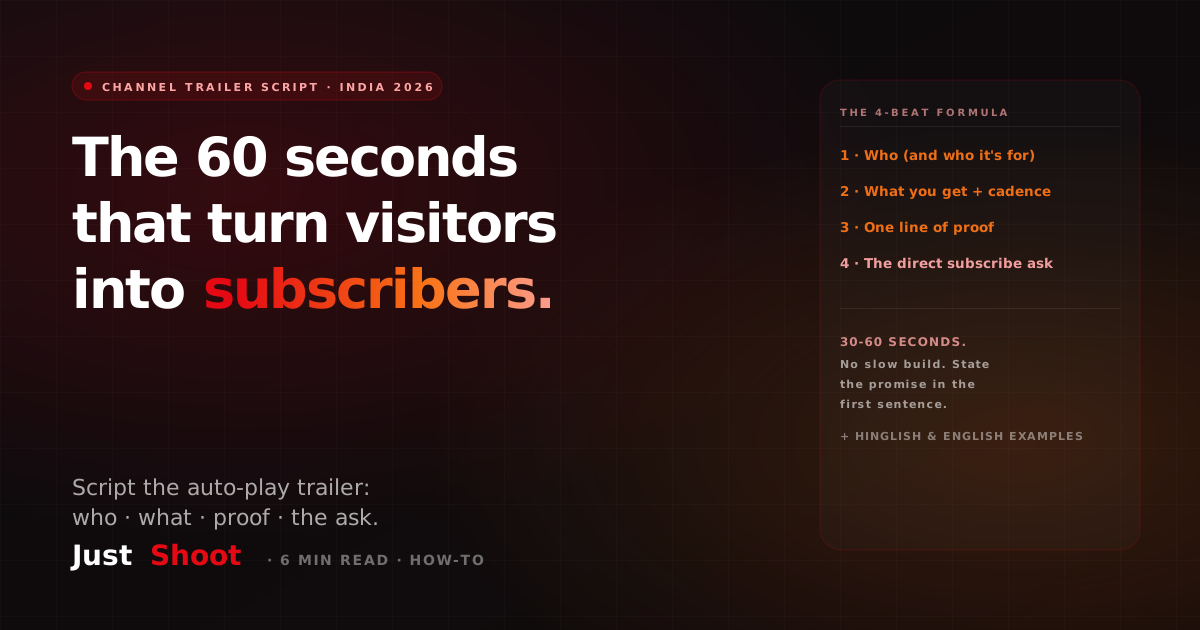
How to Write a YouTube Channel Trailer Script That Converts Visitors (India, 2026)
Write a 30-60 second YouTube channel trailer script that turns first-time visitors into subscribers — the 4-beat formula, why it differs from a video script, and Hinglish + English examples.