Can AI Write YouTube Scripts in Regional Indian Languages? (2026)
Can AI write original YouTube scripts in Tamil, Telugu, Bengali, Marathi — not just dub English? The honest 2026 answer: translation isn't writing. Here's what actually works.
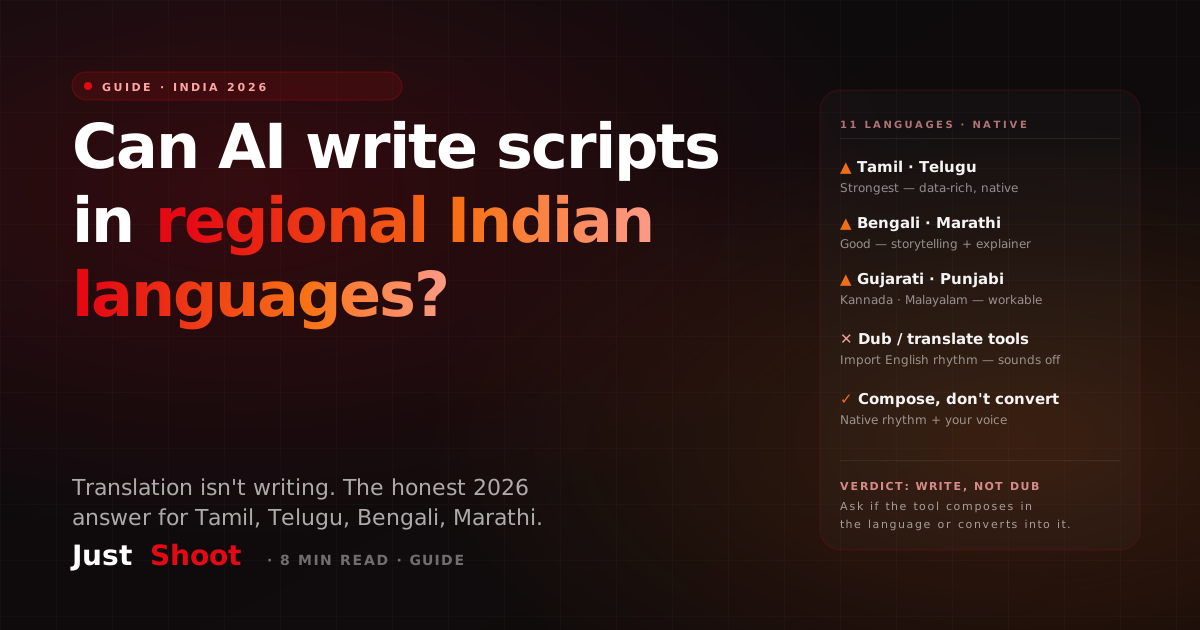
Can AI Write YouTube Scripts in Regional Indian Languages? (2026)
By Ashok Sachdev, Founder of JustShoot · Published 2026-06-02
Most "regional language AI" tools don't write — they translate or dub. That's a different job, and it shows on screen. Below is the honest 2026 picture: where AI genuinely writes original Tamil, Telugu, Bengali and Marathi scripts, where it just back-translates English, and how to tell which one you're actually buying.
Short answer (52 words)
Yes — but most tools cheat. The majority of "regional language" AI features translate or dub an English-first draft, which carries English sentence rhythm into the regional output and sounds off to native ears. True native scripting — composing directly in Tamil/Telugu/Bengali/Marathi with that language's own rhythm — is rarer. JustShoot writes natively in 11 Indian languages.
Why "translation" and "writing" are not the same job
Here is the distinction that decides whether your regional script lands: an AI that translates starts from an English (or Hindi) idea, builds the structure in that language, then converts the words. An AI that writes composes the thought in the target language from the start — so the sentence length, the clause order, the idiom, and the hook all belong to that language.
The difference is audible. Tamil doesn't pause where English pauses. Bengali storytelling front-loads emotion where English front-loads the claim. Marathi explainer rhythm is shorter and more clipped than a translated English sentence forced into Marathi grammar. When you translate, you import the source language's cadence even after you've swapped every word — and a native viewer feels that the script "sounds dubbed" within the first 20 seconds, even when every individual word is correct.
This is the same problem English-trained models hit on Hinglish: the words can be right while the rhythm is wrong. In regional languages it is worse, because there is far less native-language training data to anchor the rhythm, so generic models lean even harder on English structure underneath.
What most "regional language AI" tools actually do
Walk through the category honestly and you find three different products wearing one label:
Dubbing / voice tools (TrueFan, Wavel and similar) position themselves around taking finished video or audio and producing a regional-language voiceover or dub. Useful — but that's post-production. The script already exists; they're converting delivery, not writing the idea. If your English script was generic, the Tamil dub is generic too.
Translation-layer tools (general AI suites like Simplified and the "translate" button inside most writing apps) take your draft and render it in the target language. Fast, cheap, and exactly where the rhythm problem lives — you get grammatically valid Tamil that a native speaker can tell was thought in English.
Native-composition tools are the rare third category — write the script directly in the target language, with that language's rhythm, rather than converting from English. This is what actually reads as written-by-a-creator, and it's the gap JustShoot's Script Writer agent was built to fill.
So when a tool advertises "50+ languages," read it as a translation claim until proven otherwise. The question to ask is not how many languages but does it compose in the language or convert into it.
Where AI is genuinely good at regional scripts now (2026)
It's not all skepticism — AI has gotten real here. Honest scoreboard:
- Tamil & Telugu — strong. Both have enough digital text and a large creator base, so native-composition quality is high for explainer, news and education niches. Idiom and formal/casual register are handled well.
- Bengali — good for long-form storytelling and explainer; the model captures the front-loaded-emotion rhythm well. Watch colloquial Kolkata vs. formal register — specify which you want.
- Marathi — good for explainer and education; the clipped sentence rhythm comes through when the tool composes natively rather than translating from Hindi.
- Gujarati, Punjabi, Kannada, Malayalam — workable and improving; native composition beats translation noticeably here because generic-model data is thinner, so the translation rhythm-leak is more obvious.
The pattern: the more a tool composes rather than converts, the smaller the quality gap between Tamil (data-rich) and Malayalam (data-thinner). Tools that translate show a big quality cliff between the two; tools that write natively don't.
The honest limitations (don't oversell this to yourself)
Three things AI still won't do well in regional languages in 2026, so plan around them:
- Hyper-local slang and very recent memes — a model's training lags the street. Drop in the current phrase yourself; let AI handle structure and the 95% that's stable.
- Code-mixed regional + English (Tanglish, Manglish, etc.) — quality varies by tool. If your channel mixes, test on your actual blend before committing, the same way you'd test a Hinglish ratio.
- Your specific voice — a script that's correct Tamil still isn't your Tamil unless the tool locks your hook style, identity phrases and rhythm. Correct-language ≠ in-your-voice. That's a tone problem, not a language problem.
How to get a native-sounding regional script (the workflow)
Four steps that work regardless of which tool you use:
- Brief in the target language, not English. If your tool lets you describe the video in Tamil, do it — you cut the translation hop at the source. Composing from a Tamil brief beats translating from an English one.
- Specify register up front. "Formal Telugu for a finance explainer" vs. "casual conversational Telugu for a vlog" produce very different scripts. The model won't guess your channel's register.
- Lock your voice, not just your language. Feed the tool 2–5 of your own reference videos so it learns your hooks, pacing and signature phrases in that language — not a generic native speaker's. JustShoot's Tone Fingerprint does this per channel and reuses it on every script.
- Read it aloud before you shoot. The fastest native-quality test is your own ear. If a sentence makes you pause to "translate it back," it was written in English underneath — flag it and regenerate that beat.
Where JustShoot fits
JustShoot writes natively across 11 Indian languages — English, Hinglish, Hindi, Gujarati, Marathi, Tamil, Telugu, Bengali, Punjabi, Kannada, Malayalam — using the same 9-agent pipeline (research → fact-check → script → storyboard → thumbnail → SEO → shorts). The script is composed in your chosen language with that language's rhythm, then voice-locked to your channel via the Tone Fingerprint — not translated from an English draft. For finance creators it also runs the SEBI compliance agent before the script ships. Honest comparison vs. a translation-first competitor is in our JustShoot vs Big Creator breakdown.
Starter ₹499/month gives 500 credits (~5 full pipelines); Pro ₹699 (10 videos), Studio ₹899 (20 videos, 3 channels), annual −20%, credits roll over, 7-day free trial, no card. Test the rhythm gap on your own language first with the free Hinglish/regional ratio tool — paste a video, see the blend in 60 seconds, no signup.
FAQ
Q: Can AI write a YouTube script in Tamil from scratch, not just translate English? Yes — but only tools that compose in the language do this. Many "Tamil support" features translate an English draft, which imports English rhythm and sounds dubbed. Native-composition tools build the script in Tamil from the brief. Ask the vendor which one it is.
Q: Which regional Indian languages does AI handle best in 2026? Tamil and Telugu are strongest (large digital corpus + creator base), Bengali and Marathi are good for explainer/storytelling, and Gujarati/Punjabi/Kannada/Malayalam are workable and improving. Native-composition tools narrow the gap between data-rich and data-thin languages.
Q: Is AI dubbing the same as AI script writing in a regional language? No. Dubbing (TrueFan, Wavel and similar) converts a finished video's audio into another language — it's post-production on an existing script. Script writing creates the original idea and words in the target language. A great dub of a generic script is still generic.
Q: Why does my translated Tamil/Telugu script sound off even when the words are correct? Because translation carries the source language's cadence. English sentence length and clause order get imported even after every word is swapped, so native viewers feel it's "dubbed." The fix is composing in the target language, not converting into it.
Q: Does JustShoot really write natively in regional languages or translate? It composes natively across 11 Indian languages and then voice-locks the output to your channel via the Tone Fingerprint, rather than translating an English draft. You can test the rhythm on your own language free before signing up.
Try native-language scripting free for 7 days
No card. Sign in, paste your channel URL, pick 2–5 reference videos in your language, and ship a tone-matched regional script in 30 minutes. Start free. Comparing tools first? Run the free ratio tool on your last video — 60 seconds, no signup.
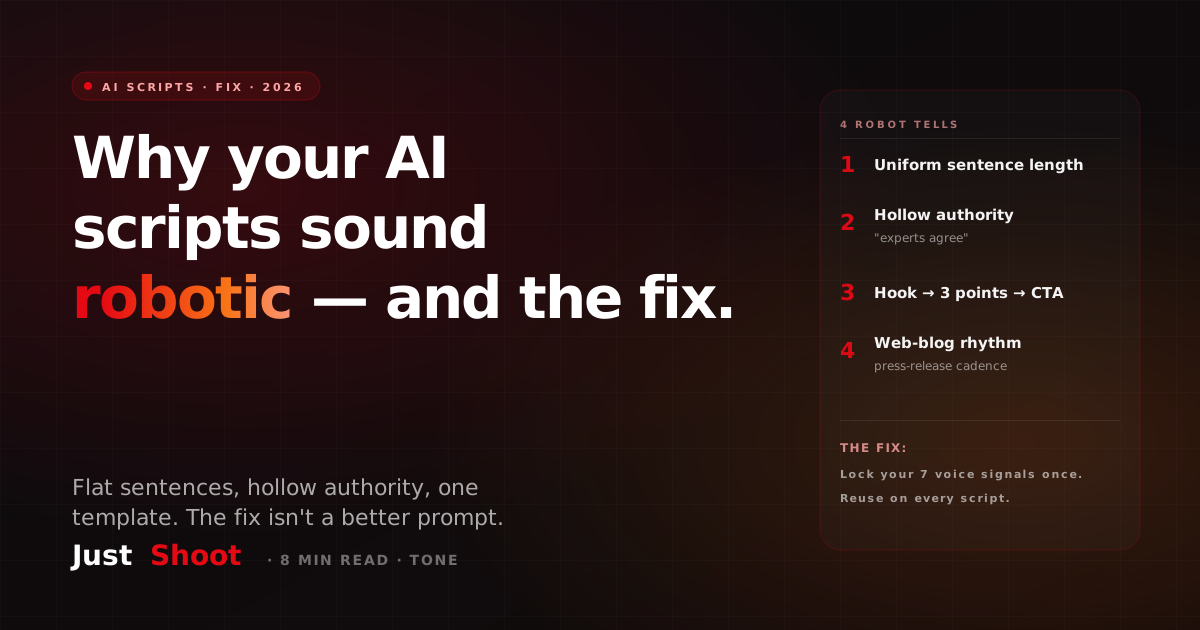
Why Your AI YouTube Scripts Sound Robotic (And How to Fix It)
AI YouTube scripts sound robotic for 3 reasons: uniform sentences, hollow authority, and one rigid template. Here's why — and the real fix for natural, human scripts in 2026.
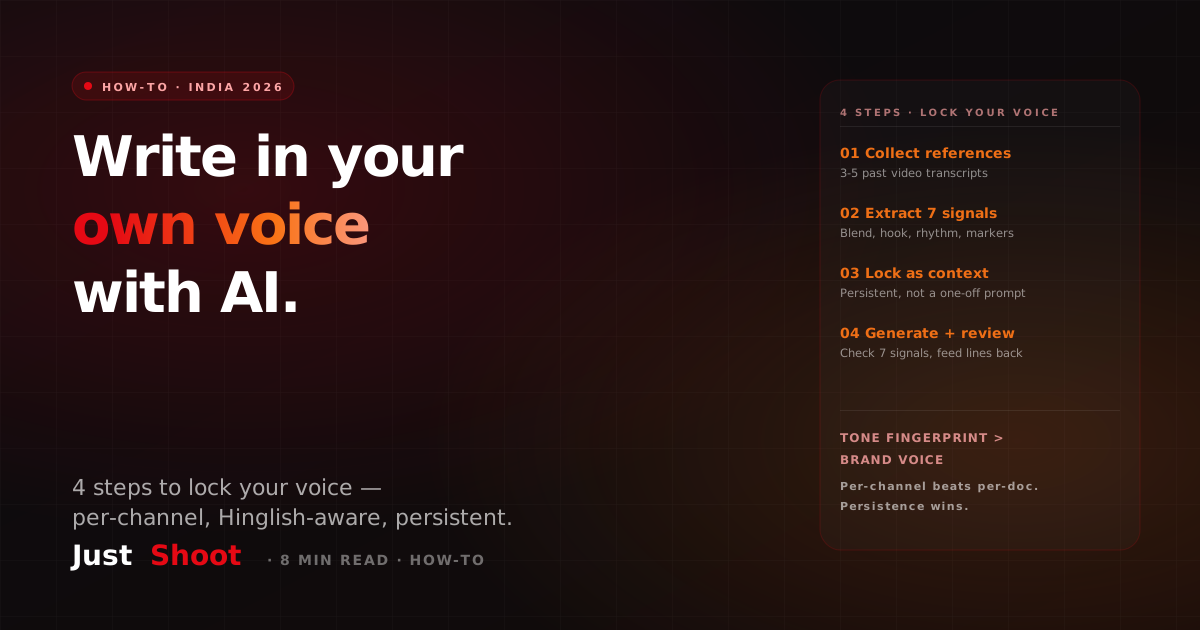
How to Write a YouTube Script in Your Own Voice with AI (2026)
Want AI scripts that sound like you, not a chatbot? Here are the 4 steps to lock your voice — and why a per-channel Tone Fingerprint beats per-document brand-voice tools for India.