How to Write a YouTube Hook: The First 30 Seconds (India, 2026)
Write a YouTube hook that holds viewers past the first 30 seconds — 6 hook archetypes, the restate-the-title rule, and curiosity-gap calibration, with Hinglish examples.
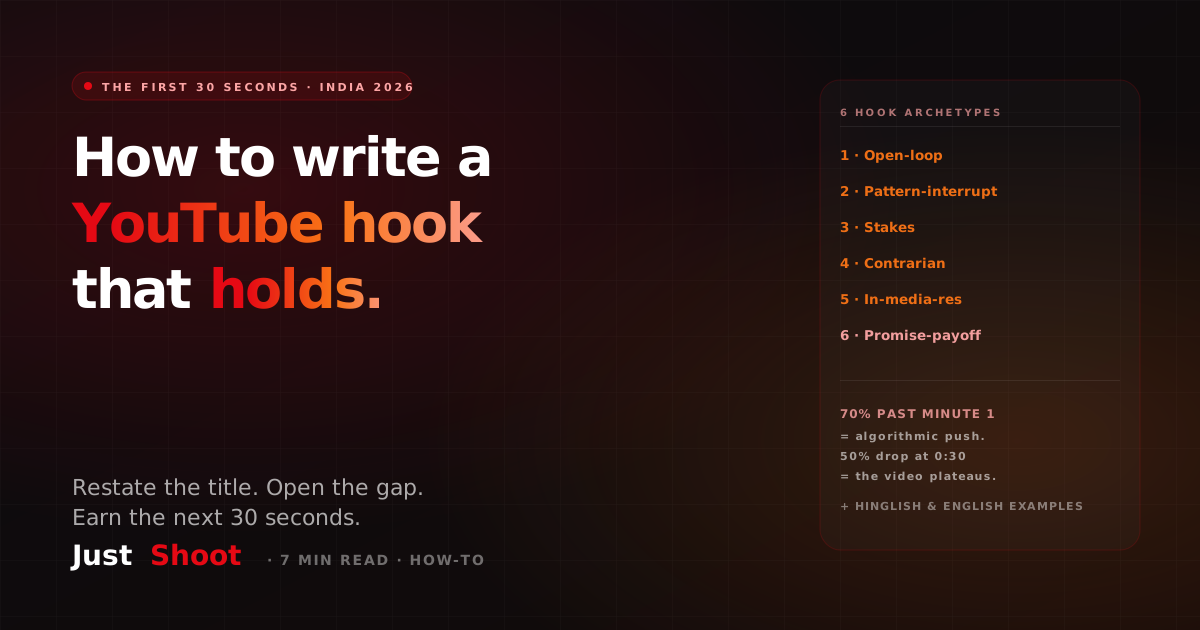
How to Write a YouTube Hook: The First 30 Seconds (India, 2026)
By Ashok Sachdev, Founder of JustShoot · Published 2026-06-25
Short answer: To write a YouTube hook, do three things in the first 30 seconds — restate the title's promise in your opening sentence so the viewer knows they are in the right place, open a curiosity gap that the video will close, and prove the payoff is worth the wait. Pick one of six hook archetypes (open-loop, pattern-interrupt, stakes, contrarian, in-media-res, or promise-payoff), write the line out word for word, then read it aloud. If it sounds like a throat-clearing intro ("Hi guys, welcome back to my channel"), it is not a hook — delete it and start on the most interesting sentence you have.
I build an AI scripting tool for Indian creators, and across thousands of scripts the single most reliable predictor of a video's performance is not the thumbnail or the topic — it is whether the written hook earns the next 30 seconds. This is how to engineer that hook on the page, before you ever hit record.
Why the first 30 seconds decide the whole video
YouTube's ranking system leans heavily on early retention. The percentage of viewers still watching at the 30-second and one-minute marks is the strongest signal the algorithm reads about whether your video is worth recommending. A video that holds 70% of viewers past the first minute gets pushed; one that leaks to 50% in the first 30 seconds plateaus, no matter how good the rest is — because the rest never gets seen.
This is a written problem before it is a performance problem. Most creators improvise the open on camera, and improvised opens ramble. The fix is to script the hook deliberately — the same discipline we cover in the full YouTube script writing process, where the hook is written before the body, not after.
The two rules that govern every hook
Before the archetypes, two rules apply to all of them.
Rule 1 — Restate the title in your first sentence. A viewer arrives from a thumbnail and title that made a promise. If your first spoken line does not confirm that promise, they feel they landed in the wrong place and bounce. Restating the title is not repeating it word for word — it is signalling "yes, this is the video about that." Example: title is "The one SIP mistake costing you 1% a year." Weak open: "Hey everyone, hope you're doing well." Strong open: "There's one mistake almost every SIP investor makes, and it quietly eats about 1% of your returns every single year."
Rule 2 — Calibrate the curiosity gap. A hook works by opening a question the viewer needs answered. Open the gap too little and there is no pull; open it too far into clickbait you cannot pay off and you train the audience to distrust you. The calibration test: can you actually deliver on the curiosity you just created, in this video? If yes, widen the gap as far as the truth allows. If no, narrow it. Curiosity without delivery is the fastest way to kill a channel's trust.
The 6 hook archetypes (with Hinglish + English examples)
Pick one per video. Mixing two is fine; stacking four is noise.
1. Open-loop
Pose a question or tease an outcome you only resolve later in the video.
- English: "By the end of this video you'll know exactly why your last three uploads flopped — and it's not the topic."
- Hinglish: "Is video ke end tak tumhe pata chal jayega ki tumhari pichli videos kyun nahi chali — aur reason topic nahi hai."
2. Pattern-interrupt
Open with something unexpected that breaks the viewer's autopilot scroll.
- English: "Stop editing your videos. Seriously — for the next 30 days, don't."
- Hinglish: "Editing band kar do. Haan, agle 30 din ke liye bilkul mat karo."
3. Stakes
Name what the viewer stands to lose or gain right now.
- English: "If you're filming in this one setting, YouTube is throttling your video and you can't see it."
- Hinglish: "Agar tum is ek setting mein shoot kar rahe ho, to YouTube tumhari reach chup-chaap kaat raha hai."
4. Contrarian
State the opposite of common advice — then justify it.
- English: "Everyone says post daily. Daily posting is exactly what killed my channel's growth."
- Hinglish: "Sab kehte hain roz post karo. Roz post karna hi meri channel growth ka katil tha."
5. In-media-res
Drop the viewer into the middle of the action or story, then rewind.
- English: "Three lakh views in 18 hours — and I almost didn't upload this one. Here's what happened."
- Hinglish: "18 ghante mein teen lakh views — aur maine yeh video upload hi nahi karne wala tha."
6. Promise-payoff
State a clear, specific outcome the viewer will have by the end.
- English: "In the next eight minutes you'll have a repeatable hook formula you can use on every video."
- Hinglish: "Agle aath minute mein tumhare paas ek hook formula hoga jo har video pe kaam karega."
Notice each example restates the title's promise and opens a gap. That double duty is the whole job. For a deeper menu of niche-specific opener patterns reverse-engineered from Indian channels, see our 9 YouTube hook formulas for Hindi creators — those are the menu; this post is the engineering of why they hold.
How to actually write it: a 4-step micro-process
- Write the body and CTA first, then come back to the hook. Counterintuitive, but you cannot promise a payoff you have not written yet. Once the video exists, you know what its single most interesting moment is.
- Draft three hook variants using three different archetypes. Do not marry the first one.
- Run the "first sentence" test. Cut every word before the most interesting one. If your hook starts with "So basically what I wanted to talk about today is…", the real hook is buried four clauses in. Start there.
- Read all three aloud and pick the one that makes you want to keep going. If the writer is bored at second 10, the viewer left at second 4.
Keeping that hook sounding like you across every upload is the hard part — video #1 sounds sharp, video #40 sounds like a template. That voice-drift problem is exactly what a persisted tone model solves, which we cover in how to write a YouTube script in your own voice with AI.
Where JustShoot fits
Inside JustShoot's 9-agent pipeline, the script agent generates three hook variants for every script — in your locked channel voice and your Hinglish-to-English blend ratio — so you choose rather than stare at a blank page. The hooks restate your title automatically because the agent has the title and the angle in the same context. You stay the editor; the blank page disappears.
JustShoot starts at Trial ₹0 (7 days, 2 scripts, no card), then Starter ₹499/mo (3 scripts), Creator ₹999/mo (4 scripts, most popular), and Studio is custom. Every plan runs the full pipeline — only the number of scripts changes.
Want to know if your current openers sound like you or like generic AI? Run your channel through the JustShoot Robot Score tool — it scores how human and on-voice your script reads in about a minute.
FAQ
How long should a YouTube hook be? Aim for 5 to 15 seconds of spoken hook, fully resolved into the video's promise within the first 30 seconds. The first sentence carries the most weight — if it does not land, the rest of the hook rarely recovers.
Should I restate my video title in the hook? Yes. The viewer clicked on a promise; your first sentence should confirm they are in the right place. Restating it in fresh words (not verbatim) signals relevance and cuts early bounce.
What is a curiosity gap and how wide should it be? A curiosity gap is the open question your hook creates that the video then answers. Open it as wide as you can honestly pay off in that video. A gap you cannot close becomes clickbait and erodes channel trust.
Do hooks work the same in Hindi and Hinglish? The archetypes are universal, but the phrasing must match how your audience actually speaks. A Hinglish "agar tumne yeh kiya to…" stakes hook can land harder for an Indian audience than a stiff English equivalent — write it in your real voice.
Can AI write my YouTube hook? AI can draft hook variants quickly, but a one-off prompt forgets your channel's voice between videos. A tool with a persisted tone model writes hooks that sound consistently like you across every upload, which is what builds a returning audience.
Ashok Sachdev is the founder of JustShoot, an AI content OS that writes YouTube scripts in your own voice for Indian creators. Connect on LinkedIn.
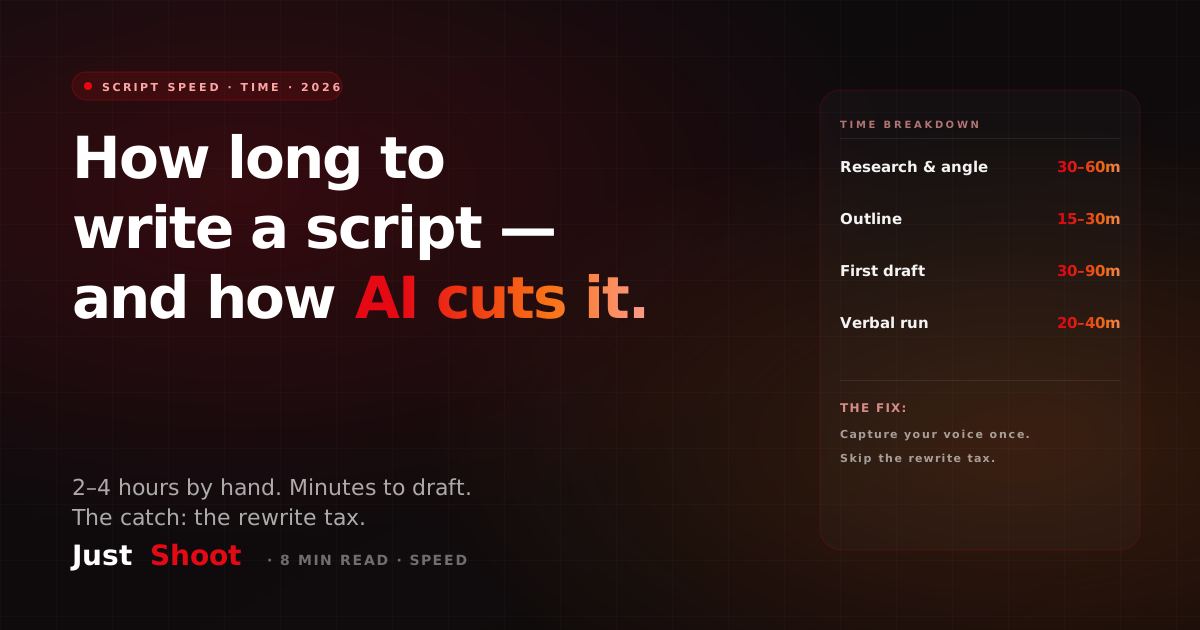
How Long Does It Take to Write a YouTube Script? (And How AI Cuts It)
Writing a YouTube script takes 2–4 hours by hand for a 10-minute video. Here's the real time breakdown — and exactly how AI cuts it to minutes without sounding robotic.
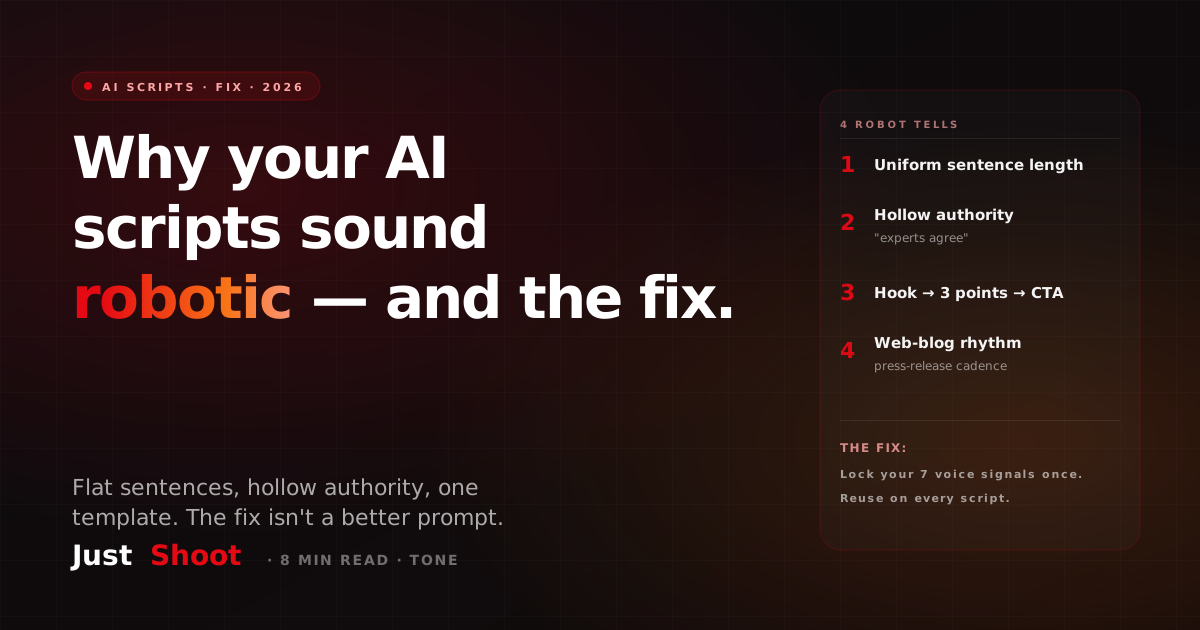
Why Your AI YouTube Scripts Sound Robotic (And How to Fix It)
AI YouTube scripts sound robotic for 3 reasons: uniform sentences, hollow authority, and one rigid template. Here's why — and the real fix for natural, human scripts in 2026.
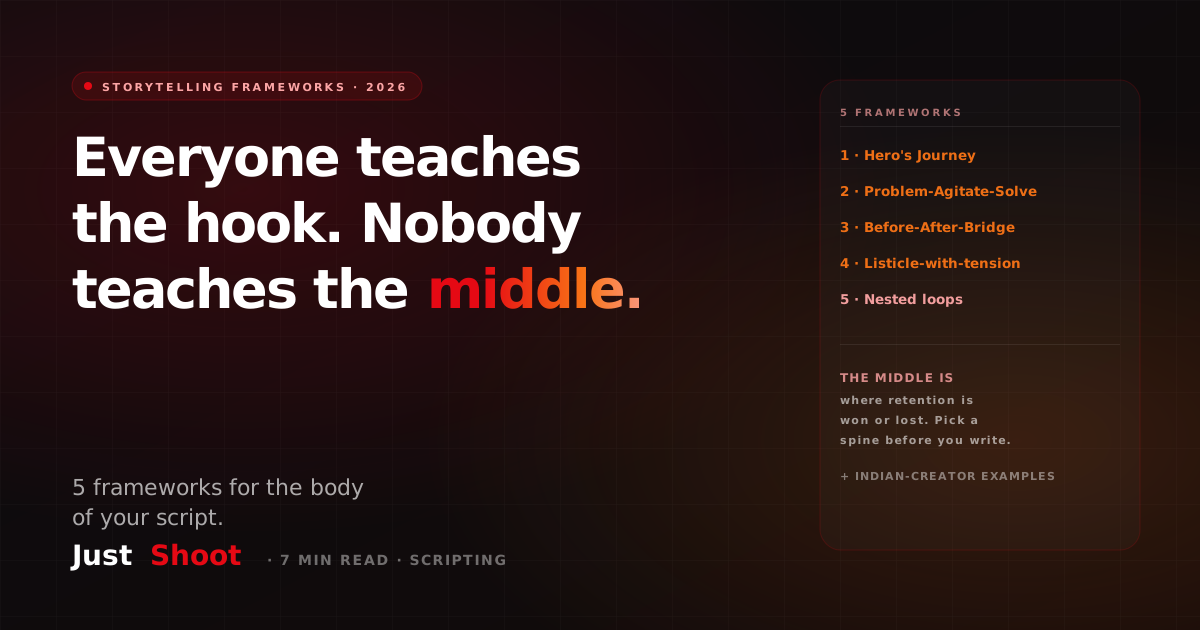
5 YouTube Storytelling Frameworks for Scripts (India, 2026)
Everyone teaches the hook; nobody teaches the middle. 5 proven storytelling frameworks for the body of your YouTube script, with Indian-creator examples and which niche each suits.