Repurpose One YouTube Script Into a Blog, LinkedIn Post & X Thread (India, 2026)
Turn one YouTube script into a blog post, a LinkedIn carousel and an X thread — the restructure method, why each platform needs its own open, and the SEO compounding effect, with examples.
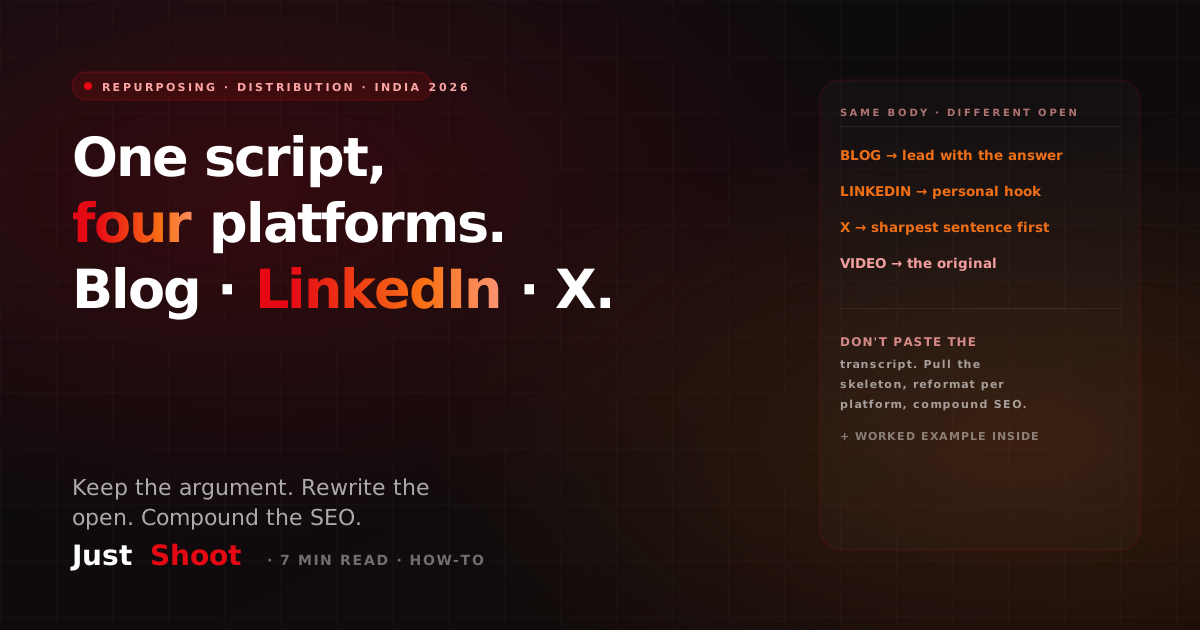
Repurpose One YouTube Script Into a Blog, LinkedIn Post & X Thread (India, 2026)
By Ashok Sachdev, Founder of JustShoot · Published 2026-06-28
Short answer: To repurpose one YouTube script into a blog post, a LinkedIn post and an X thread, keep the core argument and examples but rewrite the open for each platform — a blog leads with a search-intent answer, LinkedIn leads with a personal hook or a contrarian line, and X leads with the single sharpest sentence. Do not paste the spoken script verbatim; spoken language reads loose on the page. Restructure the script's body into scannable sections for the blog, a 5-8 slide insight sequence for LinkedIn, and 6-10 punchy tweets for the thread. One shoot becomes four assets, and the blog compounds in search while social drives the discovery.
I build an AI scripting tool for Indian creators, and the single biggest waste I see is a strong video that lives on exactly one platform. You already did the hard part — the thinking, the structure, the examples — when you wrote the script. Repurposing is how you get paid for that thinking three or four more times.
Why one script can become four assets
A good YouTube script is, underneath, a structured argument: a hook, a sequence of points, examples, and a conclusion. That structure is platform-agnostic. What changes between YouTube, a blog, LinkedIn and X is not the substance — it is the open, the format, and the length. Once you separate "what I'm saying" from "how this platform wants to hear it," repurposing stops being rewriting and becomes reformatting.
This is the same distribution thinking behind turning a long video into clips, just on a different axis. Instead of repurposing into Shorts and Reels (video → video), you are going video → text platforms, which each reward different things.
The transcript-to-article restructure
A YouTube transcript is not a blog post. Spoken delivery uses filler, repetition for emphasis, and loose connective tissue ("so anyway," "like I said") that a reader's eye snags on. To convert it:
- Pull the script's skeleton, not its words. Take your hook, your main points, and your examples — drop the verbal padding.
- Add a search-first open. A blog reader arrives from Google with a question. Answer it in the first two sentences (the answer-first lede), the way the step-by-step script process front-loads the method.
- Turn talking points into H2 sections with scannable subheads, so readers and AI engines can both lift passages.
- Layer in on-page SEO — descriptive title, meta description, and natural keyword placement, the same discipline as writing descriptions and tags for SEO.
The result is a post that ranks for the query your video answers — and keeps earning traffic long after the video's first-week push fades.
Why each platform needs a different open
The body can stay roughly the same. The open cannot. This is the rule most creators miss:
- Blog: lead with the answer. The reader Googled a question; give it to them immediately, then expand.
- LinkedIn: lead with a personal stake or a contrarian claim. The first two lines appear before "…see more," so they must earn the click. "I spent ₹0 on ads and got 40 leads from one video script — here's how" beats "In this post I will discuss repurposing."
- X (Twitter): lead with the single sharpest sentence in the whole piece. A thread lives or dies on tweet one. Pull your most counterintuitive line and open with it.
Same idea, three different doorways. Matching the open to the platform is exactly the discipline behind a strong first-30-seconds video hook — just repeated per channel.
A worked example
Say your video is "How Indian creators waste 4 hours per script." One script, three text assets:
- Blog open: "Writing a single YouTube script by hand takes most Indian creators 2-4 hours. Here's where that time actually goes — and how to cut it to minutes."
- LinkedIn open: "I watched a creator spend an entire Sunday on one script. Then re-record it twice because it didn't sound like him. The problem wasn't effort. It was process."
- X open: "Your YouTube script isn't slow because you're a bad writer. It's slow because you rewrite your own voice from scratch every single time. 🧵"
The middle of all three carries the same points and examples. Only the doorway changed.
The SEO compounding effect
Social posts spike and decay within days. A blog post is an asset: it accrues backlinks, earns its position in search over weeks, and gets cited by AI engines. When you repurpose a video into a blog, you are converting a perishable spike into a compounding asset — and the social variants (LinkedIn, X) drive early traffic and signals to that asset. The video gets discovery, the blog gets durability, and the social posts get reach. That is the whole point of treating distribution as a system, not an afterthought.
Where JustShoot fits
Inside JustShoot's 9-agent pipeline, the distribution agent (#09) takes your finished script and generates platform-native variants — a blog draft, a LinkedIn post, and a thread outline — each with its own open, in your channel voice. You are not pasting a transcript into four tabs and reformatting by hand; the package comes out ready to polish.
JustShoot starts at Trial ₹0 (7 days, 2 scripts, no card), then Starter ₹499/mo (3 scripts), Creator ₹999/mo (4 scripts, most popular), and Studio is custom. Every plan runs the full pipeline.
Want to check that your repurposed copy still sounds like you and not a generic template? Run a script through the JustShoot Robot Score tool.
FAQ
Can I just paste my YouTube transcript as a blog post? No. Spoken language reads loose on the page — filler words, repetition, and weak transitions stand out. Pull the script's skeleton (hook, points, examples), add a search-first opening line, and restructure into scannable H2 sections.
Why does each platform need a different opening line? Because each platform surfaces a different first impression. A blog reader wants an answer, a LinkedIn reader judges by the two lines above "…see more," and an X reader decides on tweet one. The body can stay the same; the open must change.
How does repurposing a video into a blog help SEO? Social posts spike and fade, but a blog post compounds — it earns search position and AI citations over weeks. Turning a video into a blog converts a perishable spike into a durable asset, while the social variants drive early traffic to it.
How many assets can one script realistically become? Comfortably four: the YouTube video, a blog post, a LinkedIn post (or carousel), and an X thread — plus Shorts if you also clip the footage. One shoot, multiple platforms, no extra thinking.
Can AI repurpose my script for me? Yes — an AI distribution tool can generate platform-native variants from one script, each with its own open. It should write them in your channel voice so the LinkedIn post and thread don't read like generic reposts.
Ashok Sachdev is the founder of JustShoot, an AI content OS that writes YouTube scripts in your own voice for Indian creators. Connect on LinkedIn.
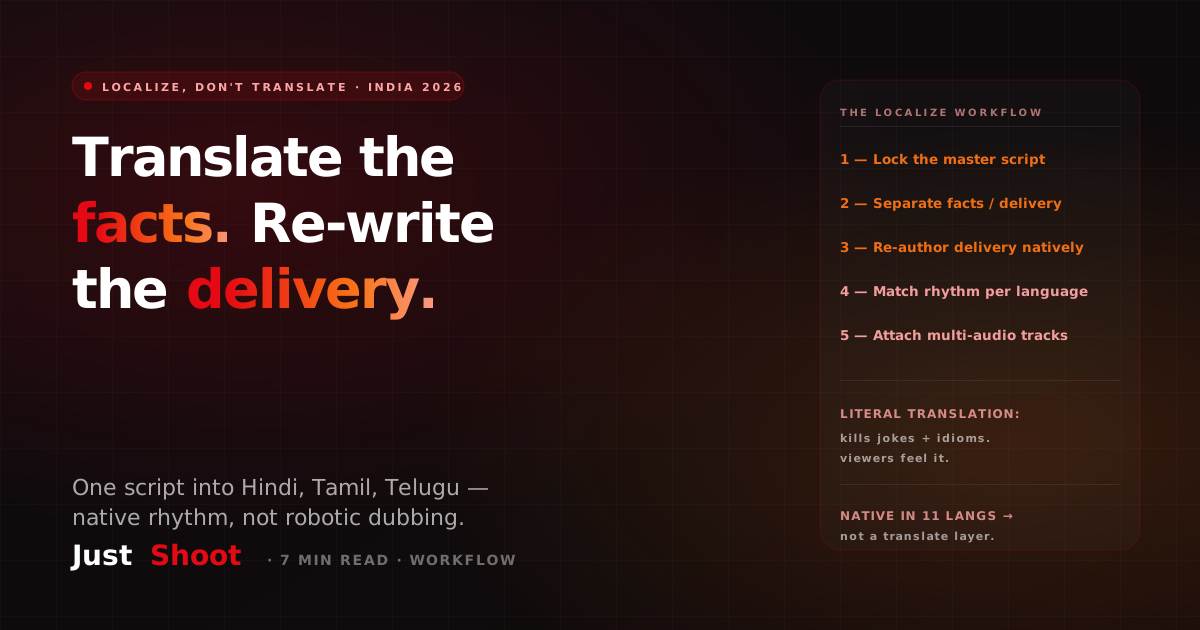
How to Localize a YouTube Script Into Regional Indian Languages (Not Just Translate It, 2026)
Literal translation kills your jokes, idioms, and rhythm. Here's the localize-don't-translate workflow for taking one YouTube script into Hindi, Tamil, and more — plus multi-audio tracks.
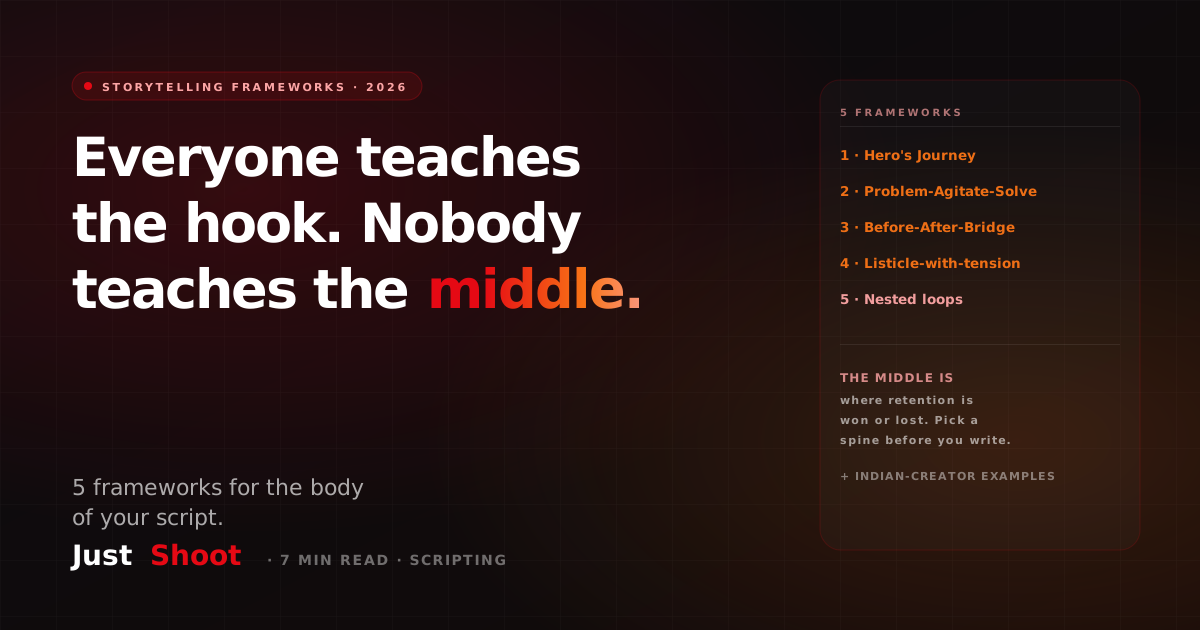
5 YouTube Storytelling Frameworks for Scripts (India, 2026)
Everyone teaches the hook; nobody teaches the middle. 5 proven storytelling frameworks for the body of your YouTube script, with Indian-creator examples and which niche each suits.
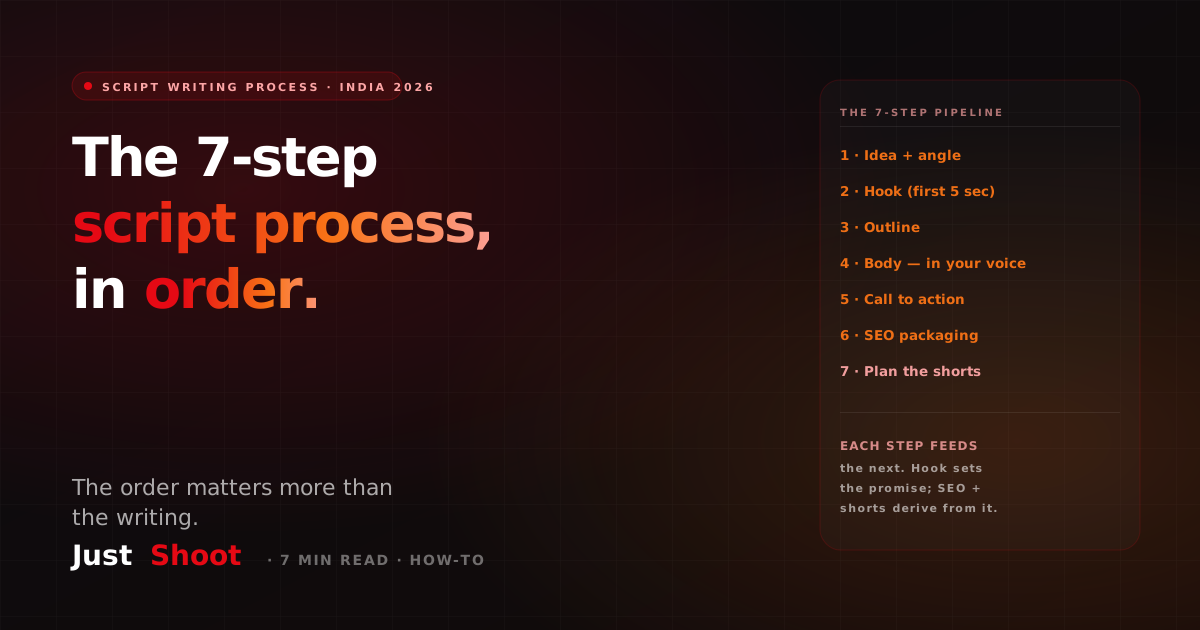
YouTube Script Writing Process: A Step-by-Step Guide (India, 2026)
The full YouTube script writing process in 7 steps — idea, hook, outline, body, CTA, SEO, and shorts — for Indian creators in 2026. The pro pipeline, explained.