5 YouTube Storytelling Frameworks for Scripts (India, 2026)
Everyone teaches the hook; nobody teaches the middle. 5 proven storytelling frameworks for the body of your YouTube script, with Indian-creator examples and which niche each suits.
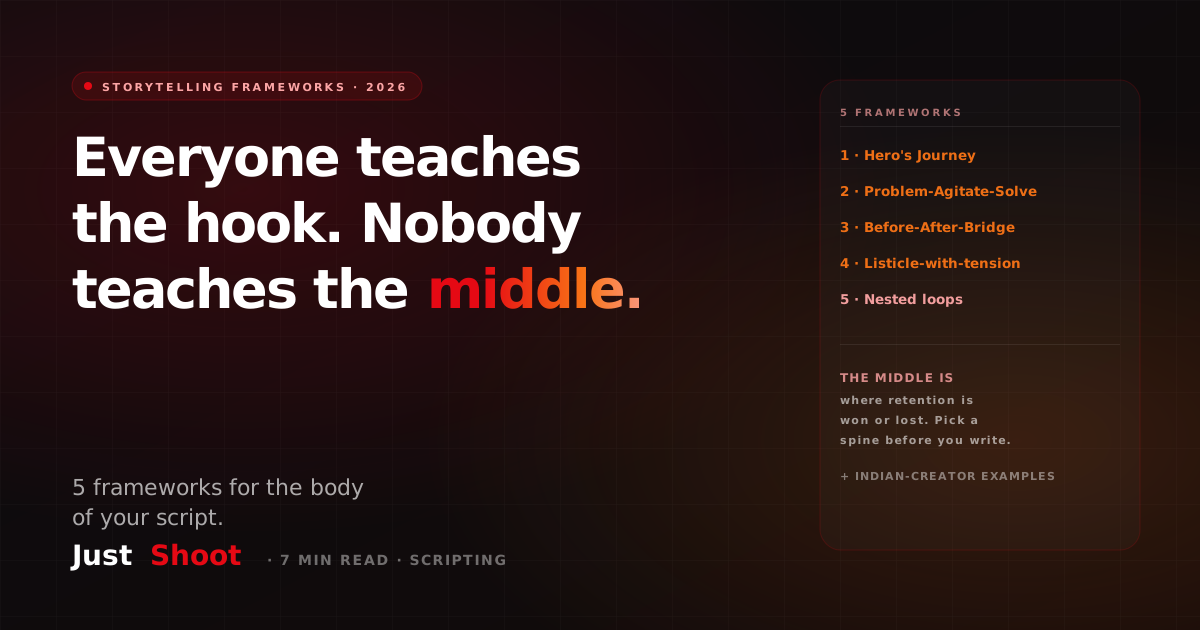
5 YouTube Storytelling Frameworks for Scripts (India, 2026)
By Ashok Sachdev, Founder of JustShoot · Published 2026-06-27
Short answer: Five storytelling frameworks reliably hold a YouTube audience through the middle of a script — the condensed Hero's Journey, Problem-Agitate-Solve, Before-After-Bridge, the listicle-with-tension, and nested loops. Pick one per video based on your niche: PAS for finance and how-to, Before-After-Bridge for transformations, nested loops for documentary-style storytelling. The hook gets the click, but the framework is what keeps the viewer watching after the first 30 seconds — and the lack of one is why most videos sag in the middle.
I build an AI scripting tool for Indian creators, and the most under-taught skill I see is structuring the body. Everyone obsesses over the hook and the thumbnail; almost nobody teaches the middle. Yet the middle is where retention is won or lost. Here are the five frameworks that work.
Why the middle of your script matters most
A great hook gets a viewer to second 30. After that, retention is governed by structure. A video with a strong hook and a shapeless middle leaks viewers steadily — they feel the video "wandering" and click away. A video with a clear narrative spine pulls them forward because they sense it is going somewhere.
This is the part the step-by-step script writing process calls the outline and body. The hook is one decision; the framework is the architecture for everything after it. Choose the framework before you write a line of the body.
The 5 frameworks
1. The condensed Hero's Journey
The classic story arc, compressed for video: ordinary situation → a problem disrupts it → struggle and attempts → a turning point → resolution and lesson. Works because humans are wired for it.
- Indian-creator example: A fitness creator opens on "I was 95 kg and avoided every photo" (ordinary), hits "three diets failed" (struggle), finds "the one habit that changed everything" (turning point), and closes on the transformation plus the takeaway.
- Best for: personal-story channels, transformation, motivation, vlogs.
2. Problem-Agitate-Solve (PAS)
Name a problem, make the viewer feel its weight, then deliver the solution. The agitation step is what most creators skip — and it is what makes the solution land.
- Indian-creator example: A finance channel: "Your FD is losing you money" (problem), "after inflation and tax you're earning negative real returns — here's the math" (agitate), "here's where that money should sit instead" (solve).
- Best for: finance, how-to, product reviews, education.
3. Before-After-Bridge (BAB)
Paint the current painful state, paint the desired future state, then position your content as the bridge between them.
- Indian-creator example: "Right now your videos get 200 views" (before), "imagine consistently crossing 10K" (after), "the gap is three scripting habits — let's fix them" (bridge).
- Best for: coaching, skill-building, business, growth content.
4. Listicle-with-tension
A numbered list, but each item escalates or builds toward a payoff — not a flat enumeration. The tension is the promise that #5 is the best, or that one of them is a mistake.
- Indian-creator example: "7 editing mistakes — and #4 is one I made for two years that cost me 40% of my views."
- Best for: tips content, mistakes videos, tools roundups, tech.
5. Nested loops
Open a story, pause it to open a second, resolve them in reverse order. The unresolved loops create sustained tension across the whole video.
- Indian-creator example: "This is the story of how I lost ₹2 lakh — but to explain it I have to tell you about a call I got at 2 a.m. …" then circle back.
- Best for: documentary, investigative, long-form storytelling, podcasts.
For the opening that feeds into any of these, pair this with the first-30-seconds hook guide — the hook sets the promise, the framework keeps it.
How to pick the right framework
Match the framework to the job of the video:
- Teaching something → PAS or listicle-with-tension.
- Sharing a transformation → Hero's Journey or BAB.
- Telling a story → nested loops.
- Reviewing or comparing → listicle-with-tension.
When in doubt, default to PAS — it is the most versatile and the hardest to get wrong. Whichever you pick, the framework is a skeleton, not a script; you still have to fill it in your voice, which is the part covered in writing scripts in your own voice with AI.
Where JustShoot fits
Inside JustShoot's 9-agent pipeline, the script agent structures the body around a chosen framework and writes it in your locked channel voice — so the middle has a spine instead of wandering, and it still sounds like you. You pick the framework; the agent does the heavy lifting of fitting your content to it.
JustShoot starts at Trial ₹0 (7 days, 2 scripts, no card), then Starter ₹499/mo (3 scripts), Creator ₹999/mo (4 scripts, most popular), and Studio is custom. Every plan runs the full pipeline.
Want to check whether your scripts read like a person telling a story or like a generic AI draft? Run one through the JustShoot Robot Score tool.
FAQ
What is the best storytelling framework for YouTube scripts? There is no single best — match it to the video's job. Problem-Agitate-Solve is the most versatile default for educational and how-to content; the Hero's Journey suits personal stories and transformations.
How do I stop my videos from sagging in the middle? Choose a narrative framework before writing the body. A sagging middle is almost always a structure problem — the video has no spine pulling the viewer forward after the hook.
Can I mix storytelling frameworks in one video? Yes, but sparingly. A common combination is a Hero's Journey overall arc with a Problem-Agitate-Solve segment inside it. Stacking more than two usually muddies the structure.
Which framework works best for Indian finance channels? Problem-Agitate-Solve, because finance viewers respond to a clearly named problem and quantified stakes (the agitate step) before the solution. Keep it education-framed and compliant.
Does AI understand storytelling frameworks? A capable AI scripting tool can structure a body around a chosen framework, but you should pick the framework based on the video's job — and ensure the output still carries your personal voice rather than a generic template tone.
Ashok Sachdev is the founder of JustShoot, an AI content OS that writes YouTube scripts in your own voice for Indian creators. Connect on LinkedIn.
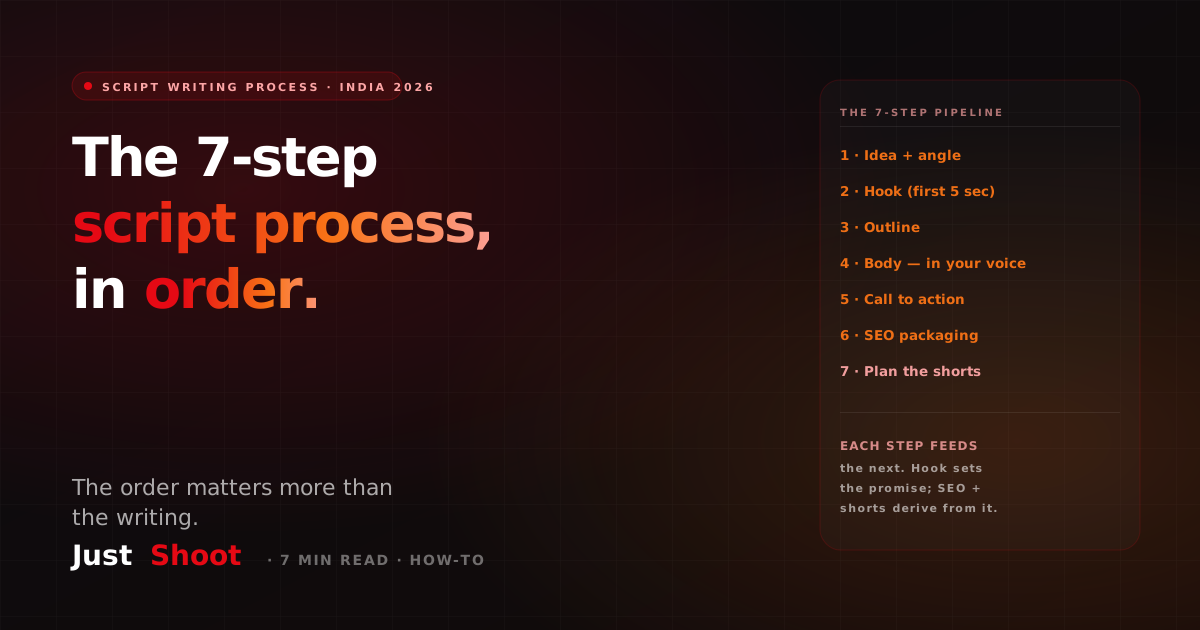
YouTube Script Writing Process: A Step-by-Step Guide (India, 2026)
The full YouTube script writing process in 7 steps — idea, hook, outline, body, CTA, SEO, and shorts — for Indian creators in 2026. The pro pipeline, explained.
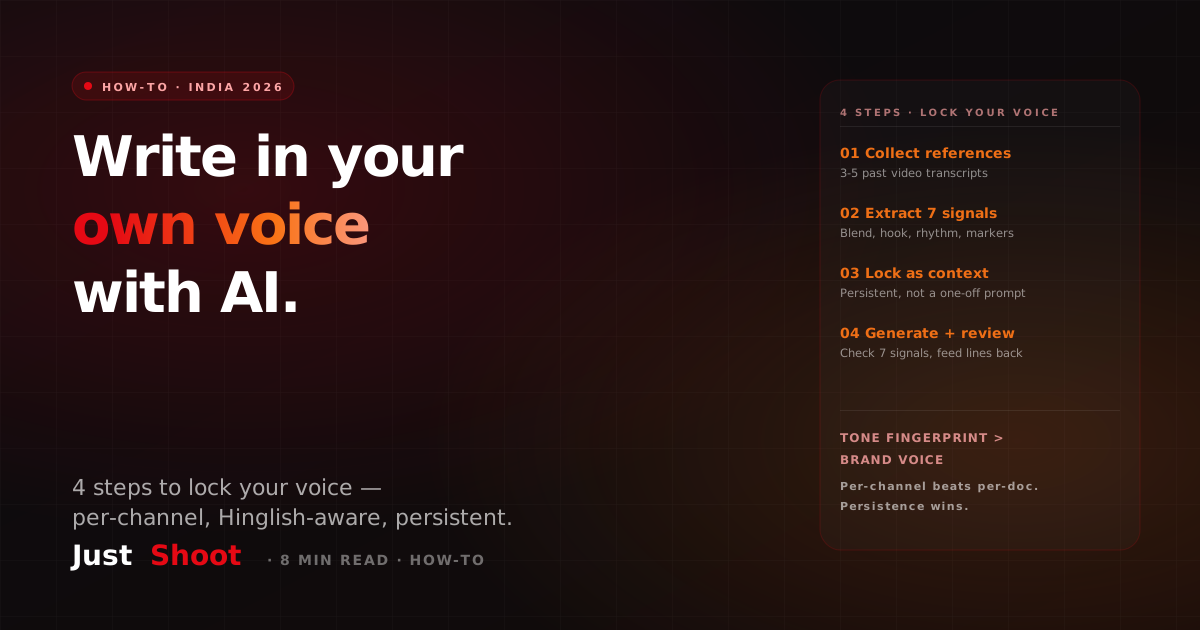
How to Write a YouTube Script in Your Own Voice with AI (2026)
Want AI scripts that sound like you, not a chatbot? Here are the 4 steps to lock your voice — and why a per-channel Tone Fingerprint beats per-document brand-voice tools for India.
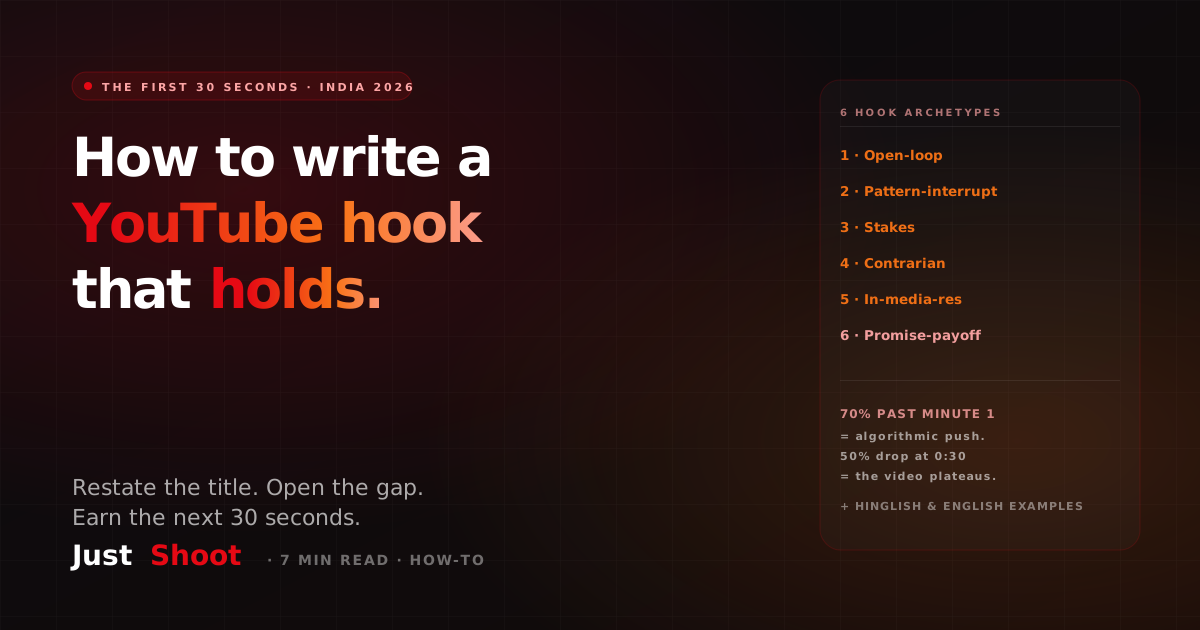
How to Write a YouTube Hook: The First 30 Seconds (India, 2026)
Write a YouTube hook that holds viewers past the first 30 seconds — 6 hook archetypes, the restate-the-title rule, and curiosity-gap calibration, with Hinglish examples.