How Long Does It Take to Write a YouTube Script? (And How AI Cuts It)
Writing a YouTube script takes 2–4 hours by hand for a 10-minute video. Here's the real time breakdown — and exactly how AI cuts it to minutes without sounding robotic.
How Long Does It Take to Write a YouTube Script? (And How AI Cuts It)
By Ashok Sachdev, Founder of JustShoot · Published 3 June 2026 · Last reviewed 3 June 2026
Short answer: Writing a YouTube script by hand takes most creators 2–4 hours for a 10-minute video — research, outline, draft, and a read-aloud rewrite. A fast writer with a tight system does it in about an hour; a beginner can burn a full day. AI drafts the same script in minutes, but you still pay a hidden 20–30-minute "make it sound human" tax — unless your voice is captured once and reused, in which case that tax disappears too.
I build an AI scripting tool for Indian creators, so I get asked "how long should this take?" constantly. The honest answer is: longer than you think, and most of the time goes to invisible work — not typing. Here's the real breakdown, the per-stage math, and where AI actually saves time versus where it just moves the work around.
The real time breakdown for one 10-minute script
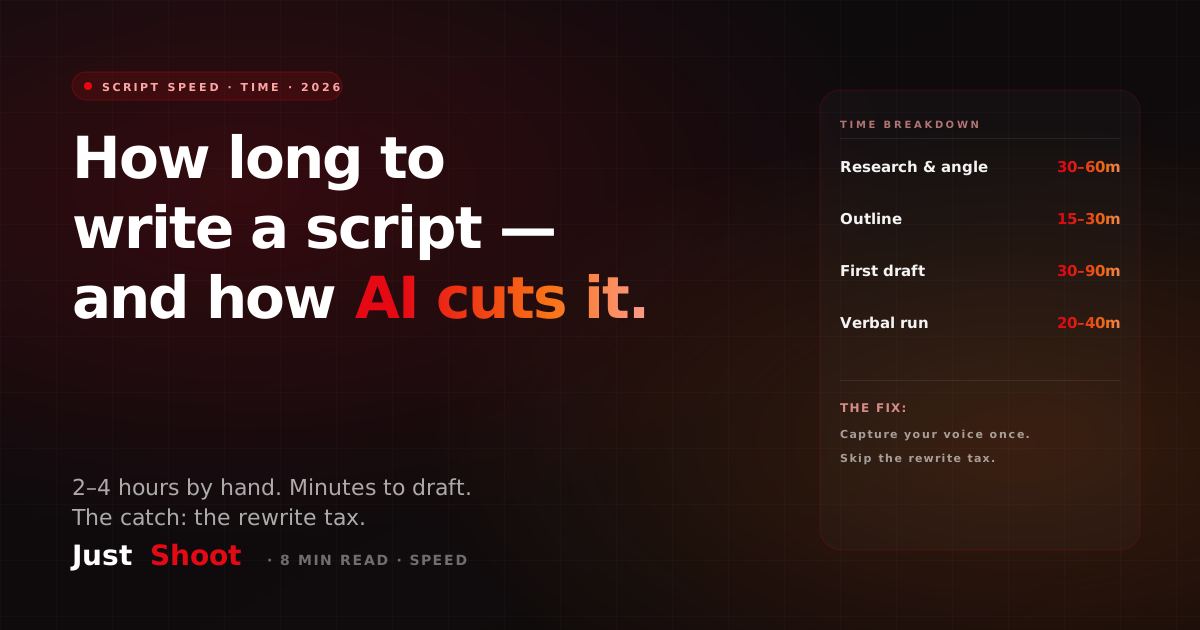
A finished script isn't one task. It's four, and the typing is the smallest one. Here's where a typical 1,500–1,800-word script (about 10 minutes of talking) actually goes:
- Research & angle (30–60 min). Finding a topic that will perform, checking what's already ranking, and deciding your specific take. This is where most creators stall.
- Outline & structure (15–30 min). Hook, the spine of the argument, the payoff, the call to action. Skip this and the draft sprawls.
- First draft (30–90 min). The actual writing. Speed here depends entirely on how clear your outline is.
- The verbal run / rewrite (20–40 min). Reading it aloud, cutting what sounds written-not-spoken, and fixing the rhythm so it sounds like you talking, not an essay.
Add it up: roughly 1.5 to 3.5 hours for one video, even before you record. Do two videos a week and scripting alone eats most of a working day. This is the bottleneck almost no creator budgets for when they start a channel.
Why beginners take 2–3× longer
The ranges above assume you have a system. Most people don't at first, and three things stretch the clock:
- No reusable outline. Starting from a blank page every time means re-inventing structure on every video.
- The blank-page freeze. Research bleeds into procrastination because the next step isn't defined.
- Over-rewriting. Without a clear "this is done" signal, creators polish the same paragraph five times.
A beginner writing their first finance or tech explainer can genuinely lose a full day to one script. The skill that separates fast creators isn't typing speed — it's having a repeatable structure and knowing when to stop.
Where AI saves time — and where it doesn't
Here's the part the "AI writes your script in 30 seconds" headlines skip. AI collapses two of the four stages and barely touches the other two.
What AI genuinely compresses:
- First draft → minutes. A good prompt turns an outline into a full draft almost instantly. This is the real, undeniable time win.
- Outline → seconds. AI is excellent at proposing a hook, three beats, and a close from a topic line.
What AI does not fix on its own:
- Research judgment. The model can summarise, but deciding the angle that will actually perform for your audience is still yours.
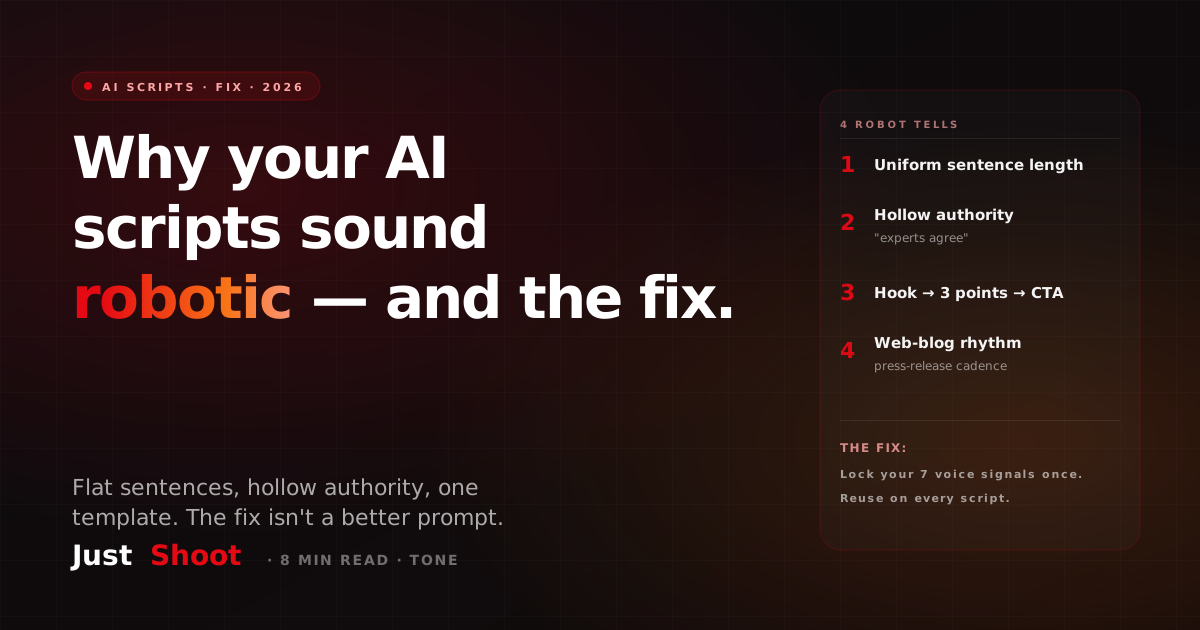
- The verbal run. This is the trap. Raw AI output reads like a corporate blog — uniform sentences, hollow authority phrases ("experts agree"), one rigid hook-points-CTA template. So you still sit down and rewrite it line by line to sound human.
That last point is the catch. Creators who AI-draft their scripts report that the read-aloud rewrite still costs 20–30 minutes per script (source: Medium / TubeAI creator reports, 2026). AI moved the work from "writing" to "de-robotting" — net faster, but not the magic-minute claim. If you want the deeper why, read why your AI scripts sound robotic and how to fix it.
Want to know how much rewrite tax your draft is carrying? Paste a script into the free AI Script Robot-Score — it flags the exact filler, uniform-sentence runs, and template phrases you'd otherwise spend 20 minutes hunting by hand.
The hidden cost: re-describing your voice every time
There's a second tax that compounds the first. Every time you open a fresh AI chat, the model has no memory of how your last script sounded. So you re-type your voice instructions — "casual, Hinglish, short punchy hooks, no jargon" — on every single video. Miss a detail and the robotic tone creeps back, which means more verbal-run time.
For Indian creators this hurts more. English-trained models flatten natural Hindi-English code-switching into over-formal "neutral" English with a few Hindi words bolted on. So your Hinglish drafts need more rewriting, not less — exactly the opposite of the time saving you signed up for.
So the real time equation isn't "AI vs. by hand." It's: AI draft (fast) + verbal run (slow) + re-describing your voice (slow, every time). Kill the last two and you actually get the minutes-not-hours promise.
How to make scripts genuinely fast (the system, not the shortcut)
Three changes cut scripting time the most — in order of impact:
- Reuse a fixed outline. Lock one structure (hook → context → payoff → proof → CTA) and never start from blank again. This alone removes the biggest stall.
- Capture your voice once, not every time. Instead of re-typing voice instructions per chat, extract your real sentence rhythm, language mix, and signature hooks once as a reusable profile — a Tone Fingerprint. Applied automatically to every draft, it removes most of the verbal-run rewrite because the voice is baked in from the first version.
- Set a "done" signal. Decide your script is finished when it passes one read-aloud, not five. Perfectionism is the silent time sink.
This is the mechanism behind every JustShoot script: the topic becomes a structured draft in your captured tone, so the slow stages — de-robotting and re-describing your voice — mostly disappear instead of eating 30 minutes each. You go from a 2–4-hour manual process to a focused review pass.
So what's a realistic target?
If you script regularly, aim for 30–45 minutes of focused work per 10-minute video once you have a system: a few minutes to pick the angle, an instant AI draft in your locked tone, and one read-aloud review. That's the achievable target — not the mythical 30 seconds, and not the 4-hour grind. The hours-to-minutes jump is real; it just comes from removing the rewrite tax, not from the draft speed alone.
FAQ
How long does it take to write a 10-minute YouTube script? By hand, about 2–4 hours for most creators — split across research, outline, drafting, and a read-aloud rewrite. A practised writer with a fixed system does it in roughly an hour; a beginner can take a full day. With AI plus a captured voice profile, a focused review pass lands around 30–45 minutes.
Does AI actually write a YouTube script in seconds? The draft takes seconds, but a usable script doesn't. Raw AI output reads robotic, so creators report 20–30 minutes of read-aloud rewriting per script on top. The genuine minutes-not-hours saving comes only when your voice is captured once and reused, which removes most of that rewrite.
Why does writing a script take so long even when I know the topic? Because typing is the smallest part. Most of the time goes to deciding the angle, structuring it, and the verbal run — making it sound spoken rather than written. Knowing the topic skips research, but not structure or rewriting.
Is it faster to write scripts in Hindi or Hinglish with AI? Often slower with generic AI, because English-trained models flatten natural Hinglish code-switching into formal English, forcing more rewriting. A tool that captures your real language balance fixes this — see how to write a YouTube script in your own voice with AI.
How do I speed up scripting without sounding robotic? Reuse one outline, capture your voice once instead of re-describing it each time, and set a single-read "done" signal. The voice capture matters most — it's what removes the slow de-robotting pass. See why AI scripts sound robotic.
The honest number is 2–4 hours by hand, minutes for the draft, and 30–45 focused minutes once you stop re-describing your voice and re-rewriting every line. The time win is real — it just lives in killing the rewrite tax, not in the typing.
See how much rewrite time your current draft is hiding: score a script free →, or try JustShoot → and generate one against your real videos to feel the difference.
Why Your AI YouTube Scripts Sound Robotic (And How to Fix It)
AI YouTube scripts sound robotic for 3 reasons: uniform sentences, hollow authority, and one rigid template. Here's why — and the real fix for natural, human scripts in 2026.
Can AI Write YouTube Scripts in Regional Indian Languages? (2026)
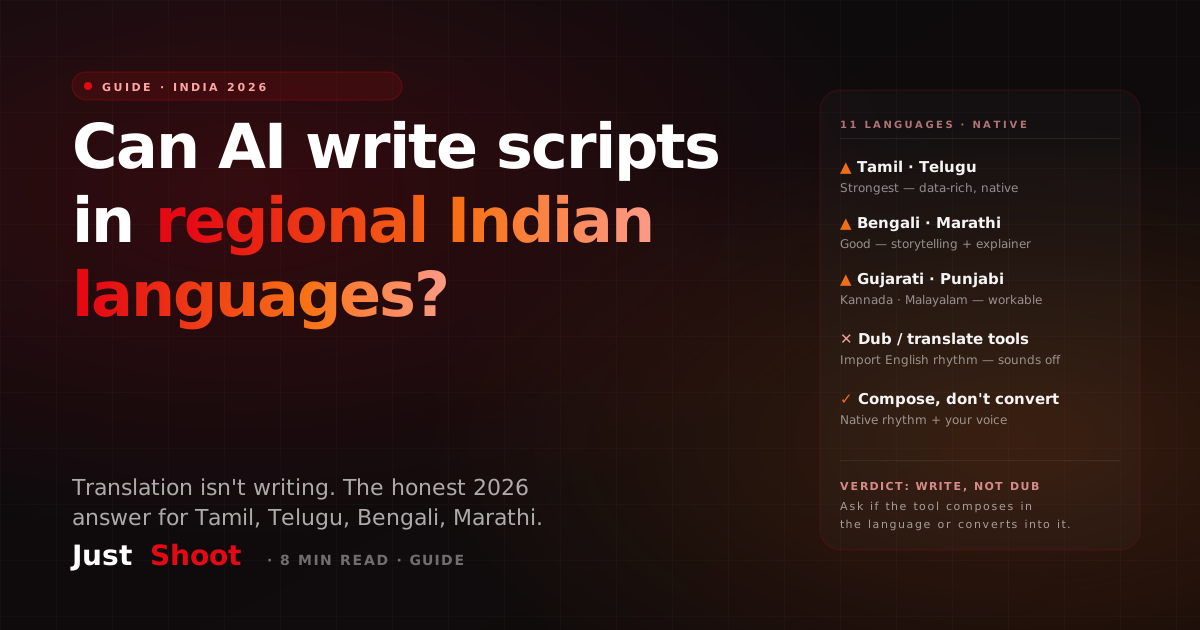
Can AI write original YouTube scripts in Tamil, Telugu, Bengali, Marathi — not just dub English? The honest 2026 answer: translation isn't writing. Here's what actually works.