How Do You Write a YouTube Script That Keeps Viewers Watching? (India, 2026)
Viewers leaving mid-video? Here's how to write a YouTube script that holds retention — front-load the payoff, plant re-engagement beats, vary rhythm. India 2026 data.
How Do You Write a YouTube Script That Keeps Viewers Watching? (India, 2026)
By Ashok Sachdev, Founder of JustShoot · Published 29 June 2026 · Last updated 29 June 2026
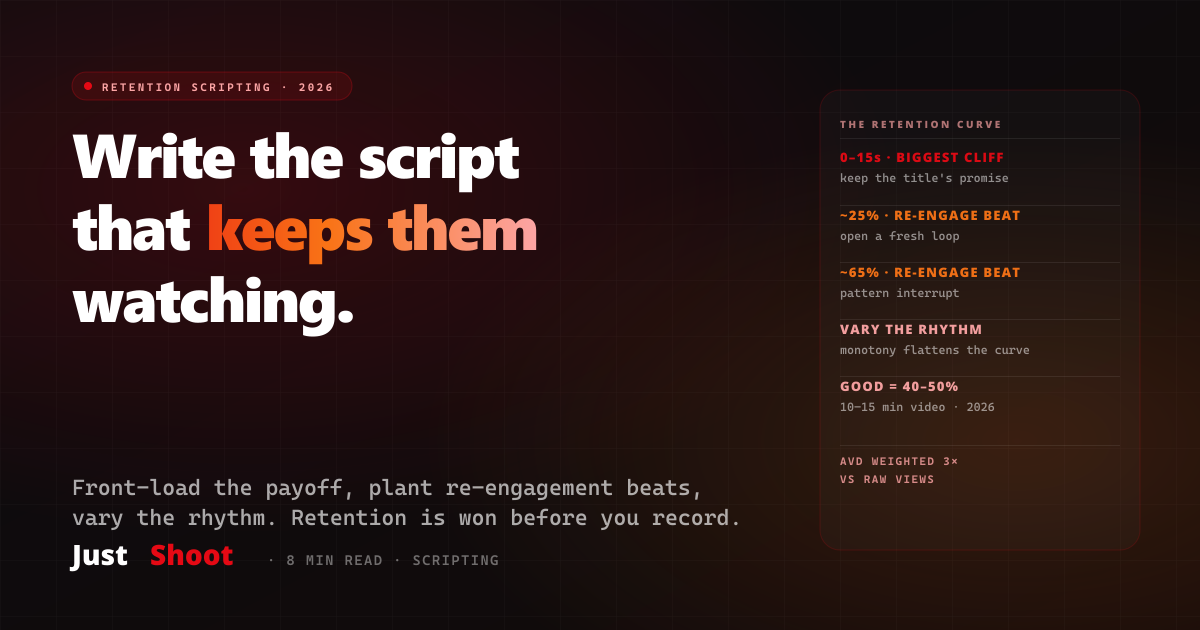
Short answer: To write a YouTube script that keeps viewers watching, structure it around the retention curve, not just the topic. Open by delivering on the title's promise in the first 15 seconds (state the result, preview the structure, set the stakes) — most drop-off happens here because the opener doesn't pay off the click. Then plant deliberate "re-engagement beats" at roughly the 25% and 65% marks, where attention naturally dips: a new sub-promise, a pattern interrupt, or an open loop. Vary your sentence and section length so the rhythm never flattens, and cut any line that doesn't deliver value, build curiosity, or move the story. Good retention in 2026 runs 40–50% for a 10–15 minute video; YouTube weights average view duration roughly 3× more than raw views when deciding what to recommend. The script is where retention is won or lost — before you ever hit record.
Why do viewers leave my YouTube video in the first minute?
Because the opening doesn't keep the promise the title and thumbnail made. The single largest drop in almost every video happens in the first 15 seconds — analysts consistently find this is the steepest cliff on the retention graph. A viewer clicked expecting a specific payoff; if your first 15–30 seconds is a logo animation, "hey guys welcome back to the channel, don't forget to subscribe," or 20 seconds of context before the topic arrives, they leave. The fix is structural, not motivational: open by confirming they're in the right place, showing why it matters now, and opening a curiosity gap you'll resolve later. State the result first, then earn the backstory. Our 9 hook formulas for Hindi creators break down exactly how Dhruv Rathee and Mohak open without a throat-clear.
What is a "good" audience retention rate in 2026?
It depends on video length, and the benchmarks are well documented. Strong retention runs 35–75% depending on duration: roughly 65–75% for videos under 5 minutes, 50–60% at 5–10 minutes, 40–50% at 10–15 minutes, and 35–45% for 15+ minute videos (anything above those bands is exceptional). Shorts under 60 seconds should hold 70–85%. By niche, tutorial and educational content typically retains 45–60%, while gaming and podcasts average 25–40%. For context, the average YouTube video retains only about 23.7% of its viewers — so for every 1,000 clicks, only ~237 people watch a meaningful portion. The reason this matters so much: YouTube's algorithm weights average view duration roughly 3× the importance of raw view count when deciding which videos to push into recommendations and Browse. Retention isn't a vanity metric. It's the lever.
How do I write the first 30 seconds so viewers stay?
Hit three things inside the first 10–20 seconds: state the result, preview the structure, and set the stakes. "By the end of this video you'll have a 3-step system to script faster — and I'll show you the exact one that cut my scripting time in half" does all three in one breath. Avoid the four killers: long logo intros, "welcome back to the channel," explaining what you're about to explain, and vague hooks that name no specific payoff. Front-load your single most compelling line — the surprising result, the bold claim, the mistake everyone makes — and introduce yourself after you've proven the video is worth it, not before. If you script only one part of your video word-for-word, make it the first 30 seconds.
What is a re-engagement beat, and where do I put them?
A re-engagement beat is a deliberate moment in the script designed to re-hook attention right before it naturally dips. Retention curves don't decline smoothly — they sag at predictable points, most reliably around the 25% mark (the "is this still worth it?" check) and the 65% mark (mid-video fatigue). Plant a beat just before each: open a fresh loop ("but there's a catch I didn't mention…"), drop a pattern interrupt (a new visual, a question to the viewer, a hard topic pivot), or pay off an earlier open loop with a small reward. Think of your script as a series of nested promises — every section should make a new micro-promise so the viewer always has a reason to stay for "the next thing." This is the difference between a flat retention line and a stepped one that holds.
Why does my script flatten retention even when the content is good?
Monotony. Uniform sentence length and uniform section length flatten the curve even when every fact is solid. If every sentence is the same subject-verb-object shape at the same length, the brain stops getting signal — it reads as a Wikipedia article being narrated, and the viewer drifts. Vary it deliberately: a punchy three-word fragment after two long sentences. A one-line section between two dense ones. A direct question to the viewer between explanations. The same principle is why AI scripts sound robotic — they default to even, predictable rhythm. Pacing variation is a retention tool, not just a style choice. Read your script out loud before filming: anywhere you get bored hearing it, the viewer left two sentences earlier.
How does writing in my own voice help retention?
Because flat, generic delivery signals low effort, and viewers reward the opposite. A script written in your actual speaking voice — your contractions, your asides, your Hinglish blend, the way you would actually say it — carries emotional engagement that a corporate-sounding draft can't fake. This is exactly where a generic ChatGPT prompt struggles: it produces clean, even, voice-less prose every time, and you spend 20–30 minutes rewriting it into something you'd actually say (the "verbal run" tax). A tone-locked script written in your channel's voice skips that step — it arrives sounding like you, with your rhythm already varied, so the retention work is baked in rather than bolted on. For Indian creators especially, a natural Hinglish flow is what lets the audience connect instantly instead of bouncing on a stiff, over-formal opener.
The retention checklist before you hit record
- First 15 seconds keep the title's promise — result, structure, stakes. No logo, no "welcome back."
- One word-for-word hook — script the opening fully even if you riff the rest.
- Re-engagement beat near 25% and 65% — new sub-promise or pattern interrupt before each dip.
- Varied rhythm — mix sentence and section length; add fragments and direct questions.
- Every line earns its place — value, curiosity, or story; if none, cut it.
- Match length to depth — don't pad to 12 minutes; a tight 8 holds better than a bloated 14. (See our data on ideal video length.)
- Read it aloud — boredom in your own ear = a drop-off on the graph.
Where JustShoot fits
JustShoot is an AI content OS for Indian YouTubers that writes scripts in your channel's voice — not a generic template. Its Tone Fingerprint learns your sentence rhythm, hook style, and Hinglish balance from your past videos, so the script arrives already varied and already sounding like you — the two things that protect retention. The same pipeline then handles SEO packaging and shorts, so the retention-shaped script you wrote doesn't get undone downstream.
Pricing is simple and GST-inclusive: a free 7-day trial (2 scripts, no card), then Starter at ₹499/month (3 scripts), Creator at ₹999/month (4 scripts — most popular), and a custom Studio plan for teams. Every plan gets the full pipeline; only the script volume changes.
Want to know if your current script will hold attention? Run it through our free AI Script Robot-Score — it flags the flat, monotonous patterns that kill retention before you film, in under a minute.
FAQ
Why do viewers leave my YouTube video in the first minute? Because the opening doesn't keep the promise the title made. The biggest drop on almost every retention graph is in the first 15 seconds. Fix it by stating the result, previewing the structure, and setting the stakes within the first 10–20 seconds — and cutting logo intros, "welcome back" lines, and vague hooks.
What is a good audience retention rate on YouTube in 2026? It depends on length: roughly 65–75% under 5 minutes, 50–60% at 5–10 minutes, 40–50% at 10–15 minutes, and 35–45% for 15+ minute videos. The average video retains only about 23.7% of viewers, so beating 40% on a 10-minute video already puts you ahead of most.
Where should I put re-engagement beats in my script? Just before the natural attention dips — most reliably around the 25% and 65% marks of the video. Use a fresh open loop, a pattern interrupt, or a small payoff to reset attention before it drops.
Does average view duration matter more than views? Yes. YouTube's algorithm weights average view duration roughly 3× the importance of raw view count when choosing which videos to recommend, so a video with fewer views but stronger retention often out-travels a high-click, low-hold one.
Why does my script kill retention even when the content is good? Usually monotony — uniform sentence and section length flatten the curve. Vary your rhythm with fragments, short sections, and direct questions, and read the script aloud to catch the boring stretches before filming.
Can AI write a retention-optimized script? Generic AI tends to produce flat, even prose that needs heavy rewriting. A tone-locked tool that writes in your actual voice — varied rhythm, your Hinglish blend, your hook style — gets you most of the way there, which is the approach JustShoot's Tone Fingerprint takes.
Written by Ashok Sachdev, Founder of JustShoot — the AI content OS built for Indian YouTubers. Retention is won in the script, before the camera ever rolls.
How to A/B Test YouTube Titles, Thumbnails & Script Hooks (India, 2026)
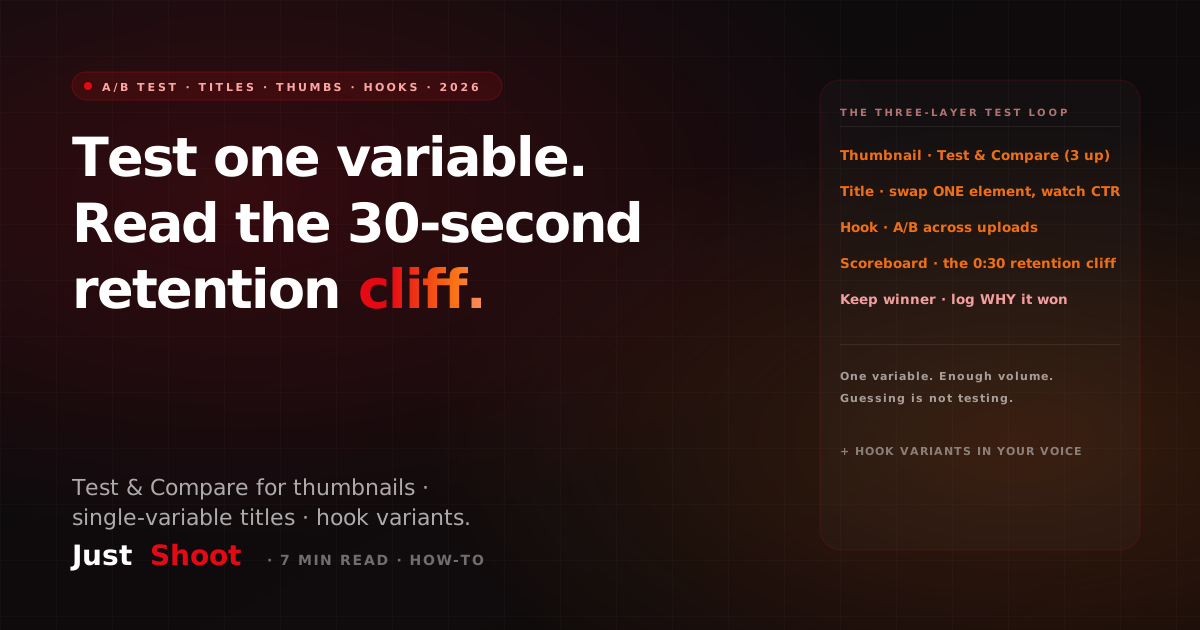
A practical A/B testing workflow for Indian creators — use YouTube's native Test & Compare for thumbnails, test titles one variable at a time, and read the 30-second retention cliff to A/B test your script hooks.
How to Script a YouTube Podcast or Interview (Question Prep, India 2026)
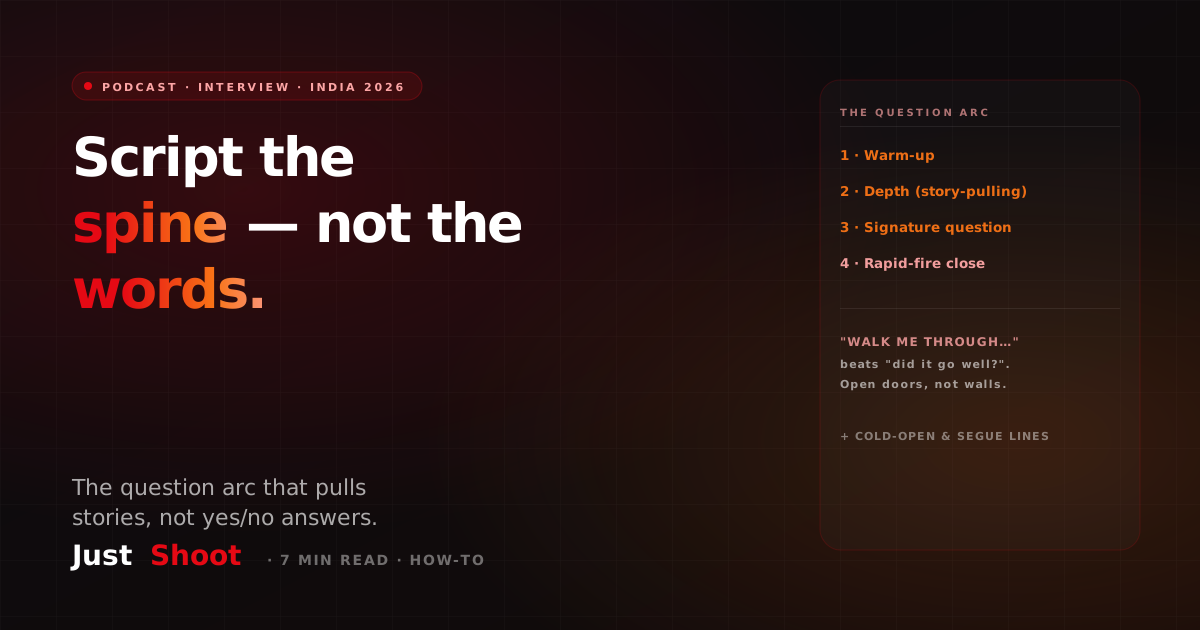
You don't script a podcast word-for-word — you script the spine: the cold-open clip, the question arc, segue lines, and the CTA. The interview-prep method that pulls stories, not yes/no answers.
Repurpose One YouTube Script Into a Blog, LinkedIn Post & X Thread (India, 2026)
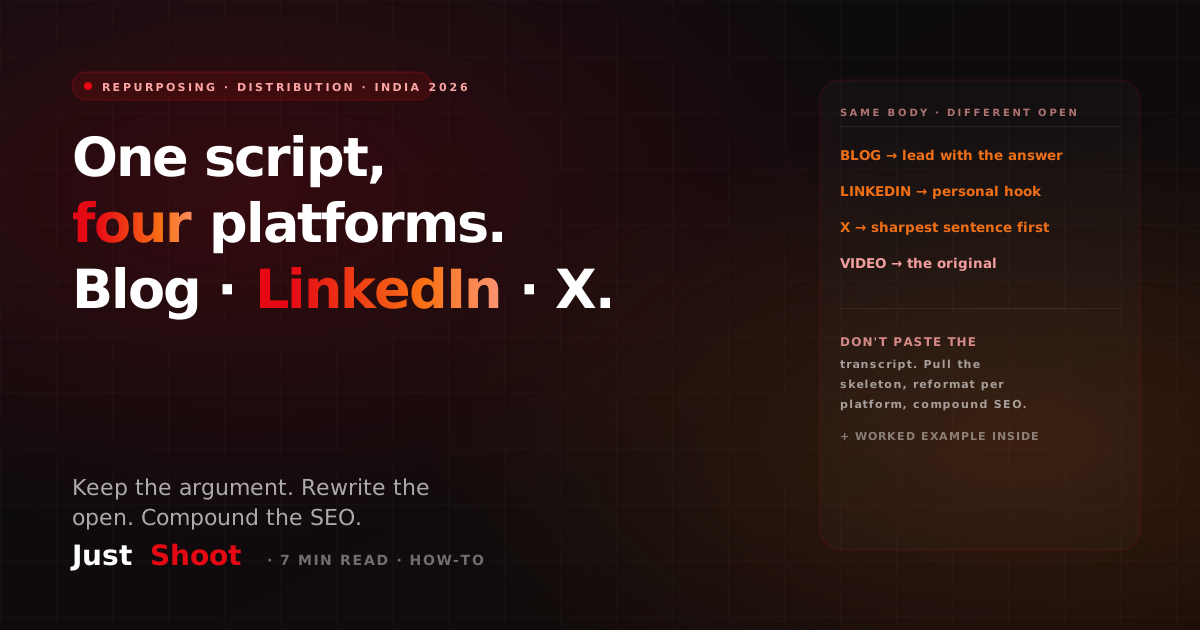
Turn one YouTube script into a blog post, a LinkedIn carousel and an X thread — the restructure method, why each platform needs its own open, and the SEO compounding effect, with examples.