How to Script a YouTube Podcast or Interview (Question Prep, India 2026)
You don't script a podcast word-for-word — you script the spine: the cold-open clip, the question arc, segue lines, and the CTA. The interview-prep method that pulls stories, not yes/no answers.
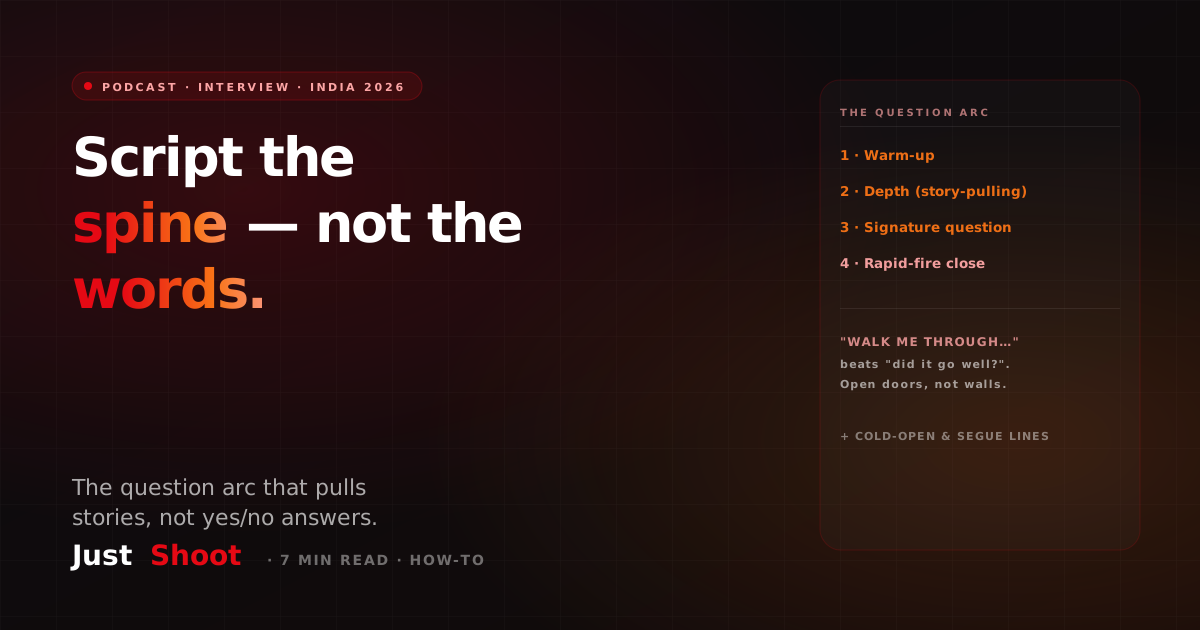
How to Script a YouTube Podcast or Interview (Question Prep, India 2026)
By Ashok Sachdev, Founder of JustShoot · Published 2026-06-28
Short answer: You don't script a YouTube podcast or interview word-for-word — you script the spine: a cold-open clip pick, a question arc that builds (warm-up → depth → signature → rapid-fire), segue lines between topics, and a closing CTA. The questions themselves should be open-ended and story-pulling ("walk me through the moment you…"), never yes/no. A scripted spine keeps a long-form conversation focused and editable while leaving room for the unplanned moments that make interviews worth watching.
I build an AI scripting tool for Indian creators, and long-form podcasts and interviews are one of the fastest-growing formats here. They look unscripted — and the good ones are, in delivery. But underneath, every great episode has a deliberate structure the host prepared in advance. That structure is the script.
Why you script the spine, not the words
A podcast read off a verbatim script sounds dead. Real conversations breathe — they follow tangents, react, and surprise. But "unscripted" does not mean "unprepared." If you walk in with no plan, you get a meandering 90-minute file that's painful to edit and worse to watch.
The fix is to script the skeleton and improvise the flesh. You decide the order of decisions in advance — the same discipline as the step-by-step script process, just applied to a conversation instead of a monologue.
The cold-open clip pick
The first thing the viewer hears should not be "hi, welcome to the podcast." It should be the single best 15-30 seconds of the whole conversation — a punchy admission, a hot take, a surprising number — pulled from the middle and dropped at the top. You can't script the exact line in advance, but you can script the intent: "open on the guest's most quotable moment." This is the long-form version of a strong first-30-seconds hook: earn the next minute before you introduce anything.
The question arc
The order of your questions is the architecture of the episode. A reliable arc:
- Warm-up. Easy, comfortable questions that get the guest talking and relaxed. Never your best material — you're calibrating.
- Depth. The substantive middle. Open-ended, story-pulling questions that earn the long answers people came for.
- Signature. The one question only you would ask — the angle that differentiates your show from every other interview the guest has done.
- Rapid-fire. A fast, fun close that gives the editor clippable moments and ends on energy.
The arc matters more than any single question. A great question asked too early lands flat because the guest isn't warm yet.
How to write questions that pull stories
The difference between a flat interview and a great one is the shape of the questions:
- Avoid yes/no. "Did the launch go well?" gets a one-word answer. "Walk me through the day of the launch" gets a story.
- Ask for the moment, not the summary. "What's the hardest decision you've made?" beats "Tell me about your challenges."
- Follow the energy. Pre-write your arc, but if the guest lights up on a tangent, chase it — the script is a map, not a cage.
Good questions are open doors. Closed questions are walls.
Segues and the CTA
Two scripted lines hold the episode together:
- Segues: short bridges between topics ("That actually connects to something I wanted to ask about…") so the cut doesn't feel jarring. Prepare three or four; you won't use them all.
- The close: like any video, a podcast needs a deliberate ending — a thank-you, a where-to-find-the-guest, and a scripted CTA and handoff to the next episode, not a silent fade.
Where JustShoot fits
Inside JustShoot's 9-agent pipeline, the script agent drafts the interview spine in your show's voice — a question arc built around your guest, story-pulling phrasings, segue options, and a cold-open intent line. You walk in prepared but free to improvise, instead of staring at a blank doc the night before.
JustShoot starts at Trial ₹0 (7 days, 2 scripts, no card), then Starter ₹499/mo (3 scripts), Creator ₹999/mo (4 scripts, most popular), and Studio is custom. Every plan runs the full pipeline.
Want to check that your interview prompts sound like your show and not a generic template? Run a script through the JustShoot Robot Score tool.
FAQ
Should I script a podcast word-for-word? No. Script the spine — the cold-open intent, the question arc, segue lines, and the CTA — then improvise the actual conversation. A word-for-word podcast sounds dead; an unprepared one meanders.
What order should podcast questions go in? Warm-up first (easy, to relax the guest), then depth (your substantive, story-pulling questions), then your signature question, then a rapid-fire close. The arc matters more than any single question.
How do I ask questions that get good answers? Avoid yes/no. Ask the guest to "walk me through" a specific moment instead of summarizing. Follow the energy — if they light up on a tangent, chase it, even if it's off your script.
What is a cold open for a podcast? The best 15-30 seconds of the conversation, pulled from the middle and placed at the very start, before the intro. It hooks the viewer with the most quotable moment instead of a slow "welcome to the show."
Can AI help prep my interview questions? Yes — an AI scripting tool can draft a question arc and story-pulling phrasings around your specific guest, in your show's voice. You still steer the live conversation; the tool removes the blank-page prep.
Ashok Sachdev is the founder of JustShoot, an AI content OS that writes YouTube scripts in your own voice for Indian creators. Connect on LinkedIn.
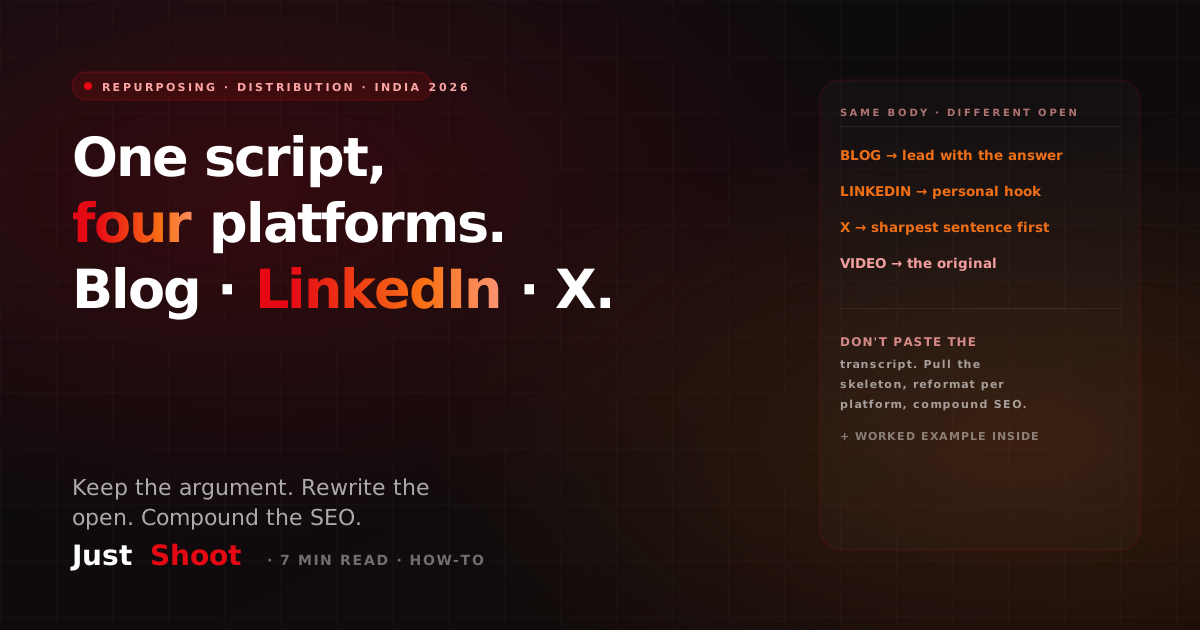
Repurpose One YouTube Script Into a Blog, LinkedIn Post & X Thread (India, 2026)
Turn one YouTube script into a blog post, a LinkedIn carousel and an X thread — the restructure method, why each platform needs its own open, and the SEO compounding effect, with examples.
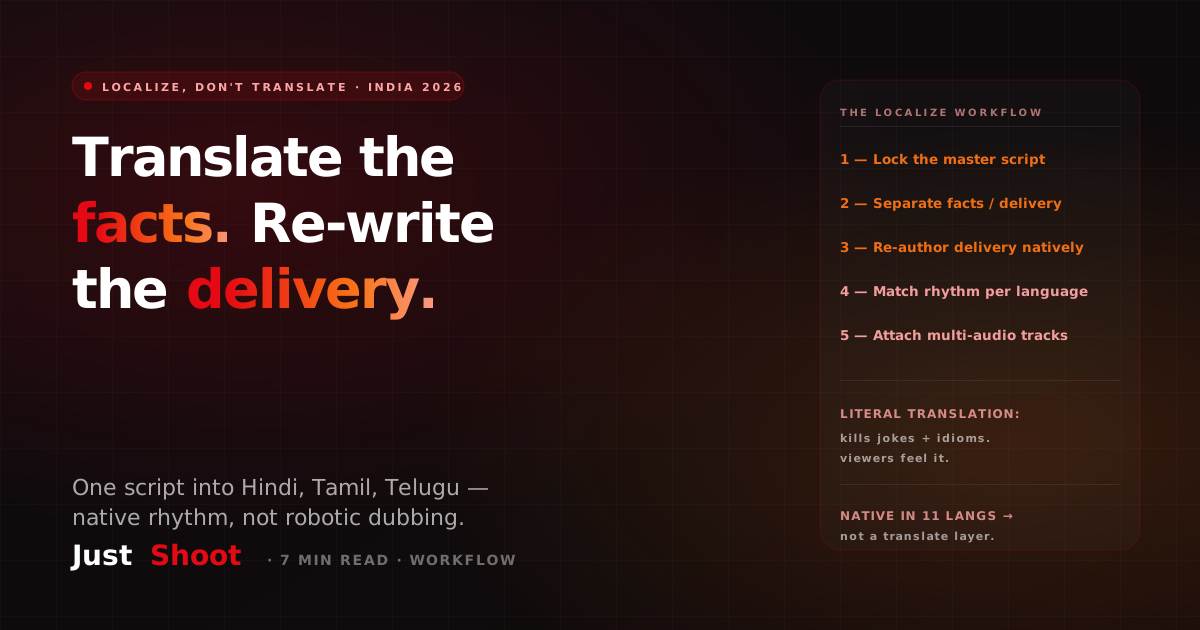
How to Localize a YouTube Script Into Regional Indian Languages (Not Just Translate It, 2026)
Literal translation kills your jokes, idioms, and rhythm. Here's the localize-don't-translate workflow for taking one YouTube script into Hindi, Tamil, and more — plus multi-audio tracks.
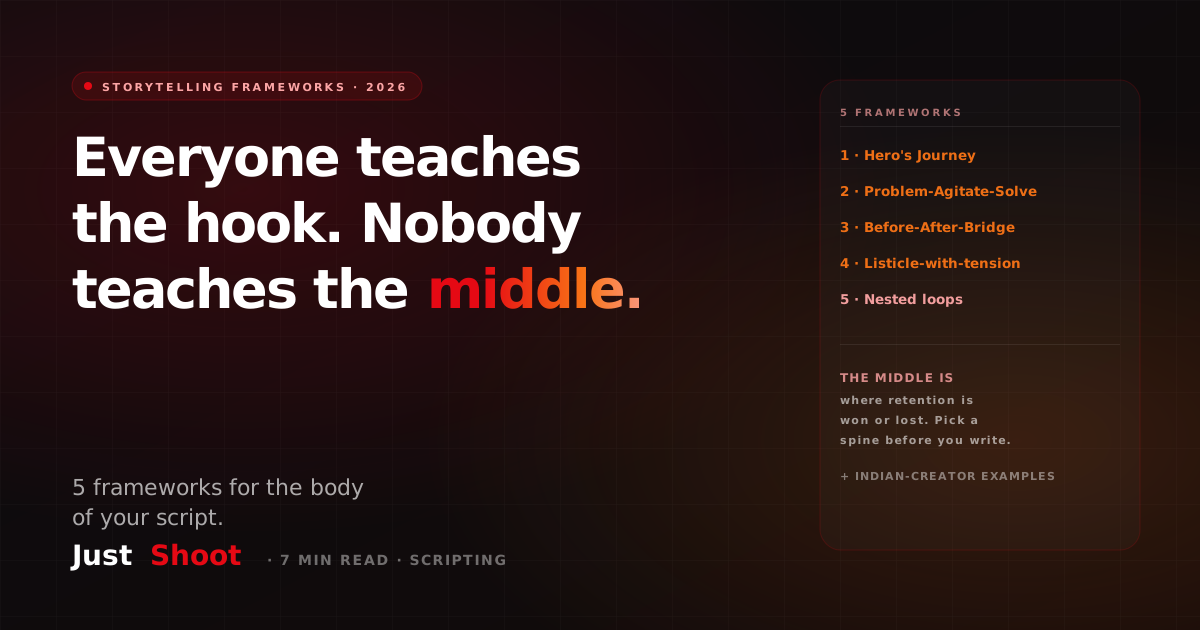
5 YouTube Storytelling Frameworks for Scripts (India, 2026)
Everyone teaches the hook; nobody teaches the middle. 5 proven storytelling frameworks for the body of your YouTube script, with Indian-creator examples and which niche each suits.