YouTube Content Calendar & Batch Scripting with AI (India, 2026)
How Indian creators batch a month of YouTube scripts in one sitting without the voice drifting — a 4-week calendar template, batch-session structure, and cadence reality check.
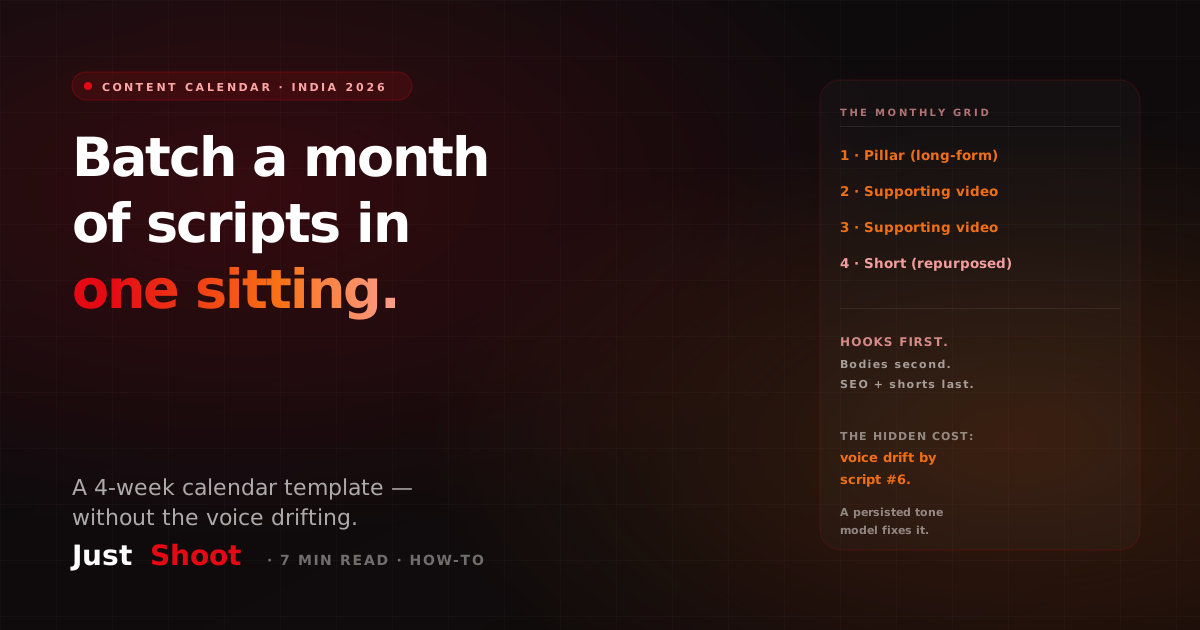
YouTube Content Calendar & Batch Scripting with AI (India, 2026)
By Ashok Sachdev, Founder of JustShoot · Published 2026-06-26
Short answer: To batch a month of YouTube scripts in one sitting, build a four-week calendar first — one pillar video, two supporting videos, and one short per week — then write all the scripts in a single focused session, drafting hooks for everything before bodies for anything. The reason creators batch and still burn out is voice drift: when you write eight scripts across eight different days with ad-hoc AI prompts, video #1 and video #8 sound like two different people. A persisted tone model fixes that by holding your voice constant across the whole batch.
I build an AI scripting tool for Indian creators, and the single most common reason solo creators stall is not lack of ideas — it is the per-video restart tax. Every upload begins from a blank page. Batching removes that tax. Here is the system.
Why batching beats daily scrambling
A YouTube channel is a publishing operation, and publishing operations run on a calendar, not on inspiration. When you decide each video the morning you shoot it, three things go wrong: topics get repetitive because you pick whatever is top of mind, quality drops because there is no time to think through the angle, and you eventually skip an upload because life happened that day.
Batching front-loads all the thinking into one session a month. You decide the topics once, script them once, and then spend the rest of the month executing — filming and editing — without the cognitive load of "what do I make today." This is the same operational discipline behind the step-by-step YouTube script writing process, scaled from one video to a month.
The 4-week calendar template
A simple, repeatable monthly grid for a solo Indian creator publishing roughly twice a week plus shorts:
| Week | Pillar (long-form) | Supporting #1 | Supporting #2 | Short |
|---|---|---|---|---|
| 1 | Big topic, evergreen | Sub-topic of pillar | Trend / news angle | Clip from pillar |
| 2 | New pillar | Listicle / how-to | Q&A from comments | Hook-driven teaser |
| 3 | Pillar | Tutorial | Reaction / commentary | Behind-the-scenes |
| 4 | Pillar | Case study / story | Collab or guest topic | Best-of recap |
The pillar is your anchor — the deep, evergreen video that defines the week. Supporting videos orbit it, reusing research and feeding watch-time back to the pillar. The short is repurposed, not separately conceived — pull it from the pillar you already scripted.
The key discipline: fill the calendar before you script. Topic selection and scripting are different mental modes, and switching between them mid-session is what slows people down.
How to run the batch-scripting session
A four-step structure for scripting a month in one sitting:
- Lock the calendar (30 minutes). Fill the grid above. Decide all 12-16 topics and angles. Do not write anything yet. If you are short on ideas, our YouTube video ideas for India guide is a fast filler.
- Hooks first, in a single pass. Write the hook for every video before writing any body. Hooks are the hardest part and the most fatiguing — doing them in one focused block keeps them sharp and lets you spot repetition across the month. The first-30-seconds hook guide has the archetypes.
- Bodies in a second pass. Now write each script body. Because the hook already set the promise, the body almost writes itself — you are keeping a promise, not inventing one.
- SEO + shorts derive last. Title, description, tags, and the short script come straight off each finished script. Do not invent them separately.
The hidden cost of batching: voice drift
Here is the trap nobody warns you about. When you script eight videos in one session using ad-hoc AI prompts, each prompt starts cold — it does not remember how the last script sounded. By script #6 you are tired, you accept whatever the model gives you, and the voice quietly homogenises into generic "YouTube AI voice." The batch ships, but it does not sound like you.
This is precisely the per-channel consistency problem. A persisted tone model — what we call a Tone Fingerprint — holds your hook style, sentence rhythm, Hinglish-to-English blend, and identity markers constant across every script in the batch, whether it is script #1 or script #16. That is the difference between keeping your channel voice consistent with AI and shipping a month of slightly-off scripts.
A cadence reality check
More is not better. Publishing four mediocre videos a week beats nobody; publishing two strong ones a week beats most. Pick a cadence you can sustain for six months, not six weeks. Batching makes a sustainable cadence achievable because the scripting bottleneck is gone — but do not use the freed-up time to over-publish. Use it to make each video better.
Where JustShoot fits
Inside JustShoot's 9-agent pipeline, you can run a topic through the full pre-production package — script, hooks, SEO, storyboard, shorts — in one pass, in your locked voice, then repeat for the next topic in the batch. Because the Tone Fingerprint persists per channel, video #16 in your batch sounds exactly like video #1.
JustShoot starts at Trial ₹0 (7 days, 2 scripts, no card), then Starter ₹499/mo (3 scripts), Creator ₹999/mo (4 scripts, most popular), and Studio is custom. Every plan runs the full pipeline.
Curious whether your batch reads consistently human across all of it? Run a script through the JustShoot Tone Fingerprint tool to see your voice profile in about a minute.
FAQ
How many YouTube scripts should I batch at once? A month at a time is the sweet spot for most solo creators — roughly 12-16 scripts including shorts. Enough to gain real efficiency, not so many that the calendar goes stale before you publish it.
Does batch scripting hurt video quality? No, if you batch the calendar and hooks separately from the bodies. Quality drops only when you let fatigue homogenise the voice — which is the voice-drift problem a persisted tone model solves.
How do I keep my voice consistent across a batch of scripts? Write all hooks in one pass to catch repetition, and use a tool that persists your tone profile across scripts rather than re-prompting cold each time. Consistency across the channel is what builds a returning audience.
What is the ideal YouTube publishing cadence in India? Pick the cadence you can sustain for six months. Two strong videos a week plus a short is a realistic, durable target for a solo creator; daily posting usually leads to burnout and quality collapse.
Can AI write a month of scripts in one session? Yes — that is exactly what batching with an AI pipeline enables. The caveat is voice consistency: a one-off prompt forgets your voice between scripts, so use a tool with a persisted per-channel tone model.
Ashok Sachdev is the founder of JustShoot, an AI content OS that writes YouTube scripts in your own voice for Indian creators. Connect on LinkedIn.
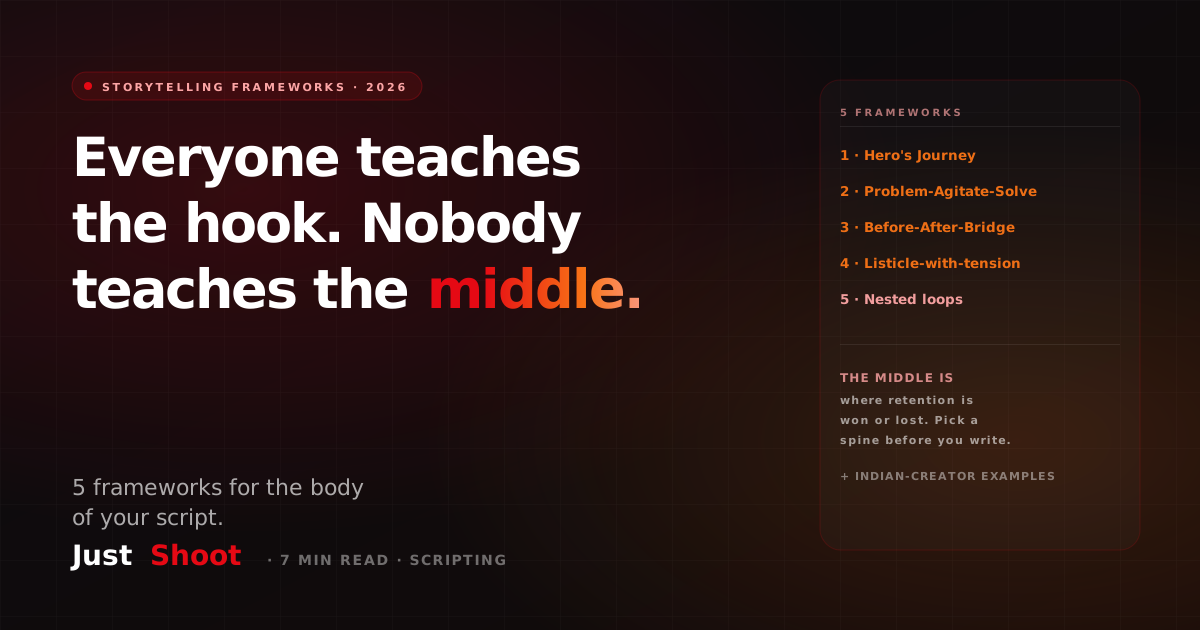
5 YouTube Storytelling Frameworks for Scripts (India, 2026)
Everyone teaches the hook; nobody teaches the middle. 5 proven storytelling frameworks for the body of your YouTube script, with Indian-creator examples and which niche each suits.
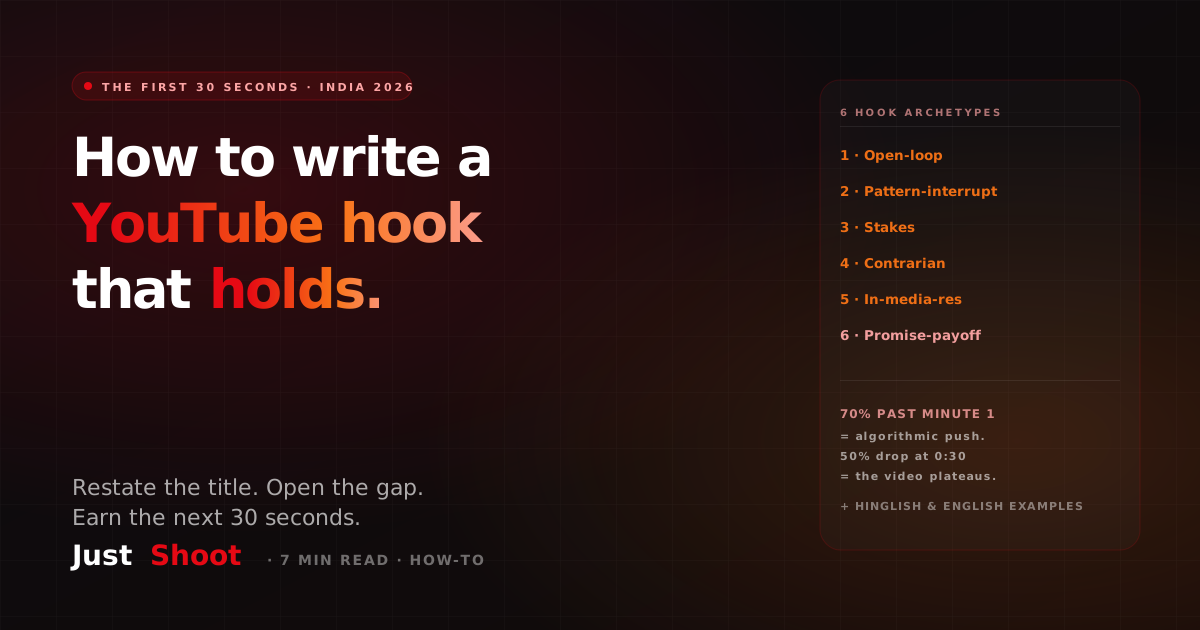
How to Write a YouTube Hook: The First 30 Seconds (India, 2026)
Write a YouTube hook that holds viewers past the first 30 seconds — 6 hook archetypes, the restate-the-title rule, and curiosity-gap calibration, with Hinglish examples.
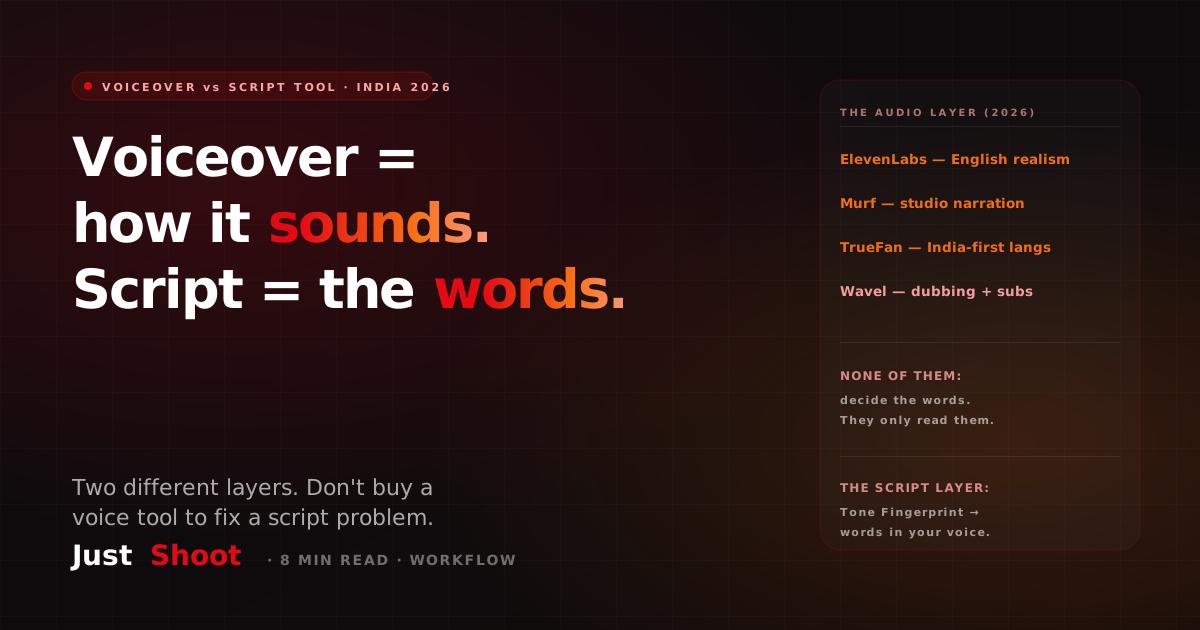
Best AI Voiceover Tool vs AI Script Tool for YouTube (India, 2026)
AI voiceover tools (Murf, ElevenLabs, TrueFan) make your video sound right. A script tool makes the words right. Here's the honest best-of plus why they're different layers.