YouTube AI Content Policy 2026: What's Allowed, What Gets You Demonetized (India)
YouTube allows AI-assisted videos in 2026 if there's real human involvement and you disclose synthetic content. Here's exactly what's allowed, what gets demonetized, and how Indian creators stay safe.
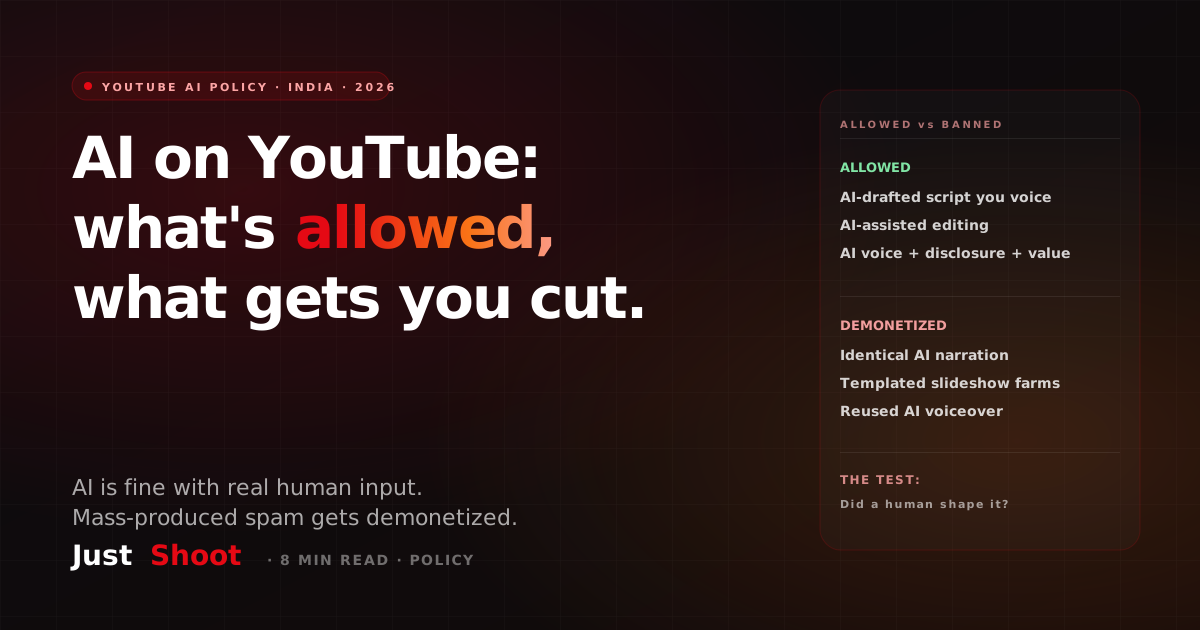
YouTube AI Content Policy 2026: What's Allowed, What Gets You Demonetized (India)
By Ashok Sachdev, Founder of JustShoot · Published 5 June 2026 · Last reviewed 5 June 2026
Short answer: YouTube allows AI-assisted content in 2026 — including AI-written scripts and AI-assisted editing — as long as there is meaningful human involvement and you disclose any synthetic or altered realistic media. What gets you demonetized is mass-produced, templated, or repetitive content with no original input: identical narration over stock slideshows, faceless channels churned out at scale, and reused AI voiceovers across near-identical videos. An AI-scripted video where you film, voice, and edit it yourself is on the safe side of the line.
I build an AI scripting tool for Indian creators, so I read these policy updates the day they drop. The confusion in 2026 is real, because YouTube renamed the policy and then ran its biggest enforcement wave yet — and a lot of creators assumed "AI = banned." It isn't. The dividing line is effort and originality, not whether AI touched the workflow. Here's the full breakdown.
What actually changed: the "inauthentic content" rename
On 15 July 2025, YouTube updated its long-standing "repetitious content" policy and renamed it the "inauthentic content" policy (YouTube Help, 2025). The rename was widely misread as a new anti-AI rule. It wasn't a new rule at all — it was a clarification that mass-produced and repetitive content was already ineligible for monetization, and AI just made it cheaper to produce that kind of content at scale.
The key phrase YouTube uses is "mass-produced or repetitive." That is the test. AI is allowed; low-effort, templated, identical output is not — whether a human or a model produced it.
Then came enforcement. Through late 2025 into early 2026, YouTube ran a sustained sweep against AI content farms. Reporting and creator-tracking around the wave pointed to large-scale demonetization and channel removals — coordinated networks pumping out faceless, AI-voiced slideshow videos were the primary target (ScaleLab / Social Media Today coverage, 2025–2026). The takeaway for a legitimate creator: the policy is aimed at spam factories, not at you using AI to work faster.
What's allowed (you keep monetization)
YouTube's own guidance and Help Center make this explicit. The following are fine under the 2026 policy:
- AI-written or AI-assisted scripts — drafting, outlining, and rewriting with AI is allowed. You're expected to add your own judgement, voice, and editing.
- AI-assisted editing — cleanup, captions, B-roll suggestions, thumbnail generation.
- AI voice or avatars with disclosure and real value — allowed if the content has genuine commentary, teaching, or original framing, and you disclose synthetic media where it could mislead.
- Reaction, commentary, and educational content that uses clips — provided you add substantial original commentary or transformation.
The common thread is meaningful human involvement: a real point of view, real editorial decisions, and a creator who could explain why the video exists.
What gets you demonetized (the banned column)
These are the patterns the inauthentic-content policy targets. Avoid all of them:
- Mass-produced templated videos — the same format, same script skeleton, same AI voice, churned across dozens of near-identical uploads.
- Identical or near-identical narration read over stock footage or slideshows with no original input.
- Reused AI voiceover across videos that differ only in topic keywords (classic content-farm signature).
- Auto-generated content with no commentary — text-to-speech reading a Wikipedia article over generic visuals.
- Undisclosed realistic synthetic media — AI-generated footage of real people or events presented as real, with no label.
If a video could have been generated by typing a topic into a tool and hitting "publish" with zero human shaping, it's at risk.
Allowed vs banned — at a glance
| Pattern | Status | Why |
|---|---|---|
| AI-drafted script you film and voice yourself | ✅ Allowed | Meaningful human involvement |
| AI-assisted editing / captions / thumbnails | ✅ Allowed | Tool, not the whole video |
| AI voice with original commentary + disclosure | ✅ Allowed | Adds value, disclosed |
| Identical AI narration over stock slideshows | ❌ Demonetized | Mass-produced, no input |
| Reused AI voiceover across near-identical videos | ❌ Demonetized | Repetitive / templated |
| Undisclosed realistic synthetic media | ❌ Risk / removal | Misleading, must disclose |
The disclosure rule most creators miss
Separate from monetization, YouTube requires creators to disclose altered or synthetic content that is realistic — content a viewer could mistake for real. You declare it in YouTube Studio when you upload, and YouTube adds a label (in the description, or more prominently for sensitive topics like news, health, and elections).
This matters for Indian creators specifically because finance, news, and health are exactly the niches where realistic AI visuals draw scrutiny. The safe rule: if you AI-generated a photorealistic person, place, or event that didn't happen, disclose it. AI scripting — where you perform the words yourself — is not synthetic media and doesn't need this label.
How this maps to building videos the safe way
The whole policy reduces to one question: did a human shape this video? The way to stay clearly on the allowed side is to keep the human in the loop where it counts — the voice and the editorial judgement — and let AI handle the slow mechanical parts.
That's the model behind JustShoot's 9-agent pipeline. It writes the script in your captured voice (via a Tone Fingerprint built from your real videos), so the output isn't a generic AI default that reads like every content-farm script — it carries your hooks, your rhythm, your Hinglish blend. You then film and voice it. That combination — original voice plus genuine human performance — is precisely the "meaningful human involvement" the policy rewards, which is the opposite of the templated, identical-narration output that gets demonetized.
Worried your current AI scripts read too generic? Paste one into the free AI Script Robot-Score — it flags the template phrases and filler that make a script look mass-produced, so you can fix it before it hurts your channel.
For more on the originality angle, see why AI scripts sound robotic and how to fix it and whether AI scripts actually hurt your channel. If you want the whole workflow in one place rather than stitched tools, here's the case for an AI Content OS vs separate tools.
The bottom line for Indian creators in 2026
YouTube did not ban AI. It tightened the screws on low-effort spam — and AI made that spam easy to mass-produce, which is why the rename and the enforcement wave landed together. If you use AI to draft and accelerate, then add your real voice, your performance, and your editorial judgement (plus disclosure where visuals are synthetic), you are squarely inside the monetizable, allowed zone.
The creators getting hurt aren't the ones using AI. They're the ones who let AI do all of it, with no human anywhere in the loop. Keep the human — your voice — and you keep the monetization. See how JustShoot keeps your voice in every script →
FAQ
Is AI-generated content against YouTube's monetization policy in 2026? No. AI-assisted content is allowed as long as there's meaningful human involvement and you disclose synthetic or realistic altered media. The "inauthentic content" policy targets mass-produced, repetitive, templated videos — not the use of AI itself.
What is YouTube's "inauthentic content" policy? It's the July 2025 rename of the older "repetitious content" policy. It clarifies that mass-produced or repetitive content — like identical AI narration over stock slideshows — is ineligible for monetization, regardless of whether AI or a human made it.
Will an AI-written script get my video demonetized? No, not on its own. An AI-drafted script that you edit, voice, and film yourself counts as human-involved content. Demonetization risk comes from templated, identical, no-input output — not from using AI as a drafting tool.
Do I have to disclose that I used AI in my YouTube video? You must disclose realistic synthetic or altered media (AI-generated people, places, or events that look real) in YouTube Studio at upload. You do not need a special label for an AI-written script that you perform yourself, because that isn't synthetic media.
Why did YouTube demonetize so many channels in early 2026? YouTube ran a large enforcement wave against AI content farms — coordinated networks mass-producing faceless, AI-voiced slideshow videos with no original input. Legitimate creators using AI as a tool were not the target.
Sources: YouTube Help — Inauthentic content policy (2025); YouTube Help — Disclosing altered or synthetic content; Social Media Today / ScaleLab enforcement coverage (2025–2026). Education, not legal advice — verify current YouTube Partner Program rules before publishing.
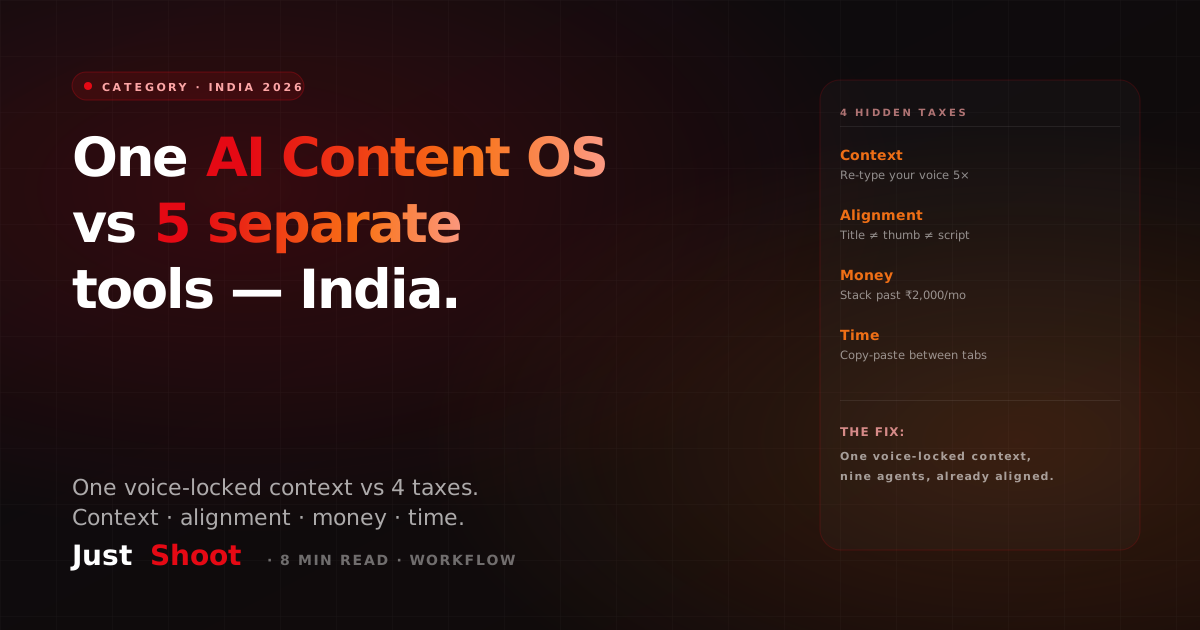
AI Content OS vs 5 Separate Tools: What Indian Creators Actually Need (2026)
An AI Content OS runs your whole YouTube workflow from one voice-locked context. Here's why stitching 5 separate tools costs more, breaks alignment, and slows Indian creators down.
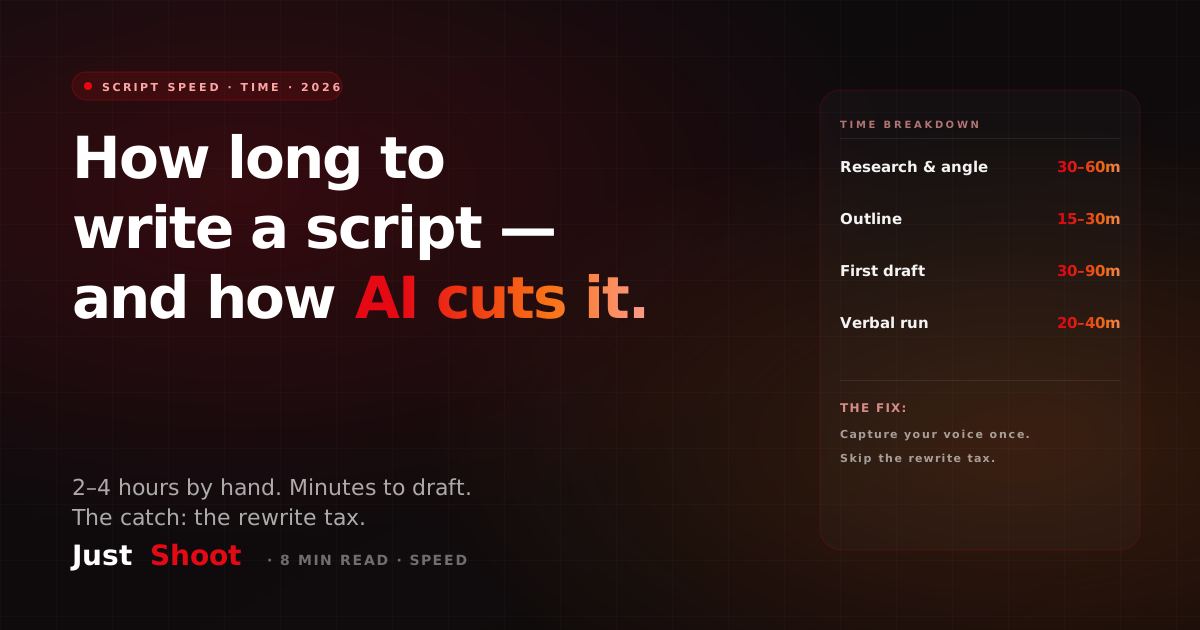
How Long Does It Take to Write a YouTube Script? (And How AI Cuts It)
Writing a YouTube script takes 2–4 hours by hand for a 10-minute video. Here's the real time breakdown — and exactly how AI cuts it to minutes without sounding robotic.