Does Using AI to Write YouTube Scripts Hurt Your Channel? (India, 2026)
No — using AI to write or research YouTube scripts won't hurt your channel or get you demonetized in India. Here's what YouTube actually penalizes in 2026, and the safe-usage rule.
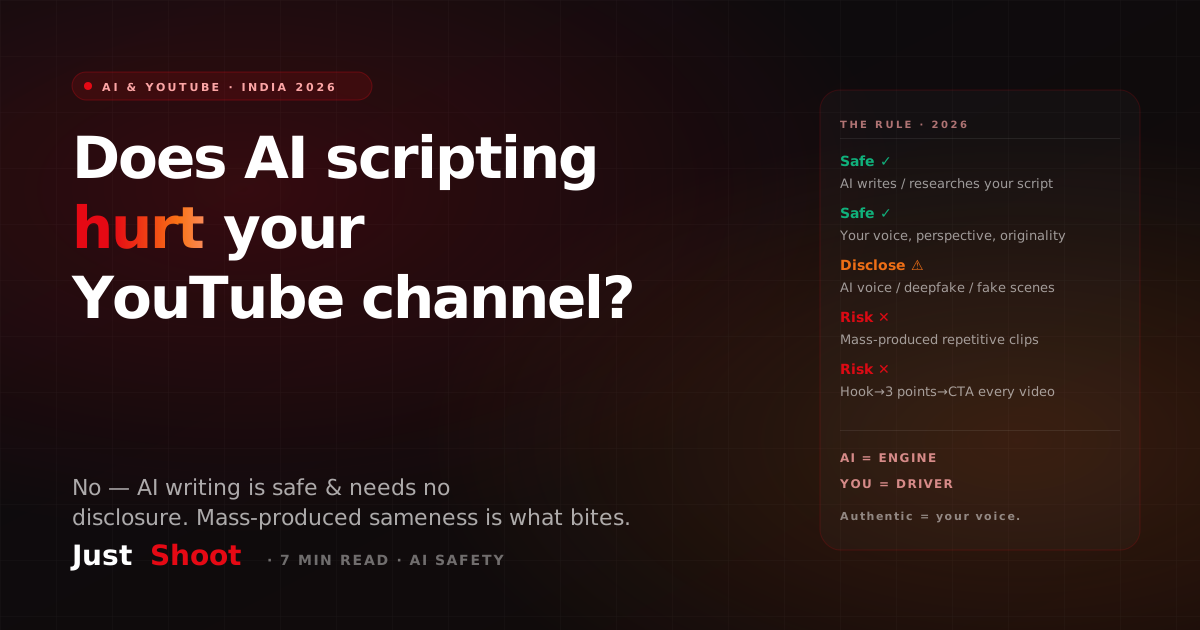
Does Using AI to Write YouTube Scripts Hurt Your Channel? (India, 2026)
By Ashok Sachdev, Founder of JustShoot · Published 1 June 2026 · Last reviewed 1 June 2026
Short answer: No — using AI to write or research your YouTube scripts does not hurt your channel, and it needs no disclosure in India in 2026. What actually hurts you is inauthentic, mass-produced content: copy-paste AI scripts, repetitive formats, and synthetic voices used without human judgment. YouTube's 2026 policy targets low-effort sameness, not AI assistance. The fix is simple — make every AI script sound like you, with your own perspective, originality, and voice.
If you're already using ChatGPT or a script tool and you're quietly worried it'll get you demonetized, this is the honest answer from someone who builds an AI scripting product for Indian creators. I'll give you the rule, the policy wording, and a safe workflow — no fear-mongering.
This article explains YouTube's published policies as of June 2026. It is not legal advice and not a guarantee against monetization disputes — always confirm the current wording on YouTube Help before relying on it.
What YouTube actually penalizes in 2026
The thing creators get wrong is assuming YouTube has a rule against "AI." It doesn't. In 2026, YouTube renamed and expanded its old "repetitious content" policy into the broader "inauthentic content" policy — and that distinction is the whole story.
The policy explicitly targets mass-produced, low-effort, repetitive videos — the kind of channel that publishes 30 near-identical AI clips a week with no original commentary (source: ytZolo, invideo, Fliki coverage of YouTube's updated monetization policy, 2026). The trigger is sameness and low effort, not the tool you used to make it. A script written with AI but shaped by your own research, opinions, and voice is exactly the kind of "original, authentic" content the policy protects.
For context, India's monetization floor still requires 1,000 subscribers plus 4,000 public watch hours in 12 months, OR 10 million valid Shorts views in 90 days (source: YouTube Partner Program / upGrowth / TubeBuddy, 2026). Nothing in that bar mentions AI. You qualify on watch time and originality — period.
So the real risk isn't "I used AI." The risk is "I used AI lazily."
AI writing vs AI media — the disclosure line creators get wrong
Here's the single most misunderstood rule in 2026, and getting it right removes most of the anxiety.
Using AI to write, research, outline, or refine a script requires no disclosure. Disclosure on YouTube applies only to realistic synthetic media — AI-generated voice that imitates a real person, deepfake footage, or AI scenes depicting real events that didn't happen (source: YouTube Help / upGrowth, 2026).
In plain terms:
- No disclosure needed: AI helped you brainstorm, outline, draft, or polish the words you say on camera.
- Disclosure needed: you used an AI voice to narrate, an AI avatar of a real person, or AI footage that looks like real, unaltered reality.
This is why script-tone tools and AI-voice/TTS tools are completely different conversations. JustShoot writes the script — the words — in your own tone. It does not generate synthetic voice or video, so script-writing with it stays firmly on the no-disclosure side of the line. If you later add an AI voiceover from some other tool, that part is what you'd flag.
The 4 things that make AI scripts look "inauthentic"
If AI-written scripts ever get a channel into trouble, it's because the output carries the tells of mass production. There are four:
- Uniform sentence length. Every line is the same medium-length shape. Human speech is bursty — short punches, long runs. AI defaults to flat.
- Hollow authority. "Experts agree," "in today's digital landscape," "studies show" — filler that asserts credibility without earning it. AI leans on it because it's trained on corporate blogs.
- The Hook → 3 points → CTA template. The same rigid skeleton on every video. Viewers (and the algorithm) read repetition as low effort.
- Web-blog rhythm. AI writes like a press release because that's its training data — not like a person talking to a camera.
None of these are caused by "using AI." They're caused by shipping the raw default output. Fix the four tells and the inauthenticity signal disappears. (We go deeper on this in Why your AI YouTube scripts sound robotic — and how to fix it.)
How to use AI safely — keep your voice, perspective, and originality
The safe-usage rule, stated once: AI is fine as the engine; you are the driver. The script can be AI-assisted as long as the judgment, perspective, and voice are yours. That's the line every policy source agrees on, and it's also just good content.
Why "your voice" is the whole game
A generic AI draft is replaceable — a thousand creators can generate the same one. What makes a channel yours is the part no model defaults to: your sentence rhythm, your Hindi/English blend, your recurring hooks and phrases, the way you open and close. We call that fixed set of signals a Tone Fingerprint — the specific markers that make a script sound like you instead of like a corporate blog.
This isn't a styling trick; it's the mechanism behind the policy verdict. "Authentic" content is content that carries a real person's voice. Lock your voice into every AI script and you're not gaming the policy — you're satisfying it by design. You can see how your own voice profile looks by reading voice clone vs tone clone for YouTube, which explains why tone (not synthetic voice) is the safe, disclosure-free path.
Want to know how "AI" your current scripts read? Paste one into the free AI Script Robot-Score — it scores the four robot tells and flags exactly what to fix before you publish.
A safe AI workflow for Indian creators
Here's the four-step loop I'd recommend to any creator who wants AI's speed without the inauthenticity risk:
- Research — use AI to gather angles and facts, then verify the claims yourself.
- Script in your voice — draft with AI, but lock your tone (rhythm, language mix, hooks) so the output sounds like your channel, not a template. This is exactly what JustShoot's script agent does.
- Fact-check — confirm every claim, especially in finance, health, or news. AI hallucinates; you're accountable.
- Publish with originality — add your perspective, your examples, your on-camera judgment. That's the "authentic" part the policy rewards.
Do this and you get AI's time savings and a channel that reads as original. That's not a loophole — it's just the right way to use the tool.
FAQ
Is it allowed to use AI to write YouTube scripts in India? Yes. Using AI to write, research, outline, or refine a script is allowed and requires no disclosure in India in 2026. Disclosure rules apply only to realistic synthetic media — AI voice, deepfakes, or AI scenes of real events — not to AI-assisted writing.
Will YouTube demonetize me for using AI? Not for using AI as a writing tool. YouTube's 2026 "inauthentic content" policy demonetizes mass-produced, repetitive, low-effort content. A script that's AI-assisted but carries your own research, perspective, and voice is original content and stays monetizable.
Do I have to disclose AI-written scripts? No. Disclosure is required only for realistic synthetic media — AI-generated voice, deepfake footage, or AI scenes depicting real events. AI-assisted writing of the words you say on camera does not require disclosure.
Can AI detection tools flag my script? Detectors flag text patterns — uniform sentence length, predictable formatting, generic phrasing. The fix isn't hiding that you used AI; it's writing in your own voice and structure so the output doesn't read as a template. A tone-locked script doesn't trip the same signals as a raw default draft.
How do I make an AI script sound like me, not generic? Lock your tone: vary your sentence rhythm, keep your Hindi/English mix, reuse your signature hooks, and cut hollow authority phrases. A persisted Tone Fingerprint applies these automatically to every script. See why AI scripts sound robotic and how to fix it and can AI write YouTube scripts in my voice (Hindi).
The honest takeaway: AI won't hurt your channel. Lazy AI will. Use it to move faster, but keep your voice, your facts, and your perspective in every script.
Want a quick, free read on how your current scripts read? Score a script with the free AI Script Robot-Score →, or try JustShoot → and generate one script against your real channel to see your tone carried through.
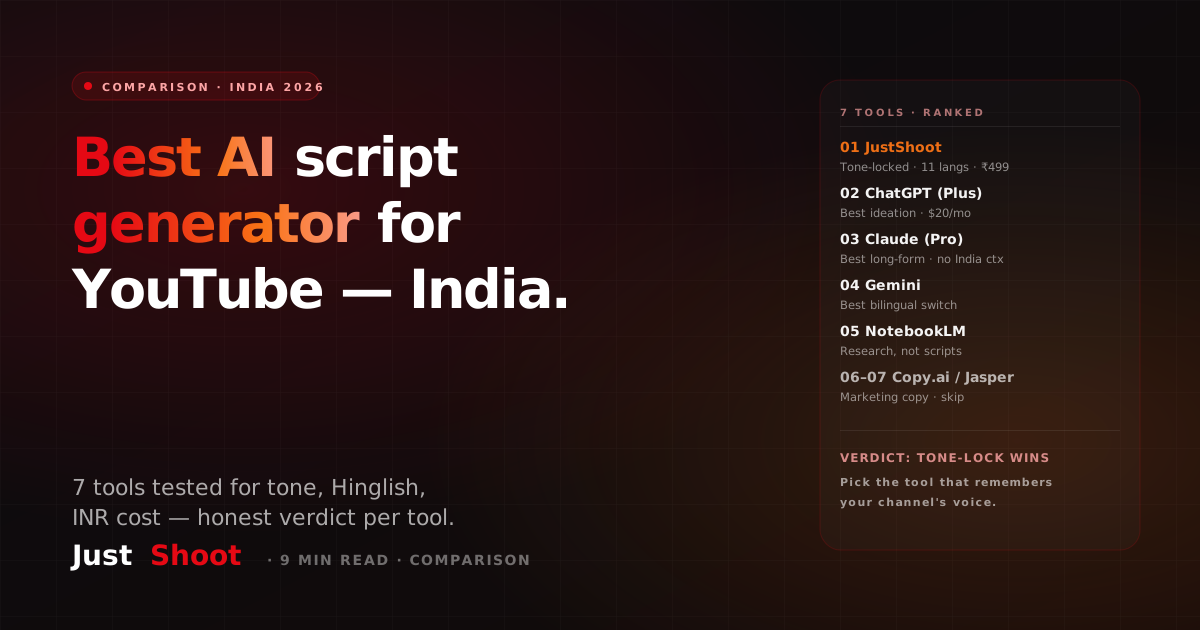
Best AI Script Generator for YouTube in India 2026 — Honest Rundown of 7 Tools
Which AI script generator actually works for Indian YouTubers in 2026 — tone match, Hinglish, INR pricing, and the one layer every tool below misses. Ranked honestly.
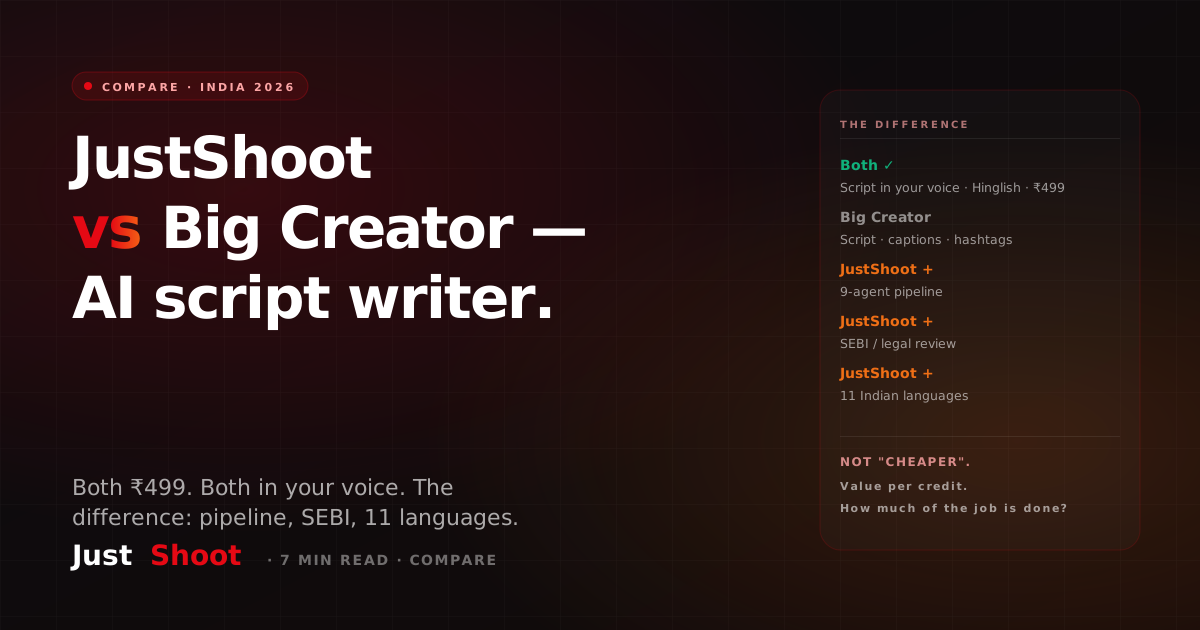
JustShoot vs Big Creator: AI Script Writer for Indian Creators (2026)
JustShoot vs Big Creator compared for Indian YouTubers in 2026 — both write scripts in your voice from ₹499. The real difference: pipeline breadth, SEBI review, and 11 languages.