AI Content OS vs 5 Separate Tools: What Indian Creators Actually Need (2026)
An AI Content OS runs your whole YouTube workflow from one voice-locked context. Here's why stitching 5 separate tools costs more, breaks alignment, and slows Indian creators down.
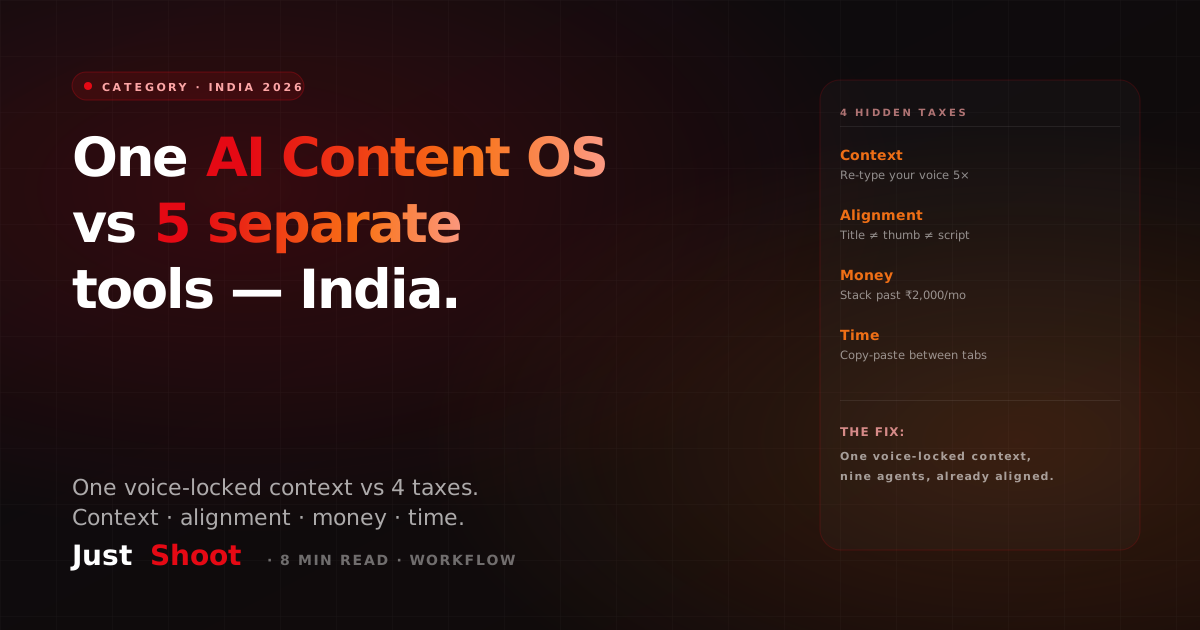
AI Content OS vs 5 Separate Tools: What Indian Creators Actually Need (2026)
By Ashok Sachdev, Founder of JustShoot · Published 4 June 2026 · Last reviewed 4 June 2026
Short answer: An AI Content OS is one connected system that runs your whole YouTube workflow — ideation, in-voice script, fact-check, storyboard, thumbnail, SEO, shorts, distribution — from a single voice-locked context. Stitching 5–6 separate tools does the same jobs but in disconnected tabs, so your title, thumbnail, and script drift out of alignment, your monthly cost stacks past ₹2,000, and you re-explain your channel's voice to every tool. For a solo Indian creator, the OS approach wins on cost, consistency, and time.
I build an AI Content OS for Indian creators, so treat my framing with healthy suspicion. But the question — "do I need one all-in-one tool, or a stack of best-in-class ones?" — is real, and the honest answer depends on how many videos you ship and how solo you are. Here's the trade-off, with the cases where a tool stack genuinely wins.
What "AI Content OS" actually means
An AI Content OS for YouTube is one system that takes a single input — your channel profile plus a topic — and produces a publish-ready package: a script in your own voice, fact-checks, an SEO title-and-tags set, thumbnail concepts, shorts cut-downs, and a distribution plan. It is not "an AI that writes scripts." It's the layer that sits between your idea and your upload, the way an operating system sits between your apps and your hardware.
The key word is connected. In an OS, every stage shares the same context — most importantly your voice. The thumbnail agent knows what the script's hook is. The SEO agent knows the actual topic angle, not a guess. The shorts agent pulls the strongest 30 seconds from the real script. Nothing is re-typed, re-explained, or re-aligned by hand.
That's the difference from a stack of tools, where each one starts cold.
The hidden cost of stitching 5 tools
The "best tool for each job" advice sounds right, and for a studio with an editor and a producer it can be. For a solo creator it quietly creates four taxes.
1. The context tax. Every separate tool starts with no memory of your channel. You re-type your voice instructions — "casual, Hinglish, punchy hooks, no jargon" — into the script tool, then again into the next AI you touch. A typical creator now juggles 4–6 tools across a single video (source: creator-workflow surveys, outliercreator / Shotstack, 2026). Each handoff is a place for your voice to slip.
2. The alignment tax. This is the one that actually hurts views. Your thumbnail tool doesn't know what your SEO tool chose as the title, which doesn't know the hook your script tool wrote. So the click-promise on the thumbnail, the keyword in the title, and the first 15 seconds of the video pull in three slightly different directions. Misaligned title–thumbnail–script is one of the most common reasons a decent video underperforms.
3. The money tax. Individually each tool looks cheap. Stacked, a script tool + an SEO tool + a thumbnail generator + a shorts clipper + a caption tool routinely passes ₹2,000/month, and most are dollar-billed, so a weak rupee makes it worse. You're paying five subscriptions to do one creator's job.
4. The time tax. Copy-pasting between tabs, reformatting outputs, and re-aligning everything by hand is invisible work that eats the time you thought AI was saving. The draft is fast; the stitching is not.
Where a tool stack genuinely wins (the honest part)
A connected OS isn't always the right call, and pretending otherwise would lose your trust.
- You already own a tool you love. If your editing or thumbnail tool is part of your identity and your team knows it cold, ripping it out for marginal integration gains isn't worth it.
- You have a team with clear handoffs. With a dedicated editor and a producer, the "context dies between tabs" problem is solved by humans, not software. The handoff is a person, not a copy-paste.
- You only need one job done. If you genuinely only want captions on existing footage, a single specialist clipper is the right tool — you don't need a whole OS for that.
If that's you, build the stack and skip the rest of this. For everyone shipping solo or near-solo on a weekly cadence, read on.
The OS model: one voice, nine agents
The reason an OS works for Indian creators specifically is the voice problem. You write in Hinglish, code-switch mid-sentence, and your audience notices instantly when a script "AI lag raha hai." A stack of English-trained tools each flattens your Hindi-English blend a little differently, so you spend the saved time un-flattening it five times over.
In an OS, your voice is captured once as a reusable profile — a Tone Fingerprint built from your existing videos: vocabulary level, hook style, sentence rhythm, Hindi/English ratio, identity markers. That profile is then shared as context across nine specialised agents — research, script, fact-check (including SEBI/legal review for finance channels), storyboard, thumbnail, SEO, shorts, distribution. Each agent inherits the same voice and the same topic context, so the outputs arrive already aligned instead of needing manual reconciliation.
That's the structural win: not "one tool does more features," but "one context flows through every stage." The thumbnail matches the hook because they were generated from the same understanding of the video. For the full breakdown of how the nine agents hand off to each other, the best AI tools for Indian YouTubers in 2026 comparison shows where a stack maps to which job.
The cost math, side by side
Here's the rough monthly picture for a weekly creator, the honest way.
- The stack: script tool (
₹700) + SEO/keyword tool (₹900) + thumbnail generator (₹600) + shorts clipper (₹800) + caption tool (~₹400) ≈ ₹2,400+/month, most dollar-billed, none aware of each other. Plus the unpriced time of stitching them together. - The OS: one subscription, credit-based, from ₹499 (Starter) / ₹699 (Pro) / ₹899 (Studio) per month, annual −20%, UPI-first with a no-card trial — one context, every job, already aligned.
The OS isn't just cheaper on the invoice. The bigger saving is the stitching time and the rewrite-to-realign tax you never see on a bill. If you want the full per-tool pricing breakdown including free tiers and USD tools, that's its own comparison — but the headline is: five subscriptions to do one job is the expensive path, not the cheap one.
So what should you actually do?
Be honest about your stage. If you ship one video a month, own tools you love, or have a team that handles handoffs, a curated stack is fine. If you're a solo or two-person Indian channel shipping weekly in Hinglish, the context, alignment, money, and time taxes compound fast — and a connected AI Content OS removes all four by sharing one voice-locked context across every stage. Start with the cheapest fix that hurts most: capture your voice once instead of re-describing it to five tools.
FAQ
What is an AI Content OS for YouTube? It's a single connected system that takes your channel profile and a topic and produces a publish-ready package — in-voice script, fact-check, SEO title and tags, thumbnail concepts, shorts cut-downs, and a distribution plan — all from one shared context. Unlike a stack of separate tools, every stage knows your voice and the actual video angle, so outputs arrive already aligned.
Is an all-in-one AI tool better than separate best-in-class tools? For a solo or near-solo creator shipping weekly, usually yes — because separate tools each start cold, drift out of alignment, and stack past ₹2,000/month. For a team with dedicated editors and clear handoffs, a curated stack can match it, since humans handle the context that software would otherwise carry.
How much does running 5 separate creator tools cost in India? A typical weekly-creator stack — script, SEO, thumbnail, shorts, and caption tools — routinely passes ₹2,400/month, and most are dollar-billed. A credit-based AI Content OS starts from ₹499/₹699/₹899 per month with annual −20%, doing the same jobs from one subscription.
Why do my title, thumbnail, and script feel misaligned? Because separate tools don't share context. Your thumbnail generator doesn't know the title your SEO tool picked, which doesn't know the hook your script tool wrote — so the three drift. An OS fixes this by generating them from the same voice and topic context. See the best AI tools for Indian YouTubers for how the jobs map.
Does an AI Content OS handle Hinglish and regional languages? A voice-first OS captures your real Hindi-English blend once and reuses it across every stage, instead of each separate tool flattening it differently. That's the core reason the OS model fits Indian creators — see how to write a YouTube script in your own voice with AI.
The choice isn't "all-in-one vs best-of-breed" in the abstract. It's: how many times are you willing to re-explain your channel's voice, and how aligned do your title, thumbnail, and script need to be? For most solo Indian creators, the connected path wins on all four taxes.
See it on your own channel: test your voice profile free →, or try JustShoot → and run one topic through the full pipeline to feel the alignment difference.
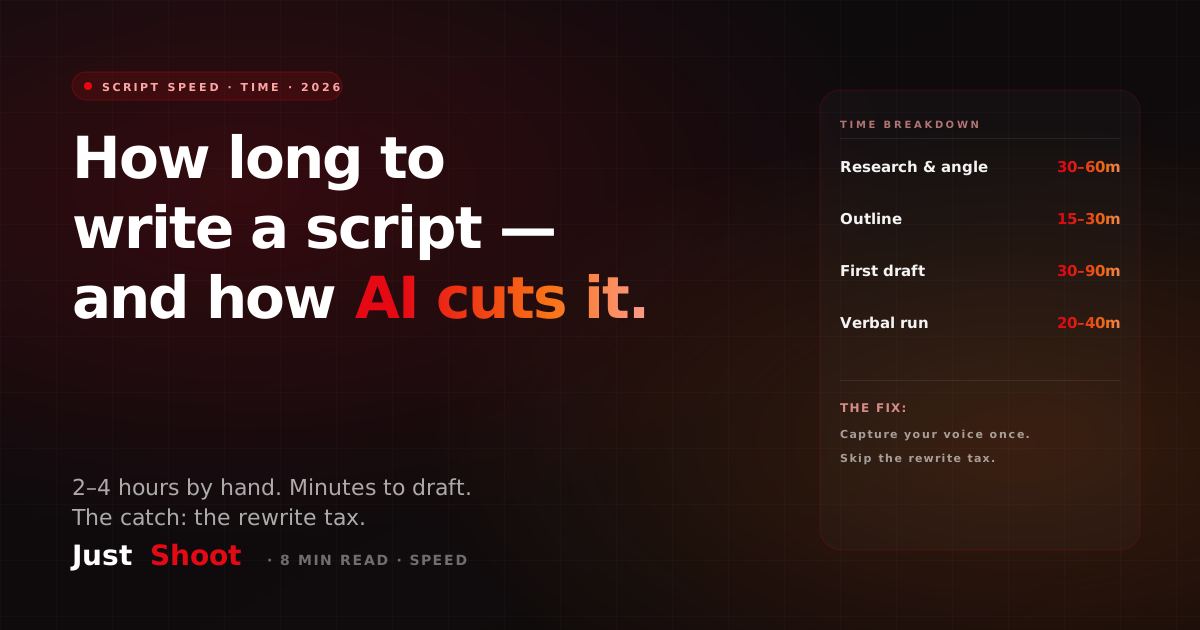
How Long Does It Take to Write a YouTube Script? (And How AI Cuts It)
Writing a YouTube script takes 2–4 hours by hand for a 10-minute video. Here's the real time breakdown — and exactly how AI cuts it to minutes without sounding robotic.
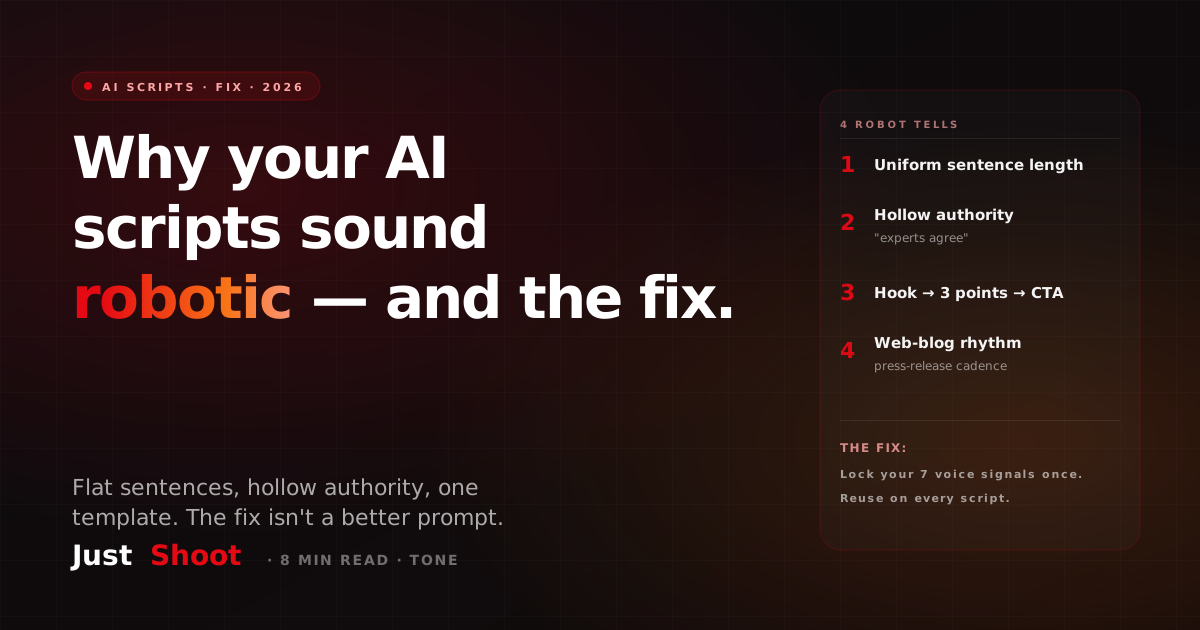
Why Your AI YouTube Scripts Sound Robotic (And How to Fix It)
AI YouTube scripts sound robotic for 3 reasons: uniform sentences, hollow authority, and one rigid template. Here's why — and the real fix for natural, human scripts in 2026.