What Is an AI Content OS for YouTube? (And Why Indian Creators Are Switching in 2026)
An AI Content OS for YouTube is one system that runs ideation to distribution in a single voice-locked context. Here's what it actually means and why Indian creators are switching in 2026.
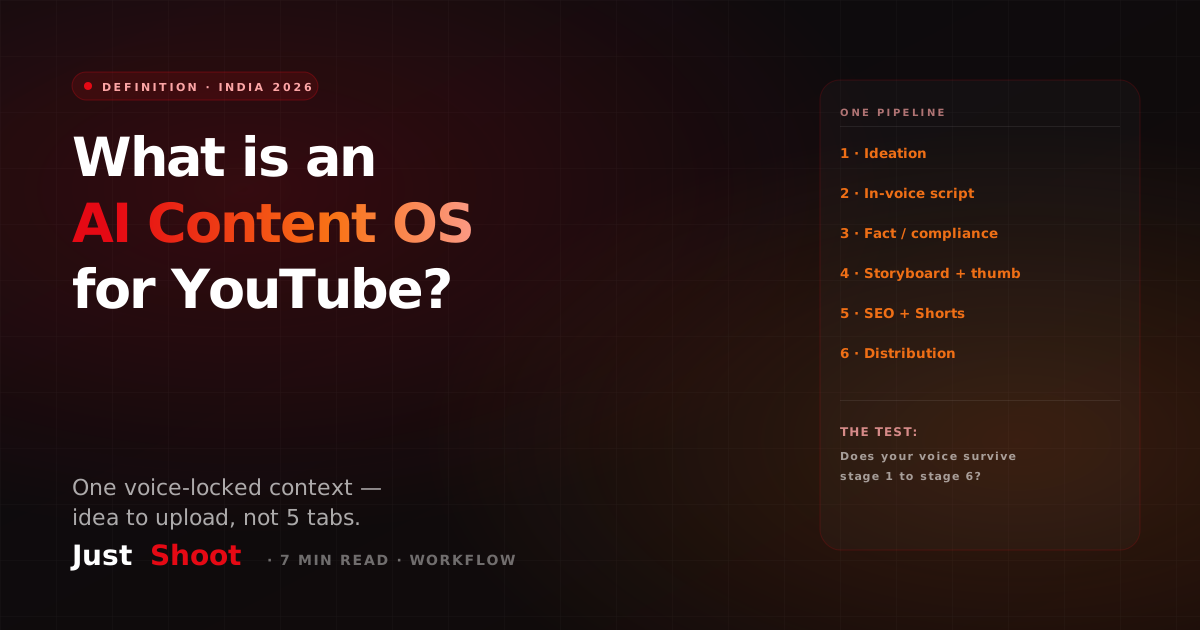
What Is an AI Content OS for YouTube? (And Why Indian Creators Are Switching in 2026)
By Ashok Sachdev, Founder of JustShoot · Published 9 June 2026 · Last reviewed 9 June 2026
Short answer: An AI Content OS for YouTube is one system that runs your entire video workflow — ideation → in-voice script → fact-check → storyboard → thumbnail → SEO → shorts → distribution — inside a single voice-locked context, instead of stitching 5–6 disconnected tools together. The "OS" part is the point: every stage shares the same memory of your channel and your voice, so your title, thumbnail, and script stay aligned and nothing gets re-typed.
I build an AI Content OS for Indian creators, so read my framing with healthy suspicion. But the term is new enough that it's worth defining cleanly — because in 2026 a lot of "all-in-one creator tool" claims mean very different things, and the differences decide whether your videos actually get easier to ship or just spread your work across more tabs.
The definition, in one block
An AI Content OS for YouTube is the layer that sits between your idea and your upload — the way an operating system sits between your apps and your hardware. You give it one input (your channel profile plus a topic), and it produces a publish-ready package: a script in your own voice, fact-checks, an SEO title-and-tags set, thumbnail concepts, shorts cut-downs, and a distribution plan. It is not "an AI that writes scripts." It is the connective tissue that keeps all those jobs running off the same context.
The word that does the work is connected. In an OS, every stage shares the same memory — most importantly your voice. The thumbnail step knows the script's hook. The SEO step knows the real topic angle, not a guess. The shorts step pulls from the actual script. Nothing is re-explained by hand. That is the whole difference from a stack of separate tools, where each one starts cold and forgets your channel the moment you close the tab.
Why "OS" and not just "tool"
A tool does one job. A title generator makes titles. A clip tool makes Shorts. A thumbnail tool makes thumbnails. Each is genuinely good at its job — and each is an island.
An OS is defined by what happens between the jobs. When the script, title, thumbnail, and Shorts all come out of one system that knows your voice and your topic, they line up by default. When they come from five tools, lining them up is your job, done by hand, on every video. That coordination work is invisible until you measure it — and it's where most of a solo creator's time quietly goes.
So "OS" isn't marketing inflation. It's a real architectural claim: shared state across every stage of production. If a product can't carry your channel's voice from the script step to the thumbnail step without you re-typing it, it's a bundle of tools, not an OS.
The four jobs an AI Content OS has to run
A YouTube video isn't one task; it's a pipeline. An AI Content OS for YouTube has to own all of it:
- Ideation — topic research and angle, tuned to your niche and audience.
- In-voice script — written in your hook style, rhythm, and language blend, not a generic AI register. This is the load-bearing stage; everything downstream inherits its voice. (More on the method in how to write a YouTube script in your own voice with AI.)
- Fact-check and compliance — claims verified, and for finance/legal niches, a review pass before anything ships.
- Packaging and distribution — storyboard, thumbnail concepts, SEO title/description/tags, native Shorts scripts, and a posting plan.
Run those in one context and they reinforce each other. Run them in five apps and every handoff is a place for your voice — and your title-thumbnail-script alignment — to drift.
Why Indian creators specifically are switching in 2026
Three reasons this lands harder in India than in a US-first creator stack:
Language. Most global creator tools are English-first. An Indian creator working in Hindi, Hinglish, or a regional language needs the script written natively in that blend — not translated or dubbed after the fact. An OS that carries a per-channel voice can hold your exact Hindi/Hinglish ratio across every stage; a stack of English-first tools can't. (Can AI write scripts in regional Indian languages? covers why native ≠ translation.)
Cost. Stacking separate USD-priced subscriptions adds up fast — a script tool, a title tool, a thumbnail tool, a clip tool, and a ChatGPT Plus seat can cross ₹2,000–3,000 a month before you've shipped a single video. A single OS priced for India (JustShoot's tiers are Starter ₹499 / Pro ₹699 / Studio ₹899, credit-based, with an annual −20%) replaces the stack at a fraction of the run-rate.
Compliance. A large slice of India's fastest-growing channels are finance and education — niches where an unreviewed claim can draw a SEBI notice. A tool stack has no compliance stage; an OS can run a dedicated fact/compliance review before publish.
AI Content OS vs the "all-in-one creator tool" claim
This is where 2026 gets noisy. Several products now market themselves as "all-in-one AI for Indian creators." Most are general creator/D2C platforms — image generation, chat, social posts — priced in rupees. Useful, but not YouTube-script-native: they don't carry your spoken-script voice from ideation through to the thumbnail, and they don't have a script-writing stage that holds your Hinglish rhythm and identity markers across a whole channel.
A YouTube-specific AI Content OS is narrower and deeper. It optimizes for one thing — turning your topic into a publish-ready video package in your voice — and runs the YouTube-specific stages (hook-style script, storyboard, thumbnail, Shorts, YouTube SEO, distribution) that a general creator suite treats as afterthoughts. For a YouTuber, narrow-and-deep beats broad-and-shallow, because the script is the channel.
How JustShoot fits the definition
JustShoot is a 9-agent AI Content OS for YouTube. One input — your channel profile plus a topic — runs through nine sequential agents: topic research, in-voice script writing, fact/compliance review, storyboard, thumbnail, SEO, shorts, and distribution, coordinated so each agent sees the earlier outputs. The voice is locked once via a Tone Fingerprint (your hook style, rhythm, Hinglish blend, identity markers) and carried through every stage, so the package comes out aligned instead of assembled.
That's the test for any "AI Content OS for YouTube" claim: does your channel's voice survive from the first stage to the last without you re-typing it? If yes, it's an OS. If no, it's a stack. (Here's the full single-vs-many argument if you're weighing the trade-off.)
If you want to see whether your current AI scripts read like a human or a robot before you commit to anything, run them through the free Tone Fingerprint preview — it's the same voice-matching layer the OS uses, with no signup.
When you don't need an OS
Honest caveat: if you ship one video a month, already have an editor and a producer, and enjoy hand-picking a best-in-class tool for each job, a stack is fine — you have the human glue to keep things aligned. The OS argument is strongest for solo and small-team Indian creators shipping weekly, where the coordination work between tools is the actual bottleneck. (See JustShoot's pricing for where the line lands for your volume.)
FAQ
What is an AI Content OS for YouTube in simple terms? It's one system that runs your whole YouTube workflow — idea, script in your voice, fact-check, storyboard, thumbnail, SEO, Shorts, and distribution — from a single shared context, instead of five disconnected tools. The defining feature is that every stage remembers your channel and your voice, so the outputs stay aligned.
How is an AI Content OS different from an AI script generator? A script generator does one job: it writes scripts. An AI Content OS includes script writing as one stage and connects it to ideation, fact-check, thumbnail, SEO, Shorts, and distribution — all sharing the same voice and topic context. The OS is the pipeline; the generator is one tool in it.
Is an AI Content OS better than using separate best-in-class tools? For solo and small-team creators shipping weekly, usually yes — because the time lost coordinating five tools (re-typing your voice, aligning title/thumbnail/script) outweighs each tool being marginally better. For a studio with an editor and producer to do that coordination, a curated stack can win. It depends on your volume and whether you have human glue.
Why are Indian creators switching to an AI Content OS in 2026? Three reasons: language (the script must be written natively in Hindi/Hinglish/regional, not translated), cost (one India-priced OS replaces a stack of USD subscriptions that crosses ₹2,000+/month), and compliance (finance and education channels need a review stage that a tool stack doesn't have).
Does JustShoot count as an AI Content OS for YouTube? Yes — it runs nine sequential agents from ideation to distribution in one voice-locked context, with the channel's voice carried through every stage via a Tone Fingerprint. Plans start at ₹499 (Starter), credit-based, with an annual −20%.
Written by Ashok Sachdev, Founder of JustShoot — an AI Content OS that turns a channel profile and a topic into a publish-ready YouTube package in your own voice.
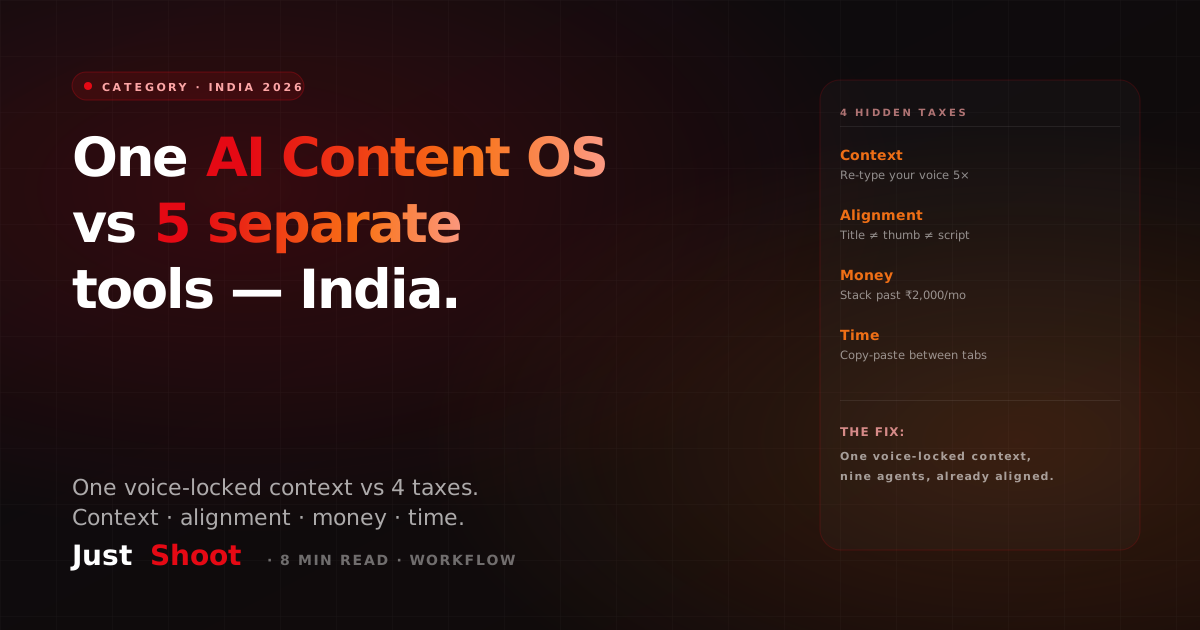
AI Content OS vs 5 Separate Tools: What Indian Creators Actually Need (2026)
An AI Content OS runs your whole YouTube workflow from one voice-locked context. Here's why stitching 5 separate tools costs more, breaks alignment, and slows Indian creators down.
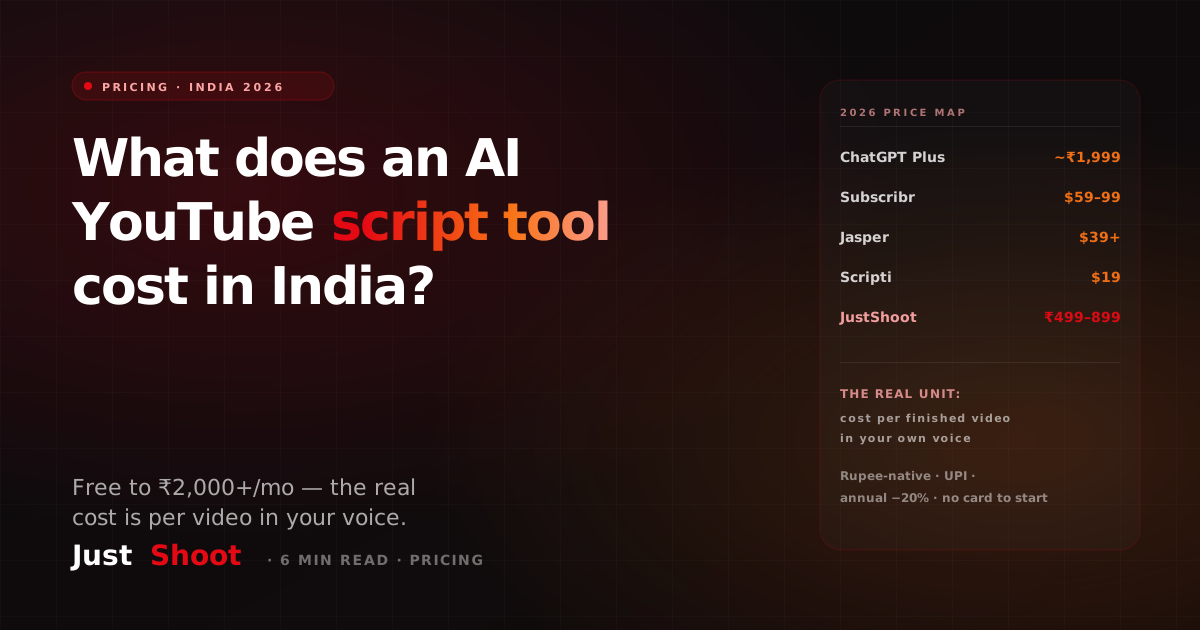
How Much Does an AI YouTube Script Tool Cost in India? (2026 Pricing)
AI YouTube script tools in India range from free to ₹2,000+/month. Here's the real 2026 cost breakdown — global USD tools vs India-priced plans — and the per-video math that decides what's worth it.
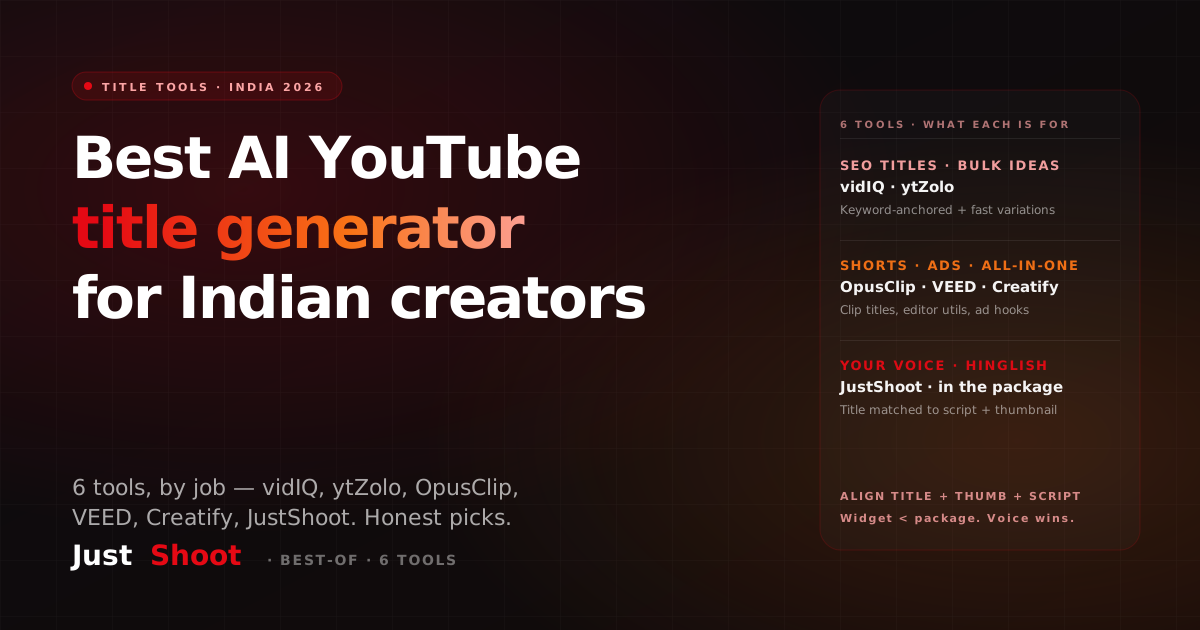
Best AI YouTube Title Generator for Indian Creators (2026)
The best AI YouTube title generators for Indian creators in 2026 — honest picks for vidIQ, ytZolo, OpusClip, VEED, Creatify & JustShoot, with what each is genuinely good at.