Best Way to Write YouTube Shorts Scripts in Hindi/Hinglish with AI (2026)
How to write YouTube Shorts scripts in Hindi and Hinglish with AI in 2026 — the 3-second hook rule, the blend ratio that holds retention, and why repurposed long-form scripts flop as Shorts.
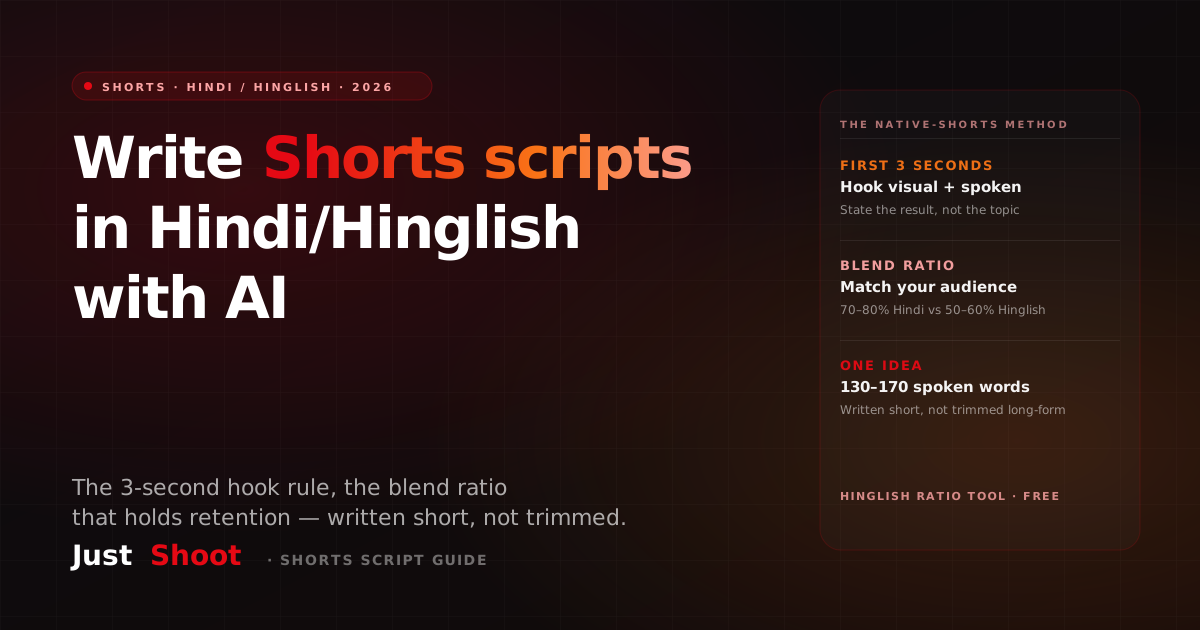
Best Way to Write YouTube Shorts Scripts in Hindi/Hinglish with AI (2026)
By Ashok Sachdev, Founder of JustShoot · Published 2026-06-09
The best way to write a YouTube Shorts script in Hindi or Hinglish with AI in 2026 is to write it natively short — a 3-second visual-plus-spoken hook, one single idea, and a 130–170 word spoken body in your own blend ratio — rather than asking AI to compress a long-form script. Generic AI tools translate or trim; a Shorts script has to be built short from the first word.
That distinction is the whole game. Most Indian creators who "use AI for Shorts" are really taking a long-form English script, running it through a translator, and chopping it to 45 seconds. It reads fine on paper and dies in the feed. Below is the actual method — what a Shorts script needs that a long-form script does not, the Hindi/Hinglish blend ratio that holds retention, and how to get AI to produce it in your voice instead of a flat, robotic one.
If you only want the workflow, skip to "How to write a Hindi/Hinglish Shorts script with AI." Everything before it is why the structure works.
Why repurposed long-form scripts flop as Shorts
A long-form YouTube script and a Shorts script are different formats, not different lengths of the same format. Three structural reasons a trimmed long-form script underperforms:
The hook budget is gone. A 12-minute video can spend 20–30 seconds setting up context before the payoff. A Short has roughly 3 seconds before the viewer's thumb decides. When you trim a long-form intro, you keep the setup and lose the hook — the opposite of what a Short needs. The Short has to open on the payoff or the tension, not the runway to it.
Spoken Hindi rhythm breaks under compression. Hindi and Hinglish carry meaning in sentence rhythm and filler cadence — the natural "toh", "matlab", "dekho" beats that make a line sound like a person talking. When you machine-trim a script to hit a word count, those beats get cut first because they look redundant on the page. The result is grammatically correct, conversationally dead. (This is the same problem covered for long-form in why AI Hinglish scripts sound robotic and how to fix it — Shorts just expose it faster because there is nowhere to hide a flat line.)
One Short = one idea. Long-form scripts are multi-beat: point one, point two, a tangent, a recap. Trimming leaves you with a mini version of all of them — three half-ideas instead of one whole one. A Short that tries to make three points retains nobody. The discipline of "one idea, stated, paid off, exited" is something you build into the script from the start, not something you trim toward.
This is why the Shorts script generator path inside JustShoot's distribution agent writes 5 native short scripts from the topic during pre-production — in your voice — rather than slicing a finished long-form script after the fact. Planning the Shorts before you shoot is the difference between a Short that was designed to be short and a Short that is a leftover.
The 3-second hook rule for Hindi/Hinglish Shorts
The first 3 seconds decide watch-time, and in India the decision is visual-first — a large share of Shorts viewers scroll with audio off part of the time. So a Hindi/Hinglish Shorts hook has to work on two channels at once:
- The visual hook (first frame): a bold Hinglish text overlay, a specific face expression, or a recognisable object on screen. This holds the audio-off scrollers.
- The spoken hook (first line): a question, a contradiction, or a number that creates an open loop. "₹50,000 ka phone, ₹8,000 mein same camera" lands harder than "Aaj hum baat karenge cameras ke baare mein."
The rule of thumb that consistently performs: state the result or tension in line one, never the topic. "Most creators get this wrong" is a topic. "Ye ek setting on karte hi aapke views double" is a hook. The longer treatment of hook archetypes lives in YouTube hook formulas for Hindi creators — for Shorts, the compression is brutal: you get one line, and it has to carry the open loop alone.
When you prompt AI for a Shorts hook, ask for 5 hook variants for the same idea, each opening on a different emotional state (curiosity, fear-of-missing, contradiction, relatability, shock). Then pick the one that reads in your voice, not the one that reads "best" in isolation.
The Hindi/Hinglish blend ratio that holds retention
There is no single correct Hindi-to-English ratio — there is the ratio your audience already expects from you, and Shorts punish you for drifting from it. Three working ranges:
- Tier-2/3 Hindi-heartland audience: lean 70–80% Hindi, English only for unavoidable technical nouns ("settings", "algorithm", "thumbnail"). Forcing English verbs here reads as showing off and drops retention.
- Metro/urban Hinglish audience: roughly 50–60% Hindi structure with English nouns and connective phrases. This is the most crowded Shorts feed but the highest monetisation.
- English-primary with Hindi flavour: English sentences with Hindi punch-words for emphasis ("bro, ye literally game-changer hai"). Best for tech/finance/SaaS-adjacent niches.
The mistake AI makes by default is collapsing toward "safe" textbook Hindi or over-anglicised Hinglish — neither matches a specific creator. The fix is to constrain the blend before you generate, not edit it after. You can sanity-check any draft against your channel's real ratio with the free Hinglish ratio analyser, then feed that target back into the prompt so every Short stays on-brand.
This is also where a persisted voice profile beats one-off prompting. A general AI tool forgets your blend the moment the chat resets. JustShoot's Tone Fingerprint locks your hook style, rhythm split, and Hindi/English ratio per channel, so every Short — Short one or Short five-hundred — comes out in the same voice without re-explaining it each time.
How to write a Hindi/Hinglish Shorts script with AI
Here is the repeatable method. It works whether you use a purpose-built tool or a general chat model — the steps matter more than the tool.
- Lock one idea. Write the single takeaway in one sentence, in Hindi or Hinglish, before you touch AI. If you cannot say it in one line, it is two Shorts, not one.
- Set the blend target. Decide your Hindi/English ratio (use the analyser above) and state it in the prompt: "Write in Hinglish, ~60% Hindi, English only for technical nouns, casual spoken tone."
- Generate 5 hooks, not a script. Ask only for five 3-second opening lines for the idea, each on a different emotional trigger. Pick the one that sounds like you.
- Build the 3-block body. Hook (0–3s) → one idea delivered with one example or proof (3–35s) → a single clear exit/CTA (last 5s). Keep the spoken body to 130–170 words — that is roughly a 45–55 second Short at natural Hindi speaking pace.
- Read it out loud. If a line does not survive being spoken aloud — if you stumble or it sounds written — cut or rewrite it. Spoken-first is non-negotiable for Hindi/Hinglish.
- Add the visual overlay note. For each block, note the on-screen text or visual so the audio-off scrollers stay hooked.
A general model can do steps 1–6 if you babysit the prompt every time. A Shorts-script tool with a locked voice profile does steps 2–4 in your blend automatically and lets you spend your time on the idea, not the prompt engineering. (For the long-form-to-Shorts workflow specifically — clipping versus writing native — see how to make viral YouTube Shorts in India.)
Why a script tool beats a translator or a raw chat model
Three concrete gaps when you use translation tools or a bare chat model for Hindi/Hinglish Shorts:
- Translators preserve grammar, not rhythm. They turn an English script into correct Hindi, which is exactly the robotic problem above. A Short needs spoken cadence, not a correct translation.
- Chat models forget your blend. Every new session you re-explain your ratio, your hook style, your niche. By Short ten you have drifted. A persisted profile holds it.
- Detached generators ignore the package. A Shorts widget gives you a script with no link to your long-form topic, your thumbnail, or your SEO. JustShoot writes the 5 Shorts inside the same voice-locked context as the main video, so the title, the long-form, and the Shorts all align.
JustShoot's plans are credit-based — Starter ₹499 / Pro ₹699 / Studio ₹899, with annual billing at −20% — so the Shorts scripts come bundled in the same package as the long-form script, fact-check, thumbnail, and SEO, not as a separate per-tool subscription. See pricing for the credit breakdown.
FAQ
Can AI write YouTube Shorts scripts in Hindi or Hinglish? Yes. AI can write Shorts scripts in Hindi or Hinglish, but the quality depends on how you constrain it. Set a single idea, state your Hindi/English blend ratio up front, and ask for native short structure — not a trimmed long-form script. A tool with a persisted voice profile keeps the blend consistent across every Short without re-prompting.
How long should a YouTube Shorts script be in words? Aim for a spoken body of roughly 130–170 words. At a natural Hindi/Hinglish speaking pace that is about a 45–55 second Short. The first line (the hook) has to land inside the first 3 seconds, so keep it to one short sentence.
What is the right Hindi-to-English ratio for Hinglish Shorts? There is no universal ratio — match the one your audience already expects. Tier-2/3 audiences usually want 70–80% Hindi; metro Hinglish audiences sit around 50–60% Hindi with English nouns. Check your channel's real ratio with a Hinglish analyser and feed that target into your prompt.
Why do my repurposed long-form scripts flop as Shorts? Because trimming a long-form script keeps the setup and loses the hook, breaks the spoken Hindi rhythm, and leaves you with three half-ideas instead of one. Shorts need to be written short from the first word — built around one idea with a 3-second hook — not compressed after the fact.
Should I use ChatGPT or a dedicated tool for Hindi Shorts scripts? ChatGPT can produce a one-off Shorts script if you carefully prompt the blend and structure every time. A dedicated script tool with a per-channel voice profile keeps your hook style and Hindi/English ratio consistent automatically and writes the Shorts inside the same context as your long-form video, thumbnail, and SEO.
JustShoot writes Shorts scripts in your own Hindi/Hinglish voice as part of a full 9-agent pipeline — from ideation to distribution. Lock your voice with the Tone Fingerprint and check any draft's blend with the free Hinglish ratio analyser.
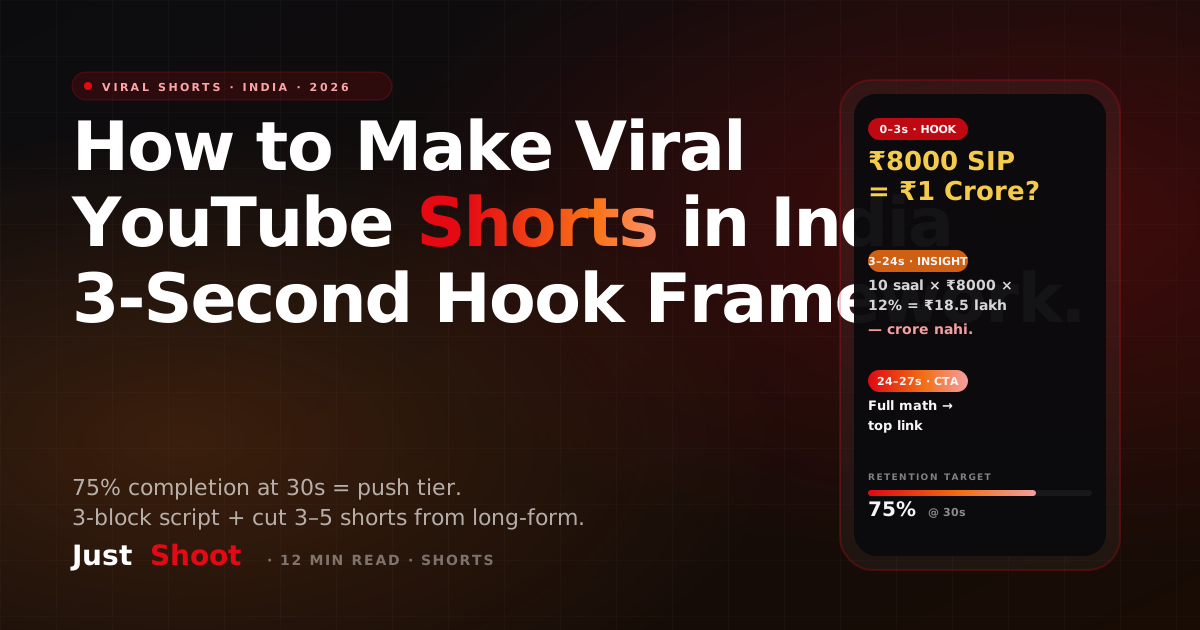
How to Make Viral YouTube Shorts in India in 2026: The 3-Second Hook Framework
How to make viral YouTube Shorts for Indian creators in 2026 — the 3-second hook, the 3-block script, retention curves, repurposing from long-form, and what to skip.
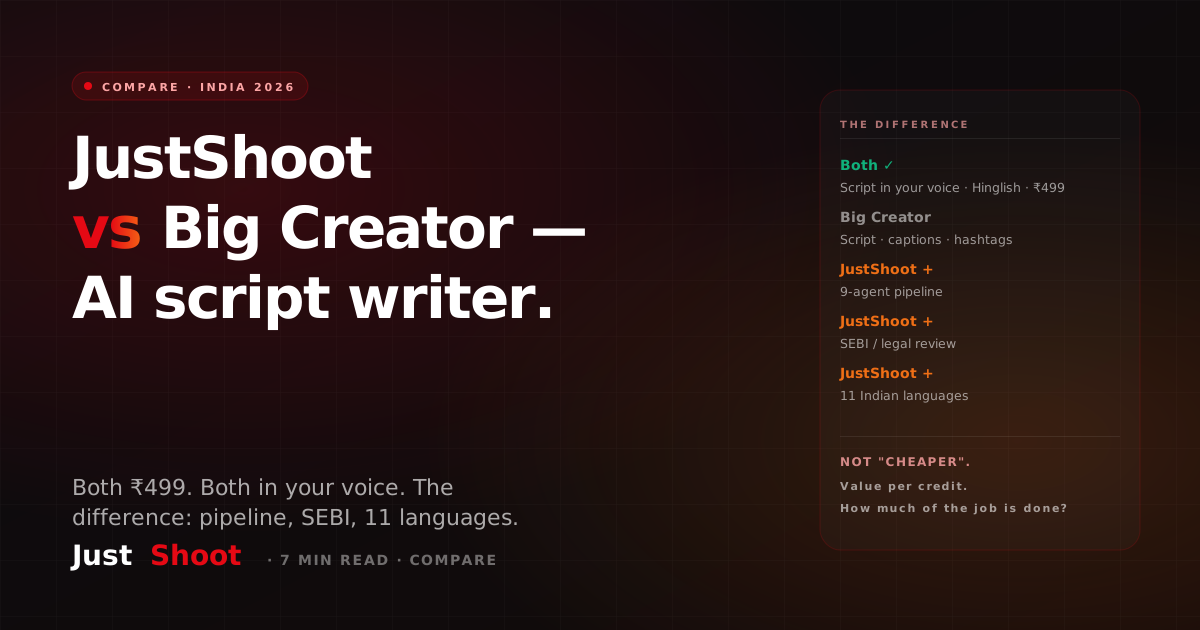
JustShoot vs Big Creator: AI Script Writer for Indian Creators (2026)
JustShoot vs Big Creator compared for Indian YouTubers in 2026 — both write scripts in your voice from ₹499. The real difference: pipeline breadth, SEBI review, and 11 languages.
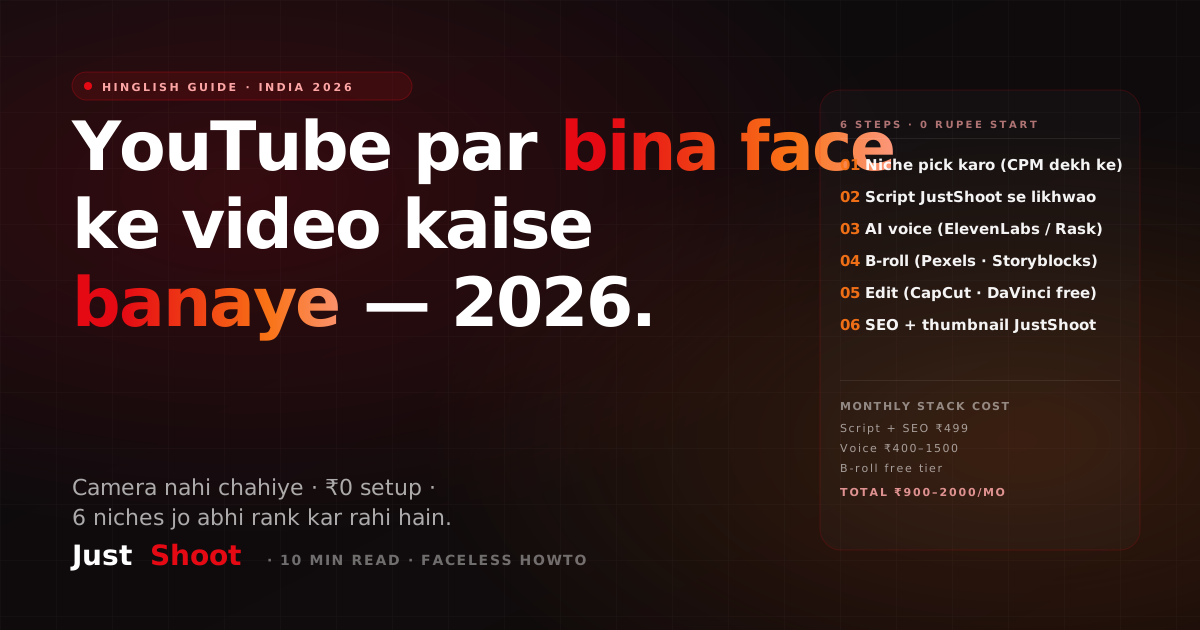
YouTube Par Bina Face Ke Video Kaise Banaye 2026 (Full Guide)
Bina face dikhaye YouTube video kaise banaye 2026 mein — AI script, voice clone, B-roll stack, aur 30-minute Hinglish workflow. Indian creators ke liye step-by-step.