SEBI Rules for YouTube Finance Creators in 2026 — What You Must Say (and Never Say)
Since 1 May 2026 every Indian stock/MF YouTube video needs your SEBI reg number + a clear disclaimer. The creator's checklist, 4 must-have disclaimers, and a SEBI-safe script structure.
SEBI Rules for YouTube Finance Creators in 2026 — What You Must Say (and Never Say)
By Ashok Sachdev, Founder of JustShoot · Published 29 May 2026 · Last updated 29 May 2026
This is creator-compliance education, not legal or financial advice. It explains how to structure a finance video so it respects SEBI's rules. For your specific situation, consult a SEBI-registered Investment Adviser / Research Analyst or a securities lawyer.
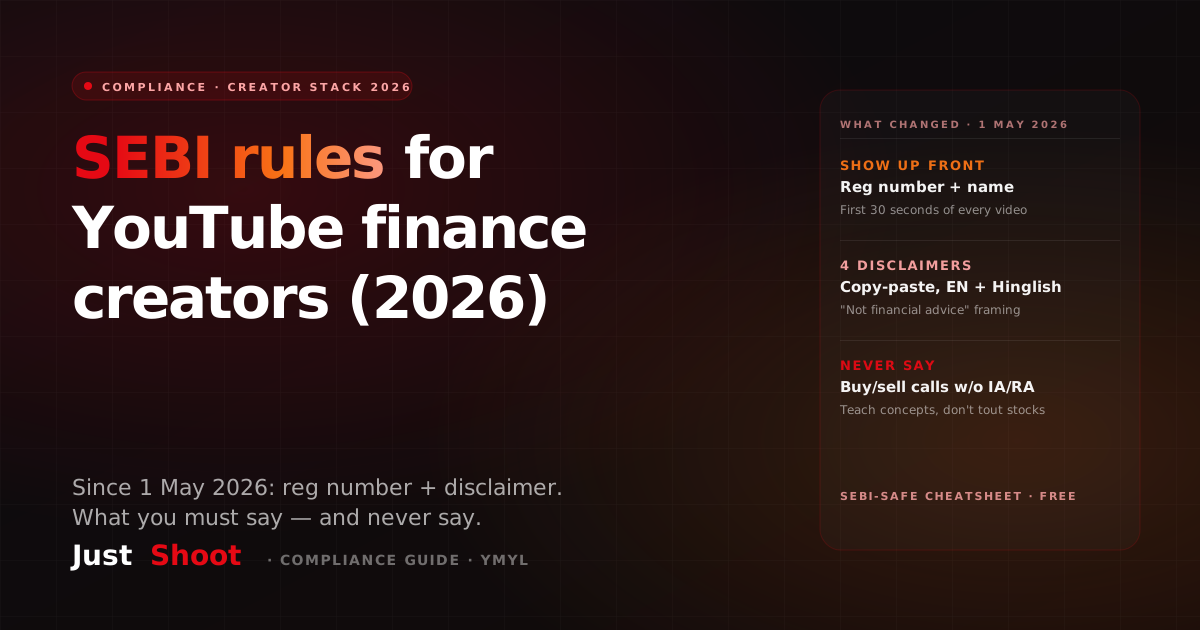
Short answer: Since 1 May 2026, every Indian YouTube video about stocks, mutual funds, or trading must show your SEBI registration number (if you have one) and your registered name at the start of the video, plus a clear "this is not financial advice" disclaimer. You can teach finance concepts without any registration. You cannot give specific buy/sell calls — recommending a particular stock or fund as a "must buy" — without a SEBI Investment Adviser (IA) or Research Analyst (RA) licence. Mutual-fund videos must also carry the standard market-risk warning. Break these and SEBI can fine you, pull the content, or refer it for enforcement. The full breakdown — what changed, what you can and can't say, the four disclaimers, and a script structure that keeps you safe — is below.
If you make finance content for an Indian audience, the rules stopped being optional this month. The good news: staying compliant is mostly about structure and language, not about saying less. Get the framing right once and you can publish freely. Below is the creator's version of the rulebook — no legalese, copy-paste disclaimers included.
What changed on 1 May 2026
SEBI's social-media disclosure requirements for securities-market content took effect 1 May 2026. The headline change: anyone publishing audio-visual content about the securities market must display, at the start of the video, their registered name and SEBI registration number where they hold one (source: RegStreet Law / Angel One regulatory summaries, 2026). The rule exists because "finfluencer" content exploded faster than oversight, and SEBI now treats a YouTube video that touts a stock or fund the same way it treats a printed advertisement.
Who does it apply to? In practice, three groups:
- Registered intermediaries (IA, RA, mutual-fund distributors) — must show their registration details up front.
- Pure educators with no registration — must make it unmistakable that the content is educational and not advice.
- Anyone running ads or affiliate links alongside securities content — disclosure of the commercial relationship is mandatory.
The practical takeaway for a creator: your intro is now a compliance surface, not just a hook. The first 30 seconds need to carry your status (registered or educator-only) and a disclaimer, woven in so it doesn't kill retention.
What you can — and can't — say without a SEBI licence
This is the line most creators get wrong. The distinction SEBI cares about is education versus advice.
You CAN, without any registration:
- Explain how SIPs, index funds, ELSS, compounding, or asset allocation work.
- Walk through publicly available data, factsheets, and historical returns as information.
- Teach frameworks ("how to evaluate any large-cap fund") without naming a "best" one to buy.
- Share your own past decisions as a personal story, clearly framed as such — not as a recommendation.
You CANNOT, without an IA/RA licence:
- Tell viewers a specific stock or fund is a "buy" / "sell" / "must invest now."
- Give personalised advice ("if you're 30, put this in this fund").
- Make sensational or guaranteed-return claims — the "10x returns," "double your money," or "guaranteed profit" style of headline is exactly what triggers scrutiny (source: lawyervikasgupta.com finfluencer compliance guidance, 2026).
The safe mental model: describe and explain, don't direct. "Here's how ELSS works and how to compare three of them" is education. "Buy this ELSS today" is advice — and needs a licence.
The 4 disclaimers every finance video needs in 2026
Build these into a template so you never forget one. Use the English version for English/global audiences and the Hinglish version for Hindi-first channels — both carry the same meaning.
1. Mutual-fund risk warning (mandatory for any MF content). Verbatim, as a 5-second voice-over and on-screen text in audio-visual content (source: SEBI / AMFI advertising code):
"Mutual Fund investments are subject to market risks, read all scheme related documents carefully."
Hinglish: "Mutual fund investments market risks ke subject hain — sabhi scheme-related documents dhyan se padhein."
2. Not financial advice.
"This video is for educational purposes only and is not investment advice. Please consult a SEBI-registered advisor before investing."
Hinglish: "Yeh video sirf educational purpose ke liye hai, investment advice nahi. Invest karne se pehle SEBI-registered advisor se consult karein."
3. No-liability.
"I am not responsible for any investment decisions you make based on this video."
Hinglish: "Iss video ke aadhaar par liye gaye kisi bhi investment decision ke liye main zimmedaar nahi hoon."
4. Affiliate / sponsorship disclosure (whenever you use a broker referral link or are paid).
"This video contains affiliate links / a paid partnership. I may earn a commission at no extra cost to you."
Put 1 and 2 in your first 30 seconds (audio + on-screen), and 3 and 4 in the description and verbally near any link. Disclosure must be conspicuous — buried in a description footer is not enough.
A SEBI-safe finance script structure
Compliance is easiest when it's baked into the script shape, not bolted on. This six-part structure keeps you on the right side of the line while still being watchable:
- Hook + status line — your opening hook, immediately followed by your registered name + reg number (if registered) or an "educational only" frame.
- Education framing — state plainly: "I'm explaining how X works, not telling you to buy anything."
- The teaching — concepts, frameworks, analogies. Describe; don't direct.
- Data with sources — show numbers and cite where they came from (fund factsheets, AMFI, SEBI). Sourced data is also what gets you cited by AI search and trusted by viewers.
- Disclaimer beat — the MF risk warning + "not advice," spoken and on-screen.
- CTA without a buy call — subscribe, grab a free resource, watch the series — never "open an account through my link for better returns."
This is exactly the discipline JustShoot's Legal Review agent is built to enforce. When you generate a finance script in JustShoot, the agent flags risky phrasing (guaranteed-return language, missing disclaimers, an implied buy call) before you ever hit record — so a compliance miss gets caught at the draft stage, not by SEBI. It is a safety check, not legal certification: it reduces obvious risk, it does not replace a lawyer or a registered advisor.
For the full beat-by-beat template, see our mutual fund channel script guide and the broader Hindi finance script template. Finance creators planning their channel economics should also read how to earn from YouTube in India in 2026 — finance is among the highest-RPM niches precisely because it's the most regulated.
Real enforcement: what actually gets channels in trouble
This isn't theoretical. SEBI has acted against finance content before — it fined Basant Maheshwari Wealth Advisers in connection with misleading YouTube content (source: ISFM / public SEBI enforcement reporting). The pattern in trouble cases is consistent:
- An implied or explicit buy call on a specific stock/fund without registration.
- Embedded broker links plus weak or missing disclaimers, which reclassifies the video as an advertisement — and ads carry stricter rules.
- Sensational return claims that imply guaranteed outcomes.
- Undisclosed paid promotion of a security the creator had a position in.
None of these require bad intent — most creators trip the line by accident, with an enthusiastic "you should definitely buy this" or a sponsor link without a clear disclosure. Structure and language are what protect you.
FAQ
Do I need a SEBI licence to make finance videos on YouTube? No — not for pure educational content. You can explain concepts, frameworks, and public data without registration. You need a SEBI IA or RA licence only if you give specific buy/sell recommendations or personalised investment advice.
What disclaimer must a mutual fund YouTube video include in 2026? The verbatim warning "Mutual Fund investments are subject to market risks, read all scheme related documents carefully," delivered as a voice-over and on-screen, plus a "not investment advice" line. Add affiliate/sponsorship disclosure if you use referral links.
Can I share stock tips on YouTube without registration? No. Specific buy/sell calls are advice and require a SEBI Investment Adviser or Research Analyst registration. You can teach how to analyse stocks, but you cannot direct viewers to buy a particular one.
What happens if I don't follow SEBI's social media rules? SEBI can issue notices, levy fines, order content removal, and refer matters for further enforcement. Embedded broker links with weak disclaimers can reclassify a video as an advertisement, inviting stricter scrutiny.
Does JustShoot check my script for SEBI compliance? JustShoot's Legal Review agent flags risky phrasing, guaranteed-return claims, and missing disclaimers as you draft, so you catch issues before recording. It is a safety check to reduce obvious risk — not legal certification, and not a substitute for a SEBI-registered advisor or lawyer.
Want your next finance video to ship with a built-in SEBI safety check? See the finance creators use-case, grab the SEBI disclaimer cheatsheet, or try JustShoot free →.

Best AI Script Generator for YouTube in India 2026 — Honest Rundown of 7 Tools
Which AI script generator actually works for Indian YouTubers in 2026 — tone match, Hinglish, INR pricing, and the one layer every tool below misses. Ranked honestly.
JustShoot vs Big Creator: AI Script Writer for Indian Creators (2026)
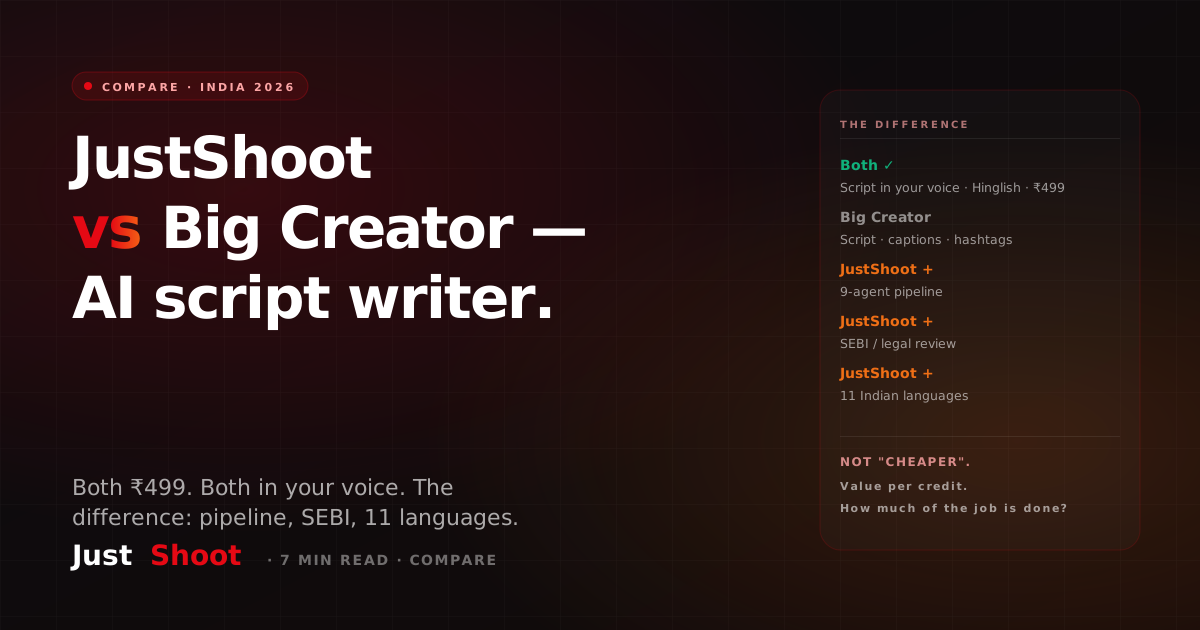
JustShoot vs Big Creator compared for Indian YouTubers in 2026 — both write scripts in your voice from ₹499. The real difference: pipeline breadth, SEBI review, and 11 languages.