Is It SEBI-Compliant to Use AI for Finance YouTube Scripts? (India, 2026)
Yes — you can use AI to script finance YouTube videos in India and stay SEBI-compliant, if the AI keeps the education-vs-advice line, strips prohibited claim words, and adds the right disclosures. Here's the safe-usage rule.
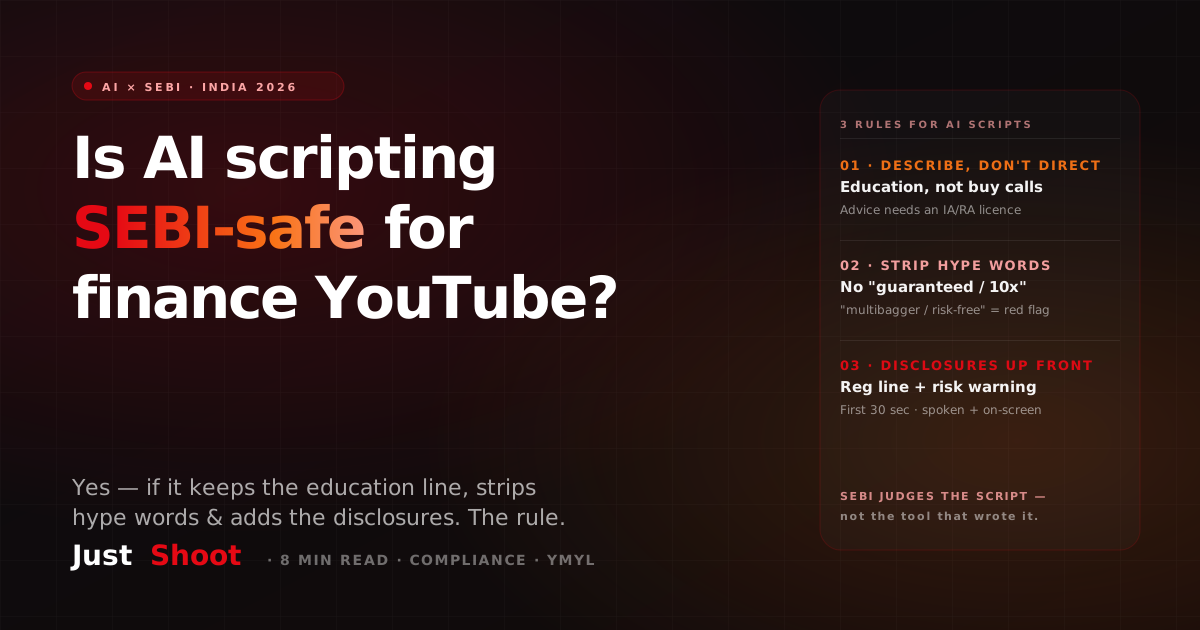
Is It SEBI-Compliant to Use AI for Finance YouTube Scripts? (India, 2026)
By Ashok Sachdev, Founder of JustShoot · Published 1 June 2026 · Last updated 1 June 2026
This is creator-compliance education, not legal or financial advice. It explains how to use an AI script tool without tripping SEBI's rules. For your situation, consult a SEBI-registered Investment Adviser / Research Analyst or a securities lawyer.
Short answer: Yes — you can use AI to write or research a finance YouTube script in India and stay SEBI-compliant, if the AI does three things: (1) keeps the education-versus-advice line — explaining concepts, never issuing a specific buy/sell call without an IA/RA licence; (2) strips prohibited claim words like "guaranteed," "assured," "multibagger," "10x," or "risk-free"; and (3) inserts the required disclosures — your SEBI registration line (if registered), the mutual-fund risk warning, and a "not financial advice" disclaimer in the first 30 seconds. SEBI does not care whether a human or an AI typed the script. It cares what the script says. The risk isn't "using AI" — it's shipping AI's raw default output, which is trained on hype-heavy global copy and quietly writes the exact phrasing SEBI penalises.
If you make finance content for an Indian audience, the rules became mandatory on 1 May 2026 — and most AI script tools were never built with them in mind. Below: why AI scripts carry a SEBI risk creators miss, the three things your script must do, the difference between a render-time word filter and a real compliance review, and where this fits a YouTube workflow.
SEBI doesn't ban AI — it judges the script
Since 1 May 2026, SEBI's social-media disclosure requirements apply to securities-market content: any video about stocks, mutual funds, or trading must carry your registered name and SEBI registration number at the start where you hold one, and educational creators must make it unmistakable the content is education, not advice (source: RegStreet Law / Angel One regulatory summaries, 2026). Nothing in the rule mentions how the script was produced. A SEBI-sensitive line is just as non-compliant whether ChatGPT wrote it or you did.
That's the part creators get backwards. They ask "is AI allowed?" when the real question is "does my script cross the education-versus-advice line, and does it carry the disclosures?" Get those right and the tool is irrelevant. Get them wrong and "but an AI wrote it" is not a defence — you published it under your name. For the full rulebook on what changed, what you can and can't say, and the four disclaimers, read SEBI rules for YouTube finance creators in 2026.
Why AI finance scripts carry a SEBI risk creators don't see
A general AI writing tool is trained mostly on US and global finance content — newsletters, sales pages, hype threads. So when you ask it for a "punchy hook about this stock," it reaches for the register it learned: "this could 10x," "guaranteed returns," "the one fund you must buy now." That is precisely the language SEBI treats as a sensational or guaranteed-return claim (source: lawyervikasgupta.com finfluencer compliance guidance, 2026). The model isn't malicious — it has no idea India has a regulator with a prohibited-words list.
Three specific ways raw AI output trips the line:
- It writes implied buy calls. Ask for an "exciting script about a smallcap" and the default output will tell viewers it's a great buy — an advice act that needs an IA/RA licence.
- It invents or omits disclosures. Unless told, AI won't add the verbatim mutual-fund risk warning or your registration line — and a finance video without them is non-compliant from second one.
- It uses real-time price data freely. SEBI bars finfluencers from using real-time market data in educational content; financial educators may use price data only with a 3-month lag, to stop disguised live tips (source: finnovate.in / livelaw, 2026). An AI that pulls "today's price" into an "educational" script can manufacture this violation for you.
None of this means avoid AI. It means review the AI's output against SEBI's rules before you record — the step almost every tool skips.
The 3 things your AI script must do to stay SEBI-safe
Whatever tool you use, hold its output to this checklist before recording:
1. Keep the education-versus-advice line. The script should describe and explain — "here's how this category of fund works, and how to compare three of them" — never direct: "buy this one today." Education needs no registration; a specific buy/sell call needs a SEBI IA or RA licence.
2. Strip the prohibited claim words. Search the draft for "guaranteed," "assured," "multibagger," "10x," "double your money," "risk-free," "must buy." Every one of these is a red flag. Replace hype with framed information ("historically, this category has returned X over Y — past performance doesn't predict future returns").
3. Insert the disclosures, up front. Your registration line (if registered) or an "educational only" frame, the verbatim mutual-fund risk warning where MFs are mentioned, and a "not investment advice" line — spoken and on-screen in the first 30 seconds, not buried in the description. The exact copy-paste English + Hinglish versions are in the SEBI disclaimer cheatsheet.
Do these three and the provenance of the script — human or AI — stops mattering. Skip them and no tool, however "compliant" it markets itself, will save you.
"AI compliance filter" vs a real script review — they're not the same
Some AI video tools advertise SEBI-safety as a render-time word filter — they scan for "tip-off" words like guaranteed or multibagger before generating the video. That catches the crudest cases, and it's better than nothing. But a word-block is not a compliance review, for two reasons:
- It misses structure. "This fund has consistently outperformed and most investors are moving in now" contains no banned word, yet it's an implied buy call. A keyword filter passes it; the education-versus-advice rule does not.
- It doesn't add what's missing. A filter removes bad words. It doesn't insert your registration line, the MF risk warning, or check that disclosures are in the first 30 seconds — the things whose absence makes a video non-compliant.
A real review reads the script the way SEBI would: is this education or advice, are the disclosures present and conspicuous, is any real-time data sneaking in. That's a different job from blocking a wordlist — and it's the job JustShoot's Legal Review agent (#04) is built to do.
How a script-level review fits a finance workflow
In JustShoot's pipeline, the script is written in your own voice first, then the Legal Review agent reads it before you record — flagging guaranteed-return phrasing, an implied buy call, missing disclaimers, or a registration line that isn't there. You see the flags at the draft stage, fix them in seconds, and ship a video that respects the rules without sounding like a legal notice.
Two honest limits, stated plainly: the agent reduces obvious risk; it is not legal certification and not a substitute for a SEBI-registered advisor or a lawyer. And it reviews the script — your delivery, on-screen text, and description still have to carry the disclosures it flags. It catches the compliance miss a hype-trained model would otherwise hand you; it does not turn an unregistered creator into a licensed adviser.
If you're weighing finance-specific AI tools, see how a script-in-your-voice review compares with an avatar render tool in our honest JustShoot vs TrueFan AI breakdown, and the broader finance creators use-case.
FAQ
Is it SEBI-compliant to use AI like ChatGPT or an AI video tool for finance YouTube scripts? It can be. SEBI judges what the script says, not how it was written. An AI script is compliant if it keeps the education-versus-advice line, avoids guaranteed-return language, and carries your registration line plus the mutual-fund risk and "not advice" disclaimers. Raw, unreviewed AI output is risky because it defaults to hype phrasing and omits disclosures.
Can using AI to write my finance scripts get me a SEBI notice? Not because it's AI — because of what gets published. If the script makes a specific buy/sell call without an IA/RA licence, claims guaranteed returns, or lacks the required disclaimers, SEBI can act regardless of who or what drafted it. Reviewing the output against SEBI's rules before recording is what protects you.
Do I still need a SEBI licence if an AI writes the script? Yes, if the content gives advice. You can publish educational finance content — concepts, frameworks, public data — without registration whether you or an AI writes it. You need a SEBI Investment Adviser or Research Analyst licence to give specific buy/sell recommendations, AI-written or not.
Can my AI finance script show live stock prices? No. SEBI requires financial educators to use stock-price data with at least a 3-month lag in educational content; real-time prices in an "educational" video can be treated as disguised trading tips. If your AI tool pulls in today's prices, remove or lag them before publishing.
Does JustShoot guarantee my finance video is SEBI-compliant? No tool can guarantee that. JustShoot's Legal Review agent flags risky phrasing, guaranteed-return claims, and missing disclaimers as you draft, so you catch issues before recording. It is a safety check to reduce obvious risk — not legal certification, and not a substitute for a SEBI-registered advisor or lawyer.
Want your next finance video scripted in your voice and checked against SEBI's rules before you record? See the finance creators use-case, grab the SEBI disclaimer cheatsheet, or try JustShoot free →.
Sources: SEBI social-media disclosure requirements effective 1 May 2026 (RegStreet Law / Angel One regulatory summaries); the 3-month data-lag rule for educational content (finnovate.in / livelaw, 2026); SEBI (Investment Advisers) Regulations and AMFI mutual-fund advertising code for the verbatim risk warning; lawyervikasgupta.com finfluencer compliance guidance; public SEBI enforcement reporting. All as summarised in justshoot.in/llms-full.txt. This post is creator-compliance education, not legal or financial advice.
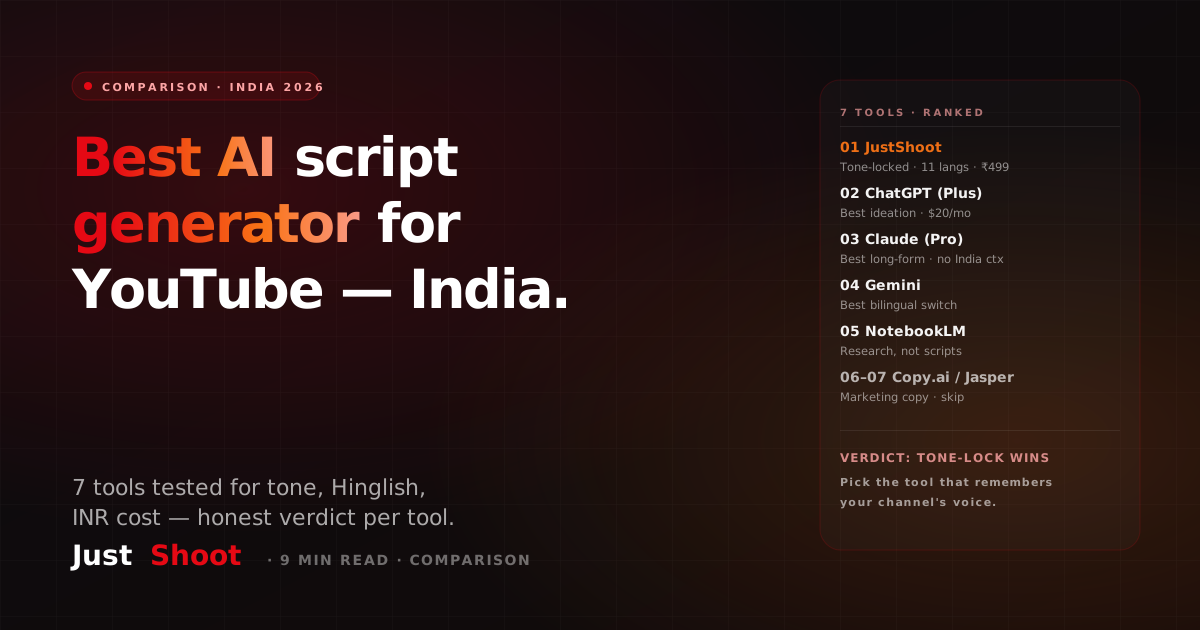
Best AI Script Generator for YouTube in India 2026 — Honest Rundown of 7 Tools
Which AI script generator actually works for Indian YouTubers in 2026 — tone match, Hinglish, INR pricing, and the one layer every tool below misses. Ranked honestly.
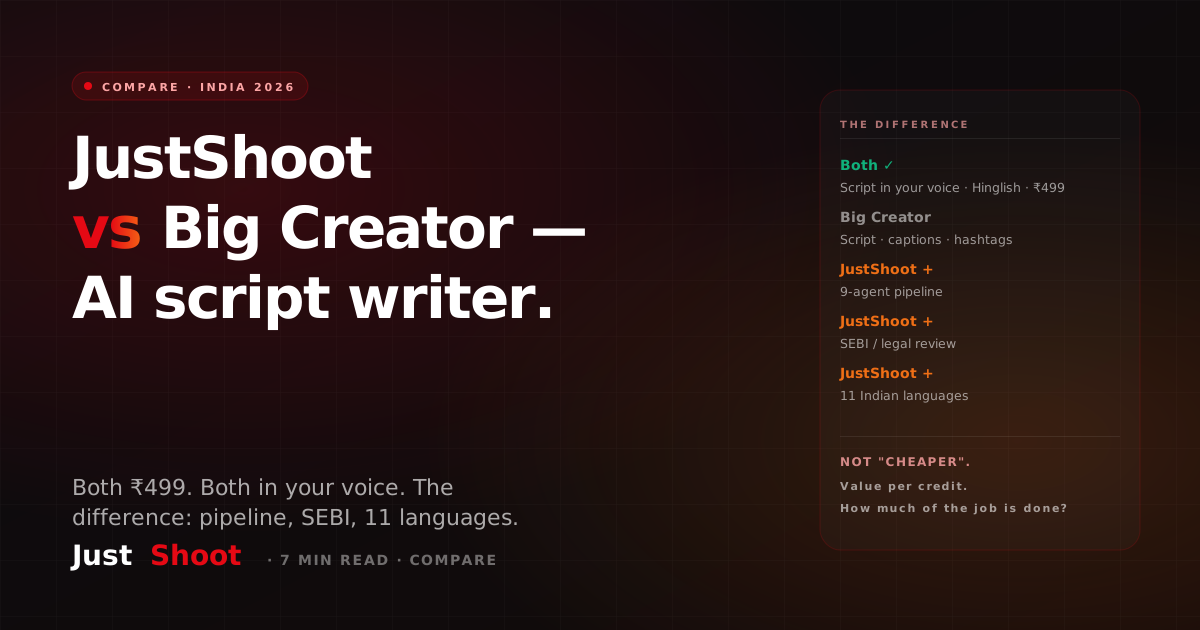
JustShoot vs Big Creator: AI Script Writer for Indian Creators (2026)
JustShoot vs Big Creator compared for Indian YouTubers in 2026 — both write scripts in your voice from ₹499. The real difference: pipeline breadth, SEBI review, and 11 languages.